Clay Studio: Pottery and Ceramics Classes in Brookfield, CT
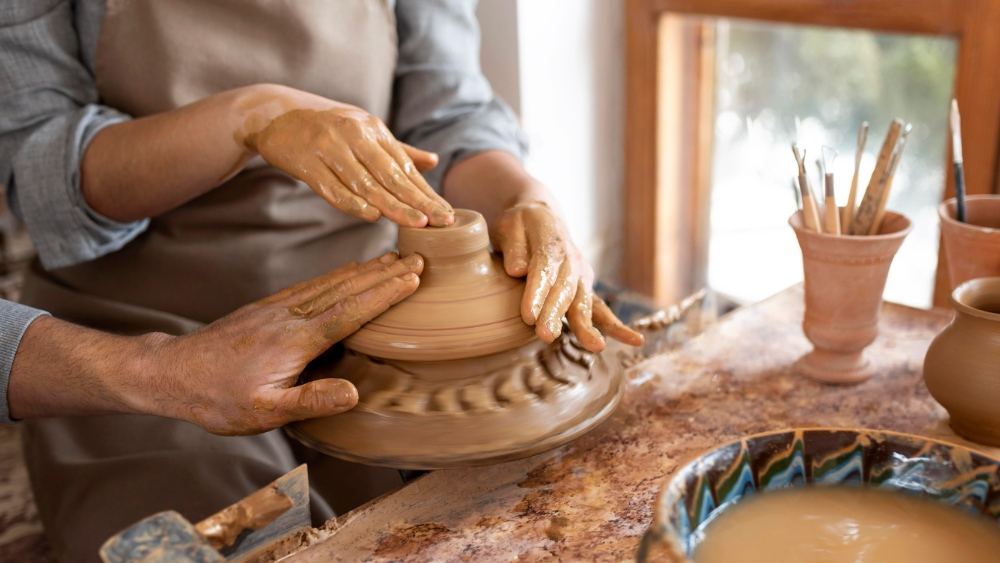
Brookfield Craft Center's Clay Studio gives beginners, returning students, and experienced ceramicists a place to build real skills with clay. We teach wheel throwing, where you shape vessels on the potter's wheel, and handbuilding, where slab, coil, and pinch techniques create both functional and sculptural pieces.
Our adult classes run year-round with weekday and evening options, and young makers can join through after-school, homeschool, and seasonal youth programs.
You will also learn the difference between low-fire earthenware and high-fire stoneware, two clay bodies that behave differently in the kiln and open up different creative possibilities.
Explore Different Ways to Work With Clay
The Clay Studio teaches two foundational approaches to forming clay, and most classes focus on one or the other. Understanding the difference helps you choose the right course.
Wheel Throwing
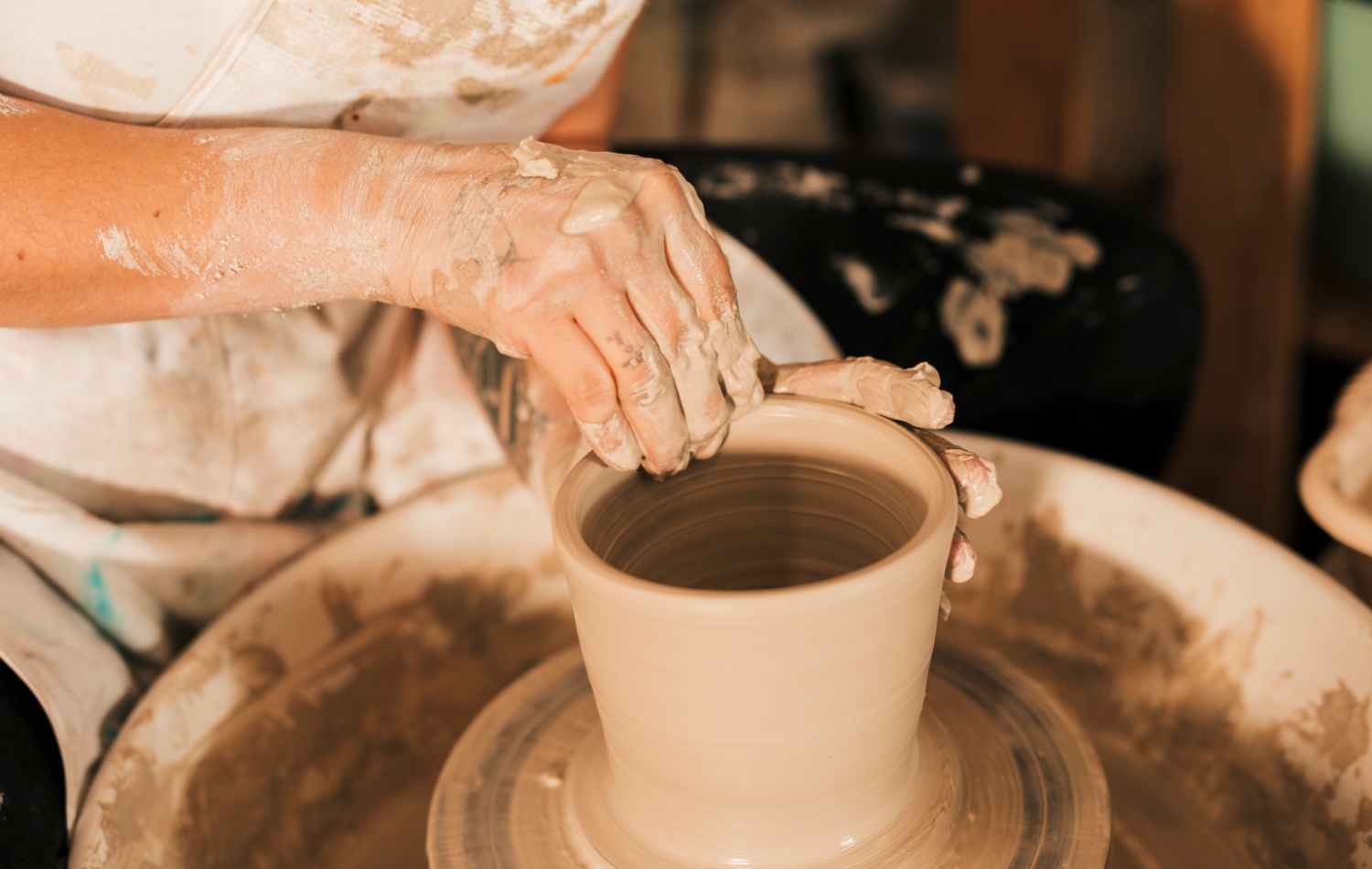
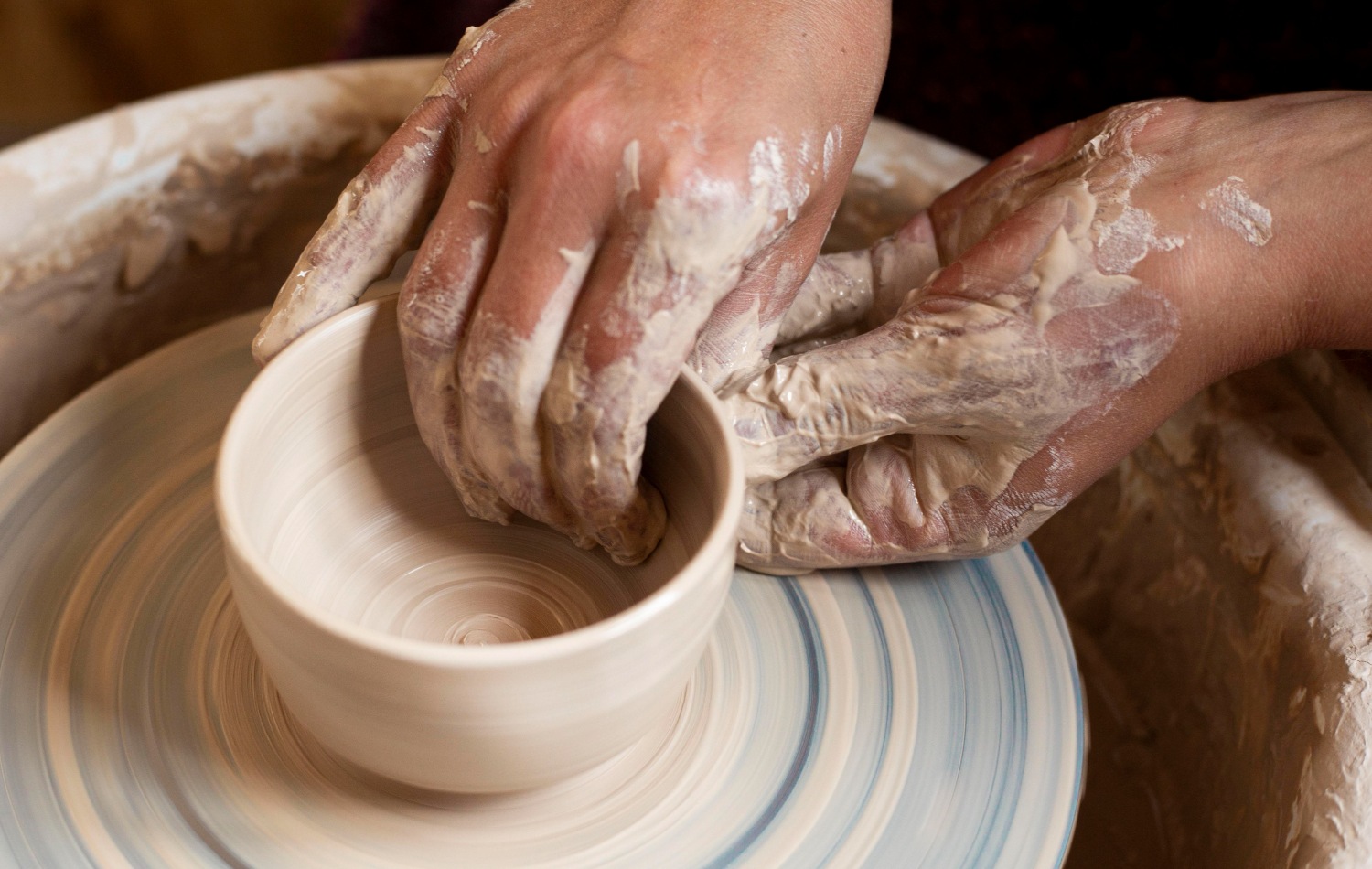
Wheel throwing uses the potter's wheel to shape symmetrical vessels like bowls, mugs, cups, plates, and vases.
You will learn to center the clay, pull the walls, and shape the form, then trim, add handles, and prepare the piece for glaze. Centering consistently takes practice, and that repetition is where the skill really builds.
Handbuilding
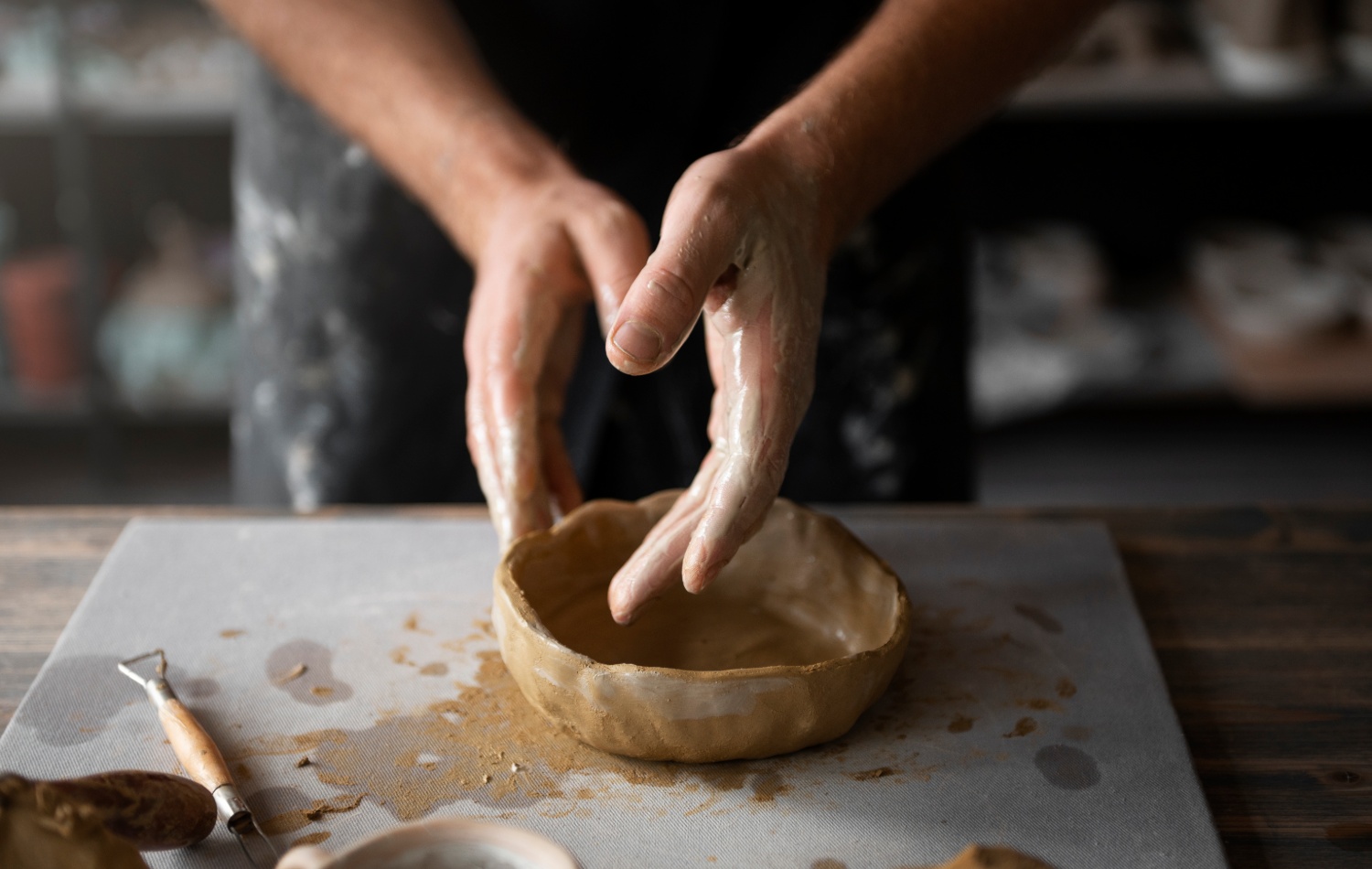
Handbuilding forms clay without a wheel, using three core methods: slab, coil, and pinch. Slabs suit angular or architectural forms, coils build taller sculptural pieces, and pinch pots are often the most direct way to feel how clay responds in your hands.
It works for both functional pottery and more sculptural, asymmetrical pieces, and it gives experienced potters as much room to explore as it gives beginners.
Glazing and Surface Decoration
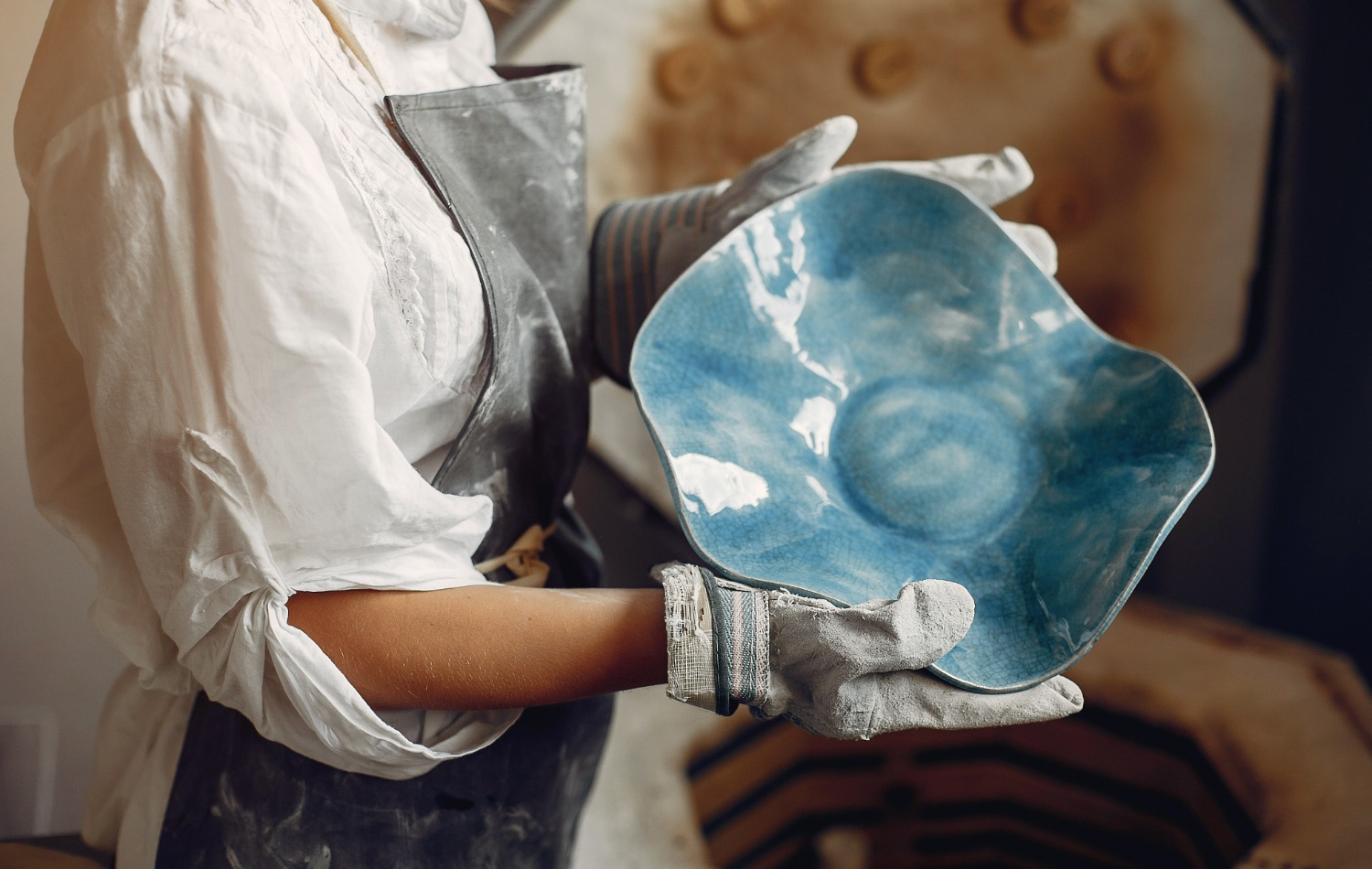
Once a piece is shaped, you may learn to glaze, add color, or carve and texture the surface before firing.
Firing changes how a glaze turns out, so results vary with kiln temperature and atmosphere. Some sessions, like our Glaze & Finish workshop, focus entirely on this stage. Not every course covers every technique, so check the individual listing for specifics.
Specialty Ceramic Workshops
The Clay Studio also schedules focused workshops around specific techniques, including Nerikomi (pattern built into colored clay), Raku firing (a fast, low-temperature process known for dramatic surface effects), and slipcasting for repeatable forms. These come and go with the schedule, so check the current listing to see what's available now.
If your search for a woodworking workshop near me is driven by a particular schedule or interest, check the current listings for the workshop length, experience level, and project details. Not every workshop is designed for the same skill level.
Clay Classes for Different Experience Levels

Beginner Pottery Classes
No experience needed. Intro to Clay: Wheel & Handbuilding covers basic studio procedures, tools, foundational technique, trimming, and basic glazing. Check the experience level on each listing before registering.
Classes for Returning Students
Already taken an intro class? Returning-student options build consistency on the wheel, sharpen handbuilding, and refine details like handles, lids, and feet.

Intermediate and Advanced Opportunities
More experienced potters should confirm required experience and prerequisites before registering. Advanced options aren't offered every session, so check current availability.
Pottery Programs for Children and Teens
Brookfield Craft Center offers clay instruction for young makers through after-school, homeschool, and seasonal programming. Program availability changes throughout the year, so families should review the current listing for exact ages, dates, and session details.
After-School Pottery
After School Clay: Wheel & Handbuilding gives students ages 8 to 17 a hands-on introduction to clay after school, combining wheel and handbuilding with age-appropriate projects.
Homeschool Clay Programs
Homeschool Clay: Wheel & Handbuilding offers the same wheel and handbuilding instruction as a daytime option for homeschool families, also ages 8 to 17.
Summer Youth Ceramics
Ceramics may also appear in our summer youth programming. Since summer offerings change year to year, visit our summer program page for current ages and details.
Understanding Clay and Firing Methods
Earthenware and Low-Fire Ceramics
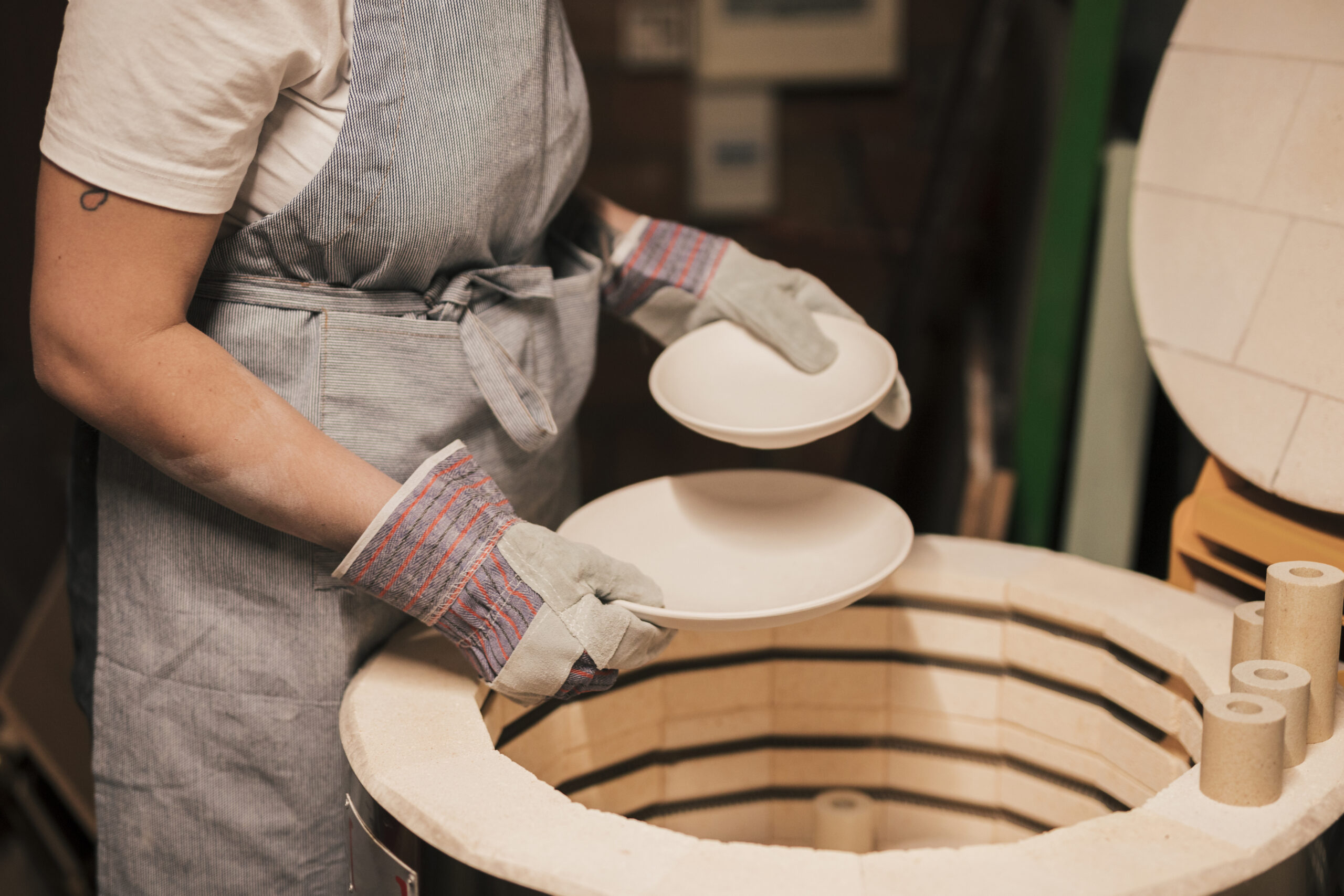
Earthenware is a low-fire clay, fired at lower kiln temperatures than stoneware or porcelain. In our electric kilns, low-fire glazes stay stable enough for bright colors and detailed decoration. Since earthenware doesn’t fully vitrify, the glaze itself gives the piece its water-resistant surface.
Stoneware, Porcelain, and High-Fire Ceramics
Stoneware and porcelain are high-fire clays, fired to cone 6 in our electric kilns. This lets the clay fully vitrify, so pieces can be thin and delicate while still strong and water-resistant. High-fire glazes are also less predictable, often producing a one-of-a-kind surface.
Which Type of Clay Class Should You Choose?
- Choose a beginner class to learn foundational studio procedures and basic technique.
- Choose wheel throwing if you are drawn to symmetrical vessels like bowls, mugs, and vases.
- Choose handbuilding for slab, coil, pinch, sculptural, or asymmetrical work.
- Choose a returning-student or continuing class to refine skills you already have.
- Choose a specialty workshop, such as Raku or Nerikomi, for a focused project or technique.
- Check whether a class works in low-fire earthenware, high-fire stoneware, or another process, since this affects color options, glaze predictability, and how the finished piece can be used.
What to Expect From a Clay Class
Hands-On Instruction
You will learn primarily by doing. Instructors demonstrate a technique, then guide you as you practice it directly on the wheel or at the handbuilding table. Expect to ask questions, make adjustments, and repeat steps until they start to feel natural. This kind of hands-on guidance is difficult to replicate through video tutorials alone.
Small Class Sizes
Clay classes are generally limited to approximately 10 students, which gives instructors time to work with each person individually. Because capacity can vary by session and workshop, confirm the specific class size when you register.
A Multi-Step Ceramic Process
Pottery does not follow the same timeline as many other crafts. A typical piece moves through several stages: forming the clay, letting it dry completely, an initial firing, glazing or surface treatment, and a final firing. Because of this process, you will not take a finished piece home on the same day you make it. Ask your instructor about the expected timeline for your specific class.
Materials, Tools, and Additional Fees
Clay, tools, and firing fees vary by class, and not every course includes the same materials. Review the individual class listing for details on what is provided, what you may need to bring, any additional material or firing fees, and recommended clothing for working with clay.
Practice Independently During Clay Open Studio
Open studio time gives eligible students and members a chance to continue practicing outside a scheduled class. It is intended for independent work, not instructor-led teaching, so participants should already be comfortable with basic studio procedures and safe handling of the wheel and tools.
Eligibility generally depends on having completed a Clay Studio class within the recent past or holding a current membership with demonstrated foundational skills, subject to confirmation by the studio monitor.
As of this writing, individual open studio sessions are listed at $29 per session, though fees and formats can change, so always confirm current pricing, schedules, and eligibility through the registration system before planning a visit.
Rooted in Craft and Community
Brookfield Craft Center is a nonprofit craft school and creative community built on a historic campus along the Still River in Brookfield, Connecticut, about six miles north of Danbury. Since its early years, the Center has supported hands-on learning, fine craftsmanship, and the preservation of craft traditions across many disciplines, including clay.
Vintage buildings on campus house specialized studios, exhibition space, and a working community of students, instructors, and artists. Learning pottery here connects you to that wider community and to a nonprofit mission focused on making arts education more accessible.
Ceramics are also part of the story beyond the studio. The Lynn Tendler Bignell Gallery and Shop features handmade ceramics alongside glass, jewelry, fiber art, woodwork, metalwork, and other craft media from local and national artists. Visit the Gallery to see how other makers approach form, surface, and function in clay.
Eligibility generally depends on having completed a Clay Studio class within the recent past or holding a current membership with demonstrated foundational skills, subject to confirmation by the studio monitor.
As of this writing, individual open studio sessions are listed at $29 per session, though fees and formats can change, so always confirm current pricing, schedules, and eligibility through the registration system before planning a visit.
How to Choose and Register for a Clay Class
A few minutes of preparation can help you register with confidence. Before signing up, take time to:
- Review the stated experience level for the class
- Confirm the eligible age or grade, especially for youth programs
- Decide between wheel throwing, handbuilding, or a project-based workshop
- Check the number and length of sessions
- Read any prerequisites listed for the course
- Review materials, tools, and fee information
- Confirm whether missed sessions can be made up
- Register through the current class listing
Details can differ significantly from one class to the next, so the individual listing should always guide your decision.
Frequently Asked Questions About Clay Studio
Are scholarships available for clay classes?
Financial assistance may be available for eligible students through Brookfield Craft Center’s scholarship program. Availability and application requirements can change, so check the current scholarship page before registering.
Does Brookfield Craft Center offer private clay classes or gift certificates?
Private classes for individuals or small groups may be arranged for the Clay Studio, and gift certificates are available for pottery classes and workshops. Contact the registrar for current options and pricing.
What is the cancellation or refund policy if I need to drop a class?
Cancellation and refund terms can vary by class and session. Review the policy listed on the registration page for your specific course before enrolling.
Do open studio session packs expire?
Yes. Open studio sessions purchased as part of a multi-session pack must be used within 12 weeks of purchase. Single sessions and packs of two or three are available, with current pricing confirmed through the registration system.
Can a teen younger than 17 join an adult-level clay class?
Most adult and evening pottery classes are listed for ages 17 and up. Younger students should look at our After School Clay or Homeschool Clay programs, which are designed for ages 8 to 17.
Find Your Next Clay Class
Clay rewards patience, practice, and a willingness to let a piece take shape over several steps rather than all at once. Wheel throwing, handbuilding, glazing, or a focused workshop like Raku or Nerikomi each offers its own way into the material. Our Clay Studio has room for you to begin that process or continue building on skills you already have.
Browse our current class schedule to find the session, age group, and experience level that fits your interests.
At Brookfield Craft Center, we welcome people who are curious about woodworking and those ready to take their existing skills further. Explore our current listings to find available classes, courses, and workshops that fit your interests and experience.
Course subjects, instructors, schedules, and registration availability change, so check the latest listing for complete details.