Ceramic Classes Near New Milford, CT
Working with clay gives students a practical way to explore form, texture, and the steps that turn raw material into finished work. Brookfield Craft Center offers hands-on instruction just south of New Milford in Brookfield, Connecticut.
Students can learn in a dedicated ceramic studio with access to equipment, workspace, and instructor guidance. Beginners can build foundational skills, while returning students can continue developing their technique through focused workshops and ceramic courses.
Learn Ceramics at Brookfield Craft Center
Working with clay involves more than shaping wet material. Students learn how construction, moisture, texture, glaze, firing temperature, and surface treatment influence the finished result.
Brookfield Craft Center teaches these processes through direct studio experience. For people comparing ceramic places near New Milford, the program offers a structured environment for learning and practicing clay techniques.
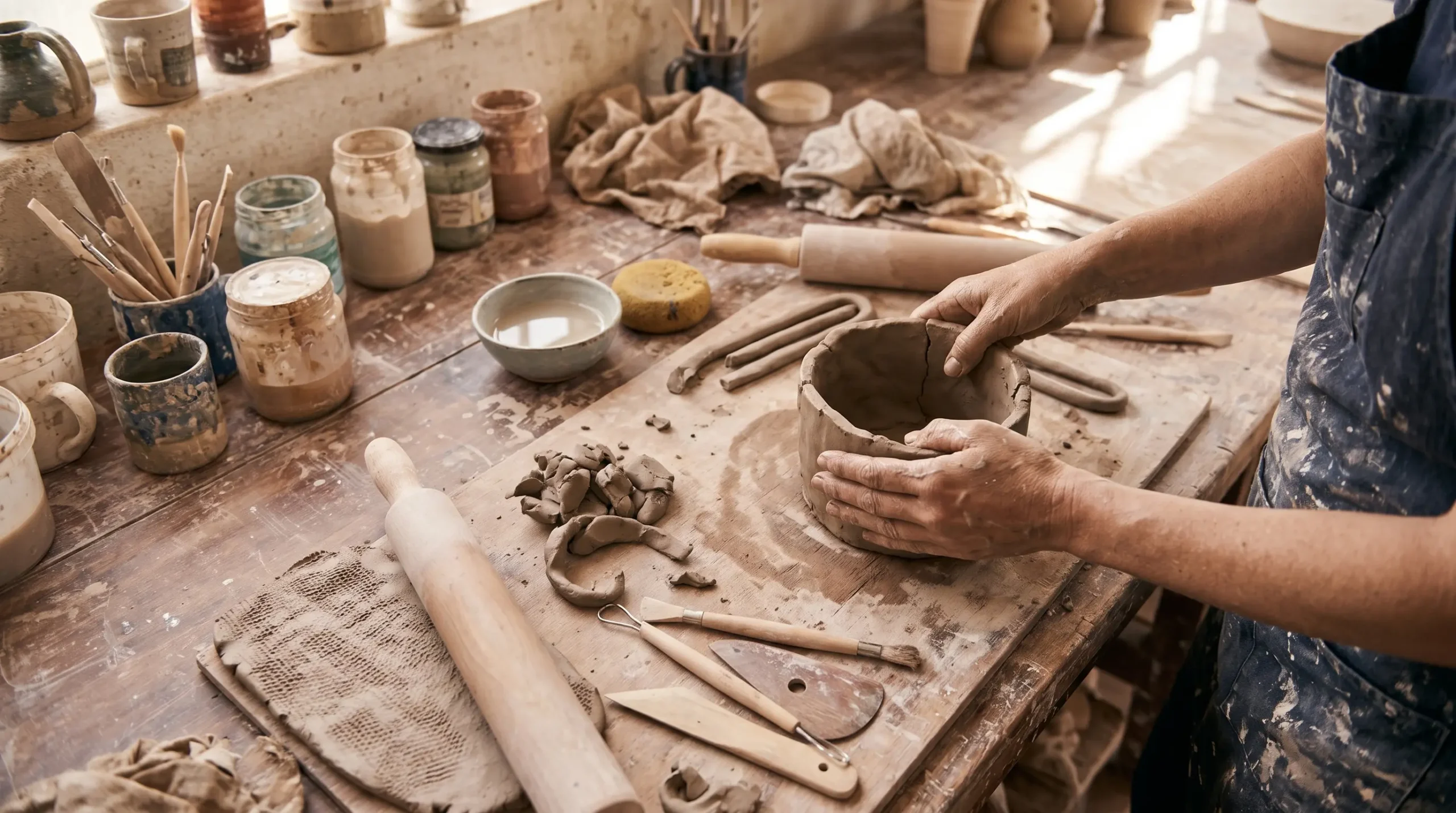
Handbuilding uses hands and basic tools rather than a pottery wheel. Common techniques include pinch, coil, and slab construction, which can be used for both functional and sculptural pieces. These methods work well for beginners while still supporting more advanced projects.
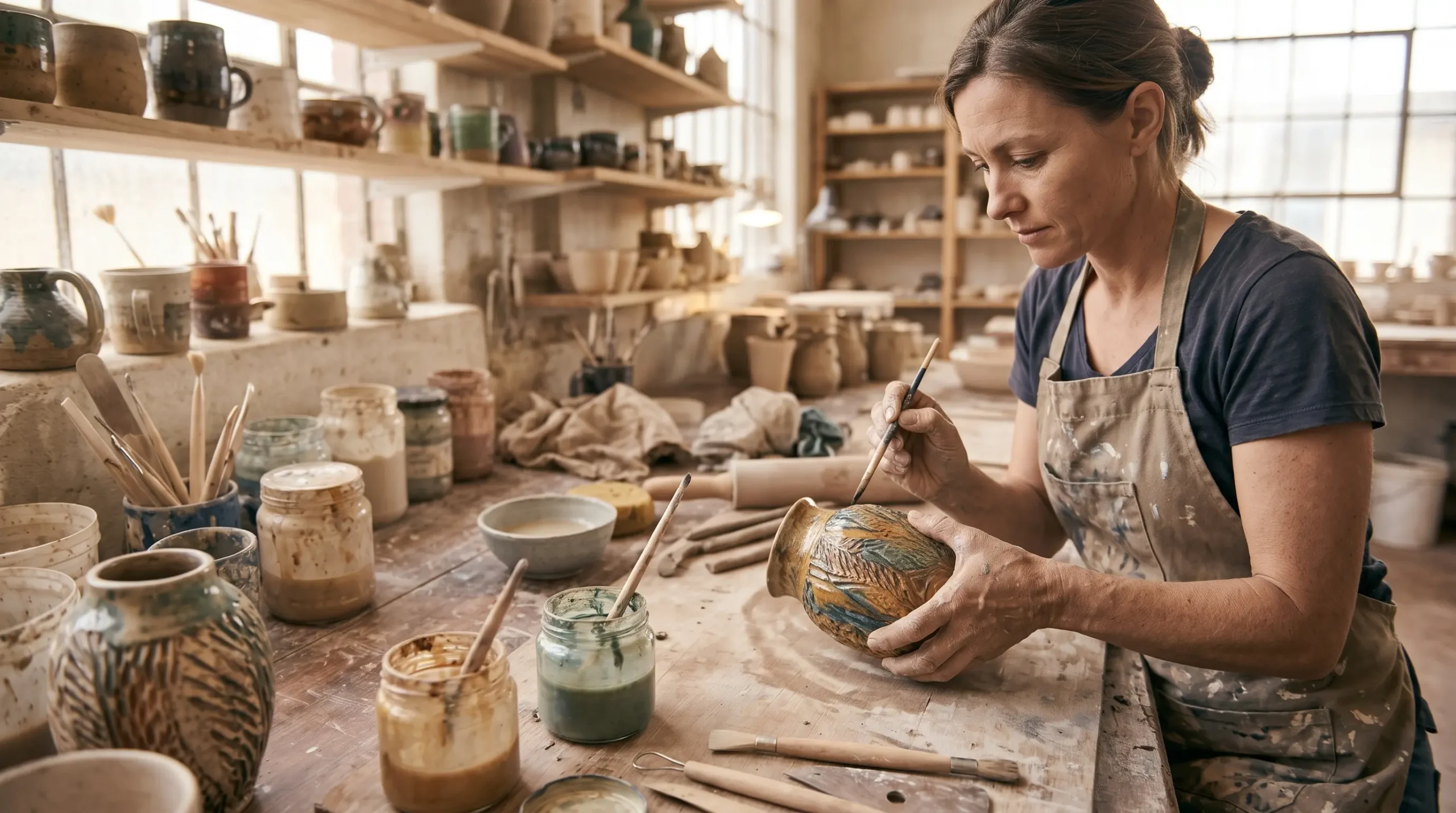
Students may explore glazing, carving, color, texture, pattern, and other surface treatments. These methods affect how a piece looks and feels after firing.
Those searching for ceramic painting can find instruction in decorative clay techniques within applicable classes. Brookfield Craft Center is not a walk-in paint-your-own-ceramic studio where visitors simply choose premade pieces to decorate.
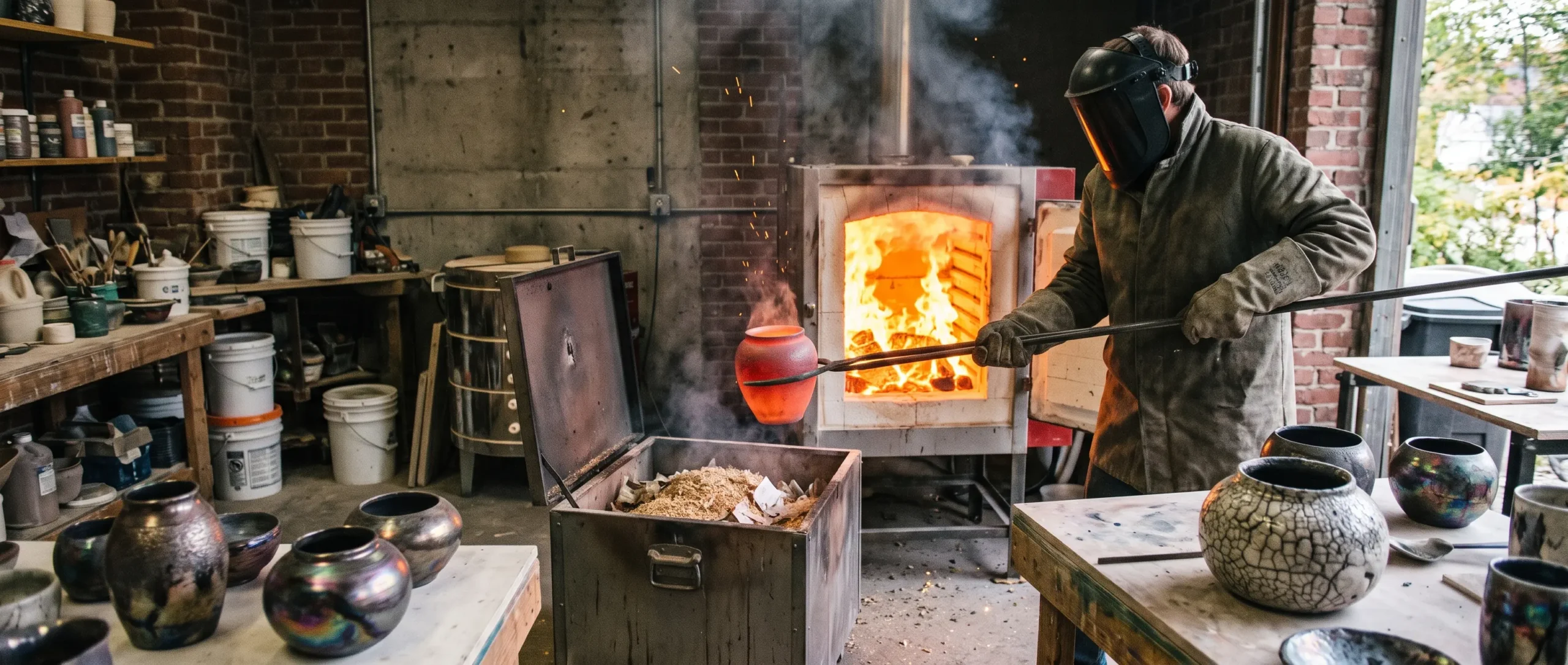
Ceramic classes may also cover specialized forming, firing, and surface techniques. Brookfield Craft Center has offered processes such as Raku, along with high-fire and low-fire ceramics. Available workshops vary, so students should check the current schedule.
Ceramic Classes for Different Experience Levels
Brookfield Craft Center’s Clay Studio serves students with different levels of experience. The key is choosing a course that matches what you already know.
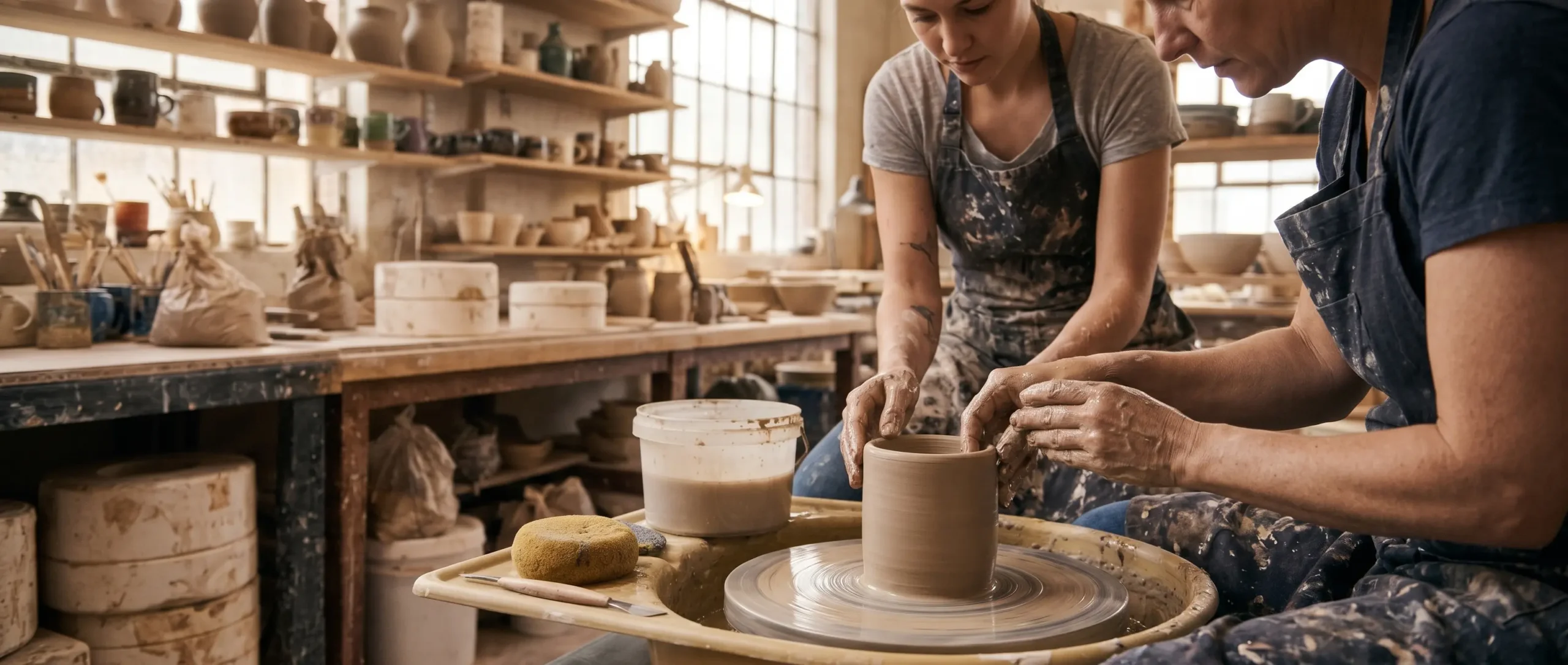
Beginner Ceramic Classes
Introductory instruction may cover clay handling, tool use, form building, moisture control, firing preparation, and basic surface treatments. Guided practice can help new students understand common mistakes before working more independently.
For beginners researching ceramic places in the New Milford area, course level and format are worth reviewing before enrollment.
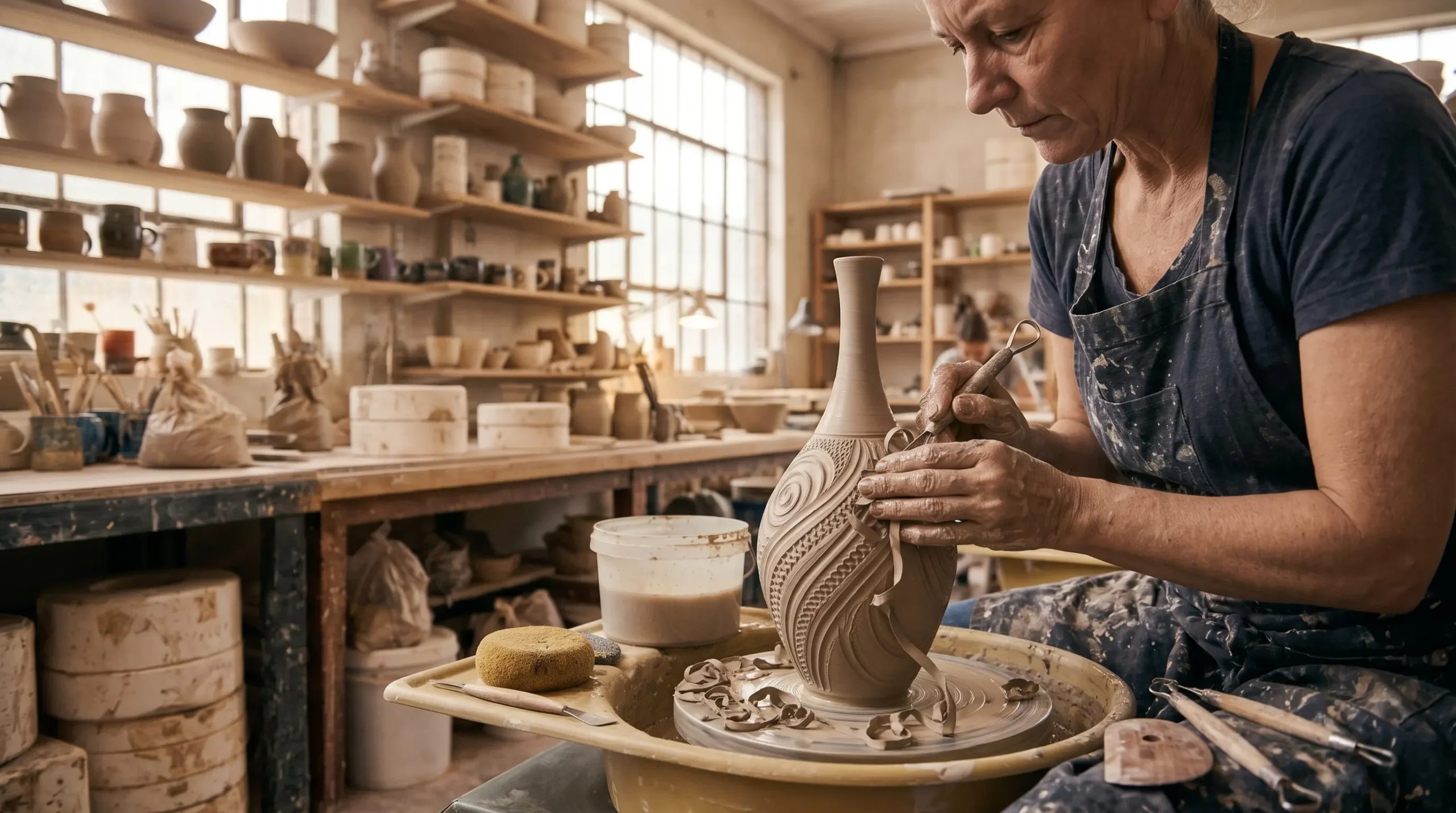
Continuing & Advanced Ceramic Courses
Students with foundational experience can focus on refining technique, troubleshooting, surface design, and more specialized processes. Prerequisites vary by workshop.
More advanced ceramic courses may assume familiarity with basic studio procedures and clay handling.
How the Ceramic-Making Process Works
Unlike some craft projects, ceramics are rarely finished the moment you stop shaping them. Clay must move through several stages before it becomes completed ceramic work.

1. Form the Clay
The first step is creating the form while the clay is workable. Handbuilding techniques such as slab, coil, and pinch construction allow students to shape the material directly. The piece must be built carefully enough to survive drying and firing.

2. Let the Piece Dry
Newly formed clay contains moisture. That moisture must leave the piece gradually before it can be safely fired. Drying too quickly or unevenly can contribute to cracking, warping, or other problems, which is one reason ceramics require patience between studio sessions.

3. Bisque Firing
After the piece is thoroughly dry, it can undergo its first kiln firing. This initial firing hardens the clay and prepares the piece for glazing or additional surface treatment. At this stage, the work is ceramic but has not necessarily reached its final appearance.

4. Glaze or Decorate
After bisque firing, applicable pieces can receive glaze, color, pattern, or texture. Students interested in ceramic painting may also learn how decorative choices change after exposure to kiln temperatures.

5. Final Firing
The decorated piece is returned to the kiln. Heat causes further physical and chemical changes in both the clay and glaze, producing the final ceramic surface. Brookfield Craft Center works with both low-fire and high-fire ceramic processes, giving students exposure to different clay bodies and firing approaches depending on the class.
Inside the Brookfield Craft Center Clay Studio
The Brookfield Craft Center ceramic studio provides dedicated space for forming, glazing, firing, and related clay processes. Students can work with equipment that may be difficult to maintain at home.
The Center supports both high-fire and low-fire methods. This gives students exposure to different approaches within ceramics while receiving guidance on preparation, construction, and surface application.
Ceramic Classes for Kids & Teens
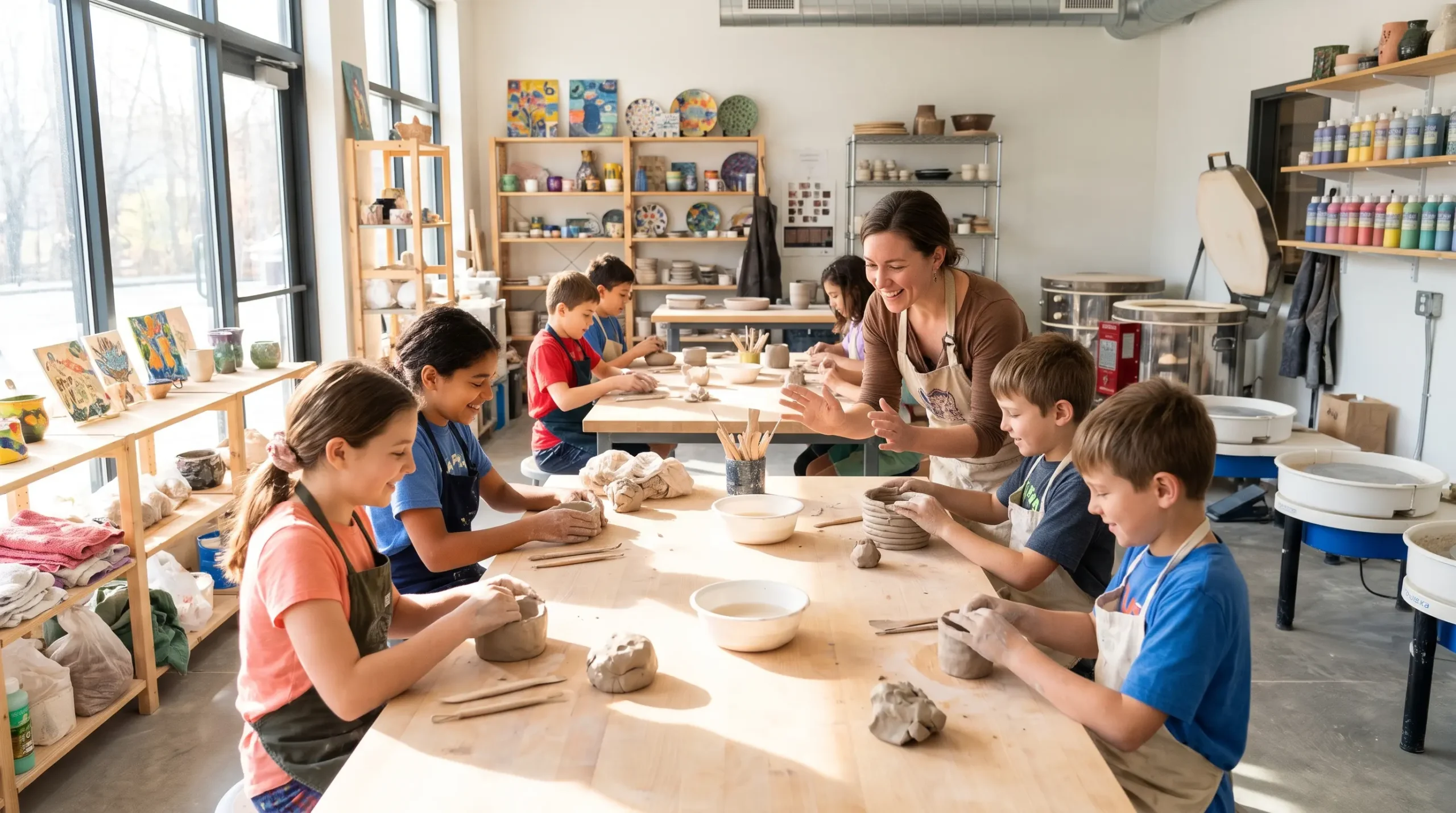
Brookfield Craft Center also offers youth clay programs that may include handbuilding, decoration, wheel work, and other age-appropriate techniques. Classes can be offered through after-school, seasonal, school-break, and summer programs. Families coming from New Milford should review current age requirements and class details before registering.
Continue Practicing With Clay Open Studio
Eligible students and members can use monitored Clay Open Studio sessions for independent practice. Participants may continue class projects, refine techniques, or develop their own ceramic work. Because Open Studio is not designed for regular instruction, students should confirm eligibility and availability before attending.
Taking Ceramic Classes Near New Milford
Brookfield Craft Center is located at 286 Whisconier Road in Brookfield, south of New Milford and near the Route 7 corridor. The location makes one-time workshops and recurring instruction accessible for area students.
For people comparing ceramic places nearby, the campus provides access to dedicated clay facilities without requiring a home setup. Brookfield Craft Center also offers programs in wood, metal, glass, jewelry, fiber, and other crafts.
Frequently Asked Questions
How long is a typical ceramic class session?
Class length can vary depending on the course or workshop format. Students should check the individual listing for the scheduled start time, end time, and number of sessions.
Are ceramic class sizes limited?
Class capacity may depend on the studio setup, instructor, and type of project being taught. Checking current availability before registering can help determine whether space remains in a particular session.
Can I visit the Clay Studio before signing up?
Visitor access may depend on current classes, events, and studio activity. Anyone who would like to see the facility before enrolling should contact Brookfield Craft Center for current visiting information.
Are evening or weekend ceramic classes available near New Milford?
Class days and times can change throughout the year. Prospective students should review the current schedule to see whether evening, weekend, or other time slots are available.
Can finished ceramic pieces be shipped or do they need to be picked up?
Arrangements for completed work may vary by class and project. Students who cannot easily return to the Center should ask about current pickup or delivery options before enrolling.
Explore Ceramic Classes Near New Milford
Learning ceramics gives students a chance to understand clay from construction through firing. Brookfield Craft Center provides direct studio experience for people who want to build skills over time.
Students interested in ceramic painting can explore applicable surface-decoration techniques as part of scheduled instruction. Review the current schedule to find an option that matches your interests and experience level.