Chris Doherty
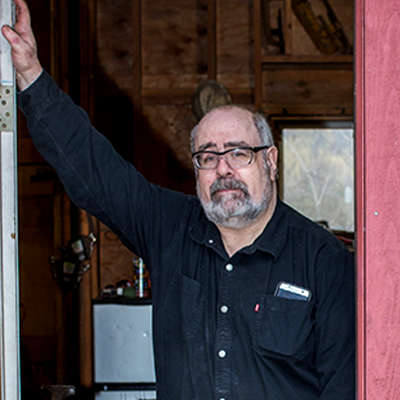
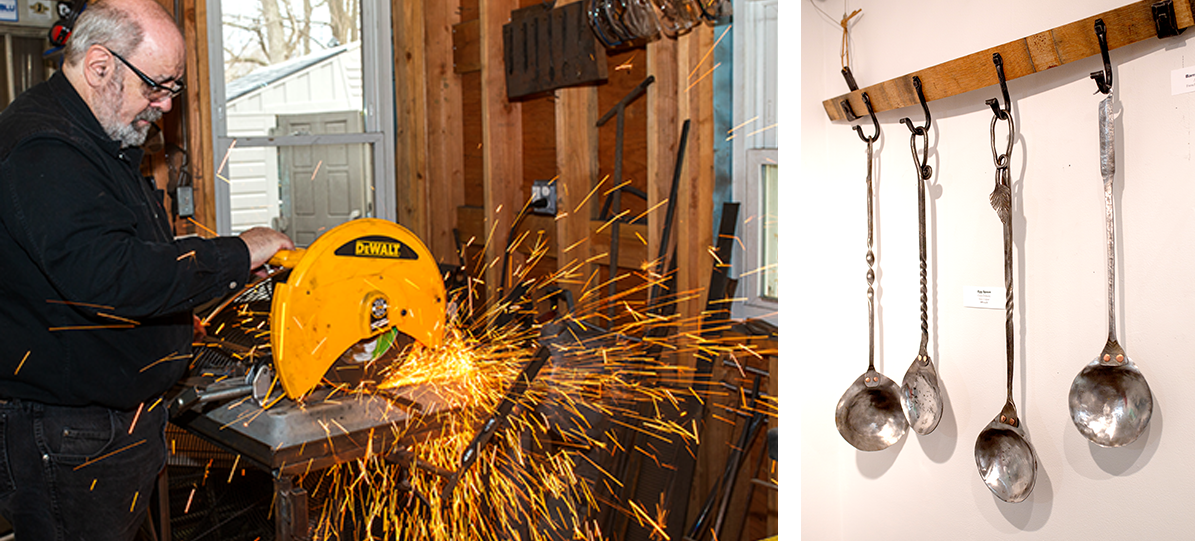
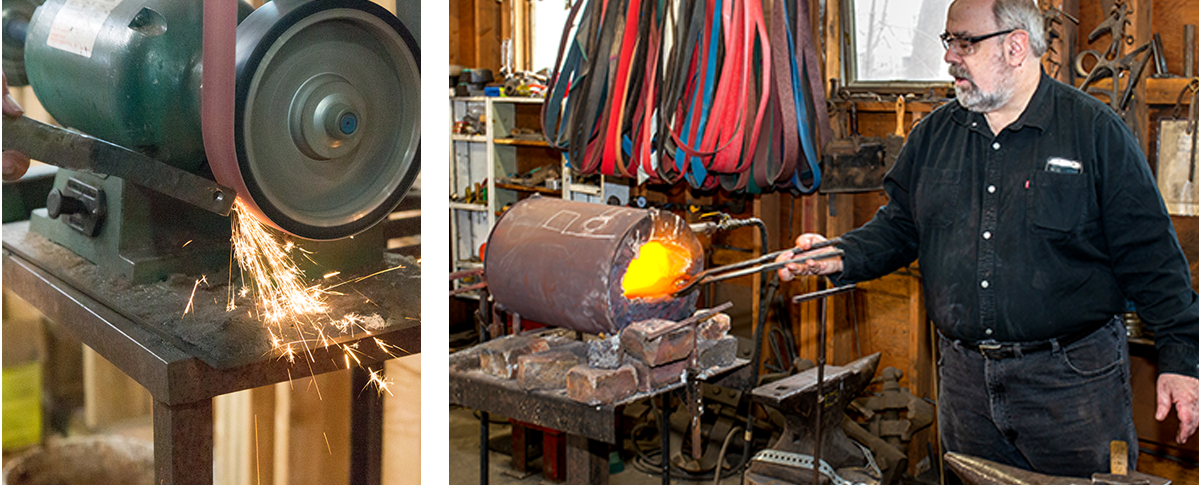
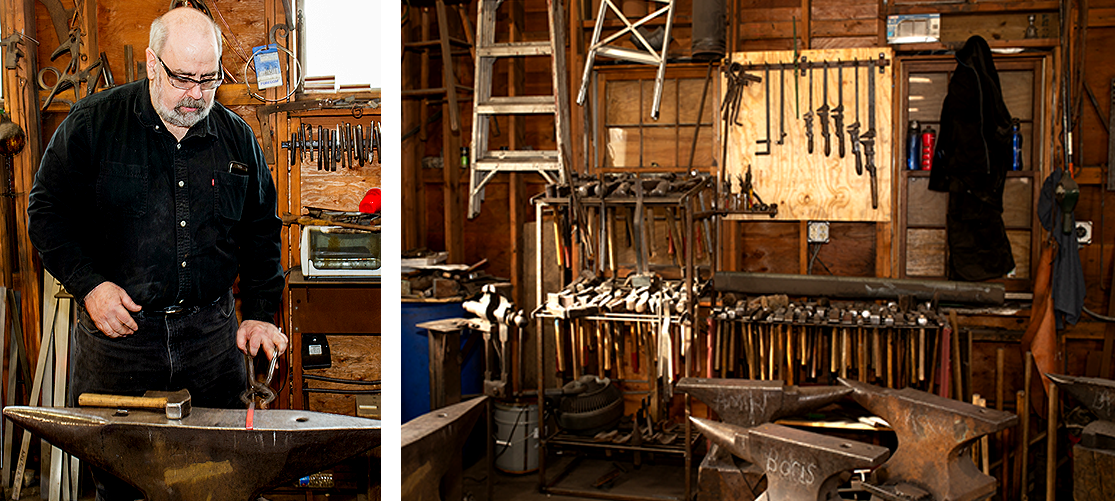
Chris got hooked on blacksmithing after taking a class at Brookfield Craft Center in the 1990s, when instructors still dragged a forge and anvil out onto the lawn — he even ended up on local TV news quenching a coal rake for no particular reason. From there he learned through classes, regular practice, blacksmithing group meetings, books, and a summer assistantship at Peter’s Valley. He’s since become deeply woven into BCC itself: supervising Open Forge nights, building up the forge facility, recruiting faculty, teaching, serving on committees, curating exhibitions, and generally sweeping the shop a lot — work the New York Times recognized in a piece on him becoming a “21st Century Blacksmith.”
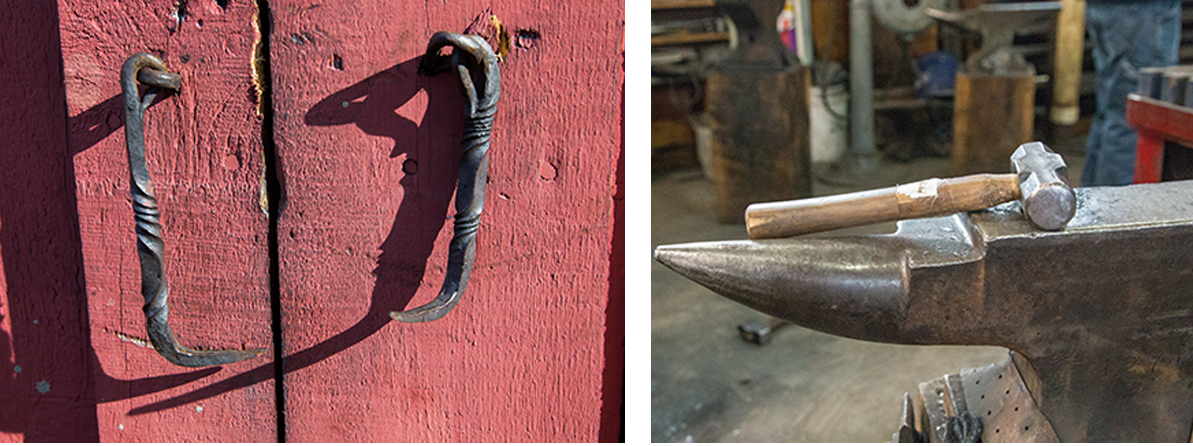
As for why he does it, Chris jokes that between the fame, adoring women, and restaurant tables, it’s hard to say — but really it comes down to the itch to make something out of nothing with fire and heavy hammers. He loves the physical poetry of the craft: the look of a new steel bar, the stress lines that form when bending it red-hot, the smell of coal, the ring of the hammer, and the moment sunlight catches a polished blade. He’s skeptical of pretentious artist statements full of jargon, preferring plain honesty about what draws him to the work.
For Chris, the most challenging piece is always the next one — the one he hasn’t figured out yet. And what matters most to him about sharing his work is simple: it’s satisfying when people find it useful or beautiful, when they’re too polite to mention the flaws, and especially when a piece has something to say and people actually pick up on it.