What’s In This Guide
- What Can You Make in a Beginner Blacksmithing Class?
- 4 Blacksmithing Projects for Beginners and the Skills They Teach
- What Foundational Skills Will You Practice?
- How a Beginner Forge Project Comes Together
- Short Sampler or Weekend Workshop: What Changes?
- Do You Keep What You Make During a Blacksmith Class?
- What Should You Check Before Booking?
- Why Finished Results Differ
- Forge Safety Comes Before the Take-Home Project
- Frequently Asked Questions
- Start Your Blacksmith Experience in Brookfield, CT
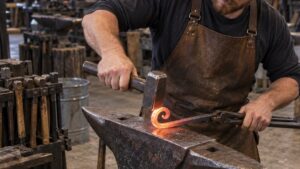
Most beginner blacksmithing classes guide students through small projects such as hooks, utensils, decorative leaves, fire tools, or other functional objects. Students can often take completed work home. However, the exact project, number of pieces, finishing process, and take-home policy depend on the workshop.
A short sampler may introduce forge work through one manageable object. A full-weekend workshop may provide more time to practice hammer control, heat management, shaping, and finishing. The individual class listing remains the most reliable source for details about what participants will make and whether they can take the finished work home.
Quick Facts
- Beginner projects often include hooks, utensils, decorative forms, and small functional objects.
- Every project develops a different combination of tapering, bending, twisting, punching, and hammer control.
- Students can often keep completed work, but take-home policies vary by workshop.
- Class length, project complexity, instructor approach, and individual pace affect the final result.
- Hammer marks and slight variations are normal features of a first hand-forged object.
What Can You Make in a Beginner Blacksmithing Class?
Beginner projects are kept small for practical reasons. A compact object allows students to repeat the essential cycle of heating, positioning, hammering, inspecting, and reheating without having to manage a large or unwieldy piece of steel. This format provides a clear objective while allowing instructors to emphasize safe movement around the forge and anvil.
Workshop formats vary, from three- or four-hour introductory samplers to more intensive weekend sessions. Class sizes may also differ, with many workshops accommodating four to eight students. One class may focus on a single hook or decorative object, while another may involve several pieces or a multistage project. Review the specific workshop description rather than assuming every beginner class follows the same format.
4 Blacksmithing Projects for Beginners and the Skills They Teach
-
Hooks and Simple Hangers
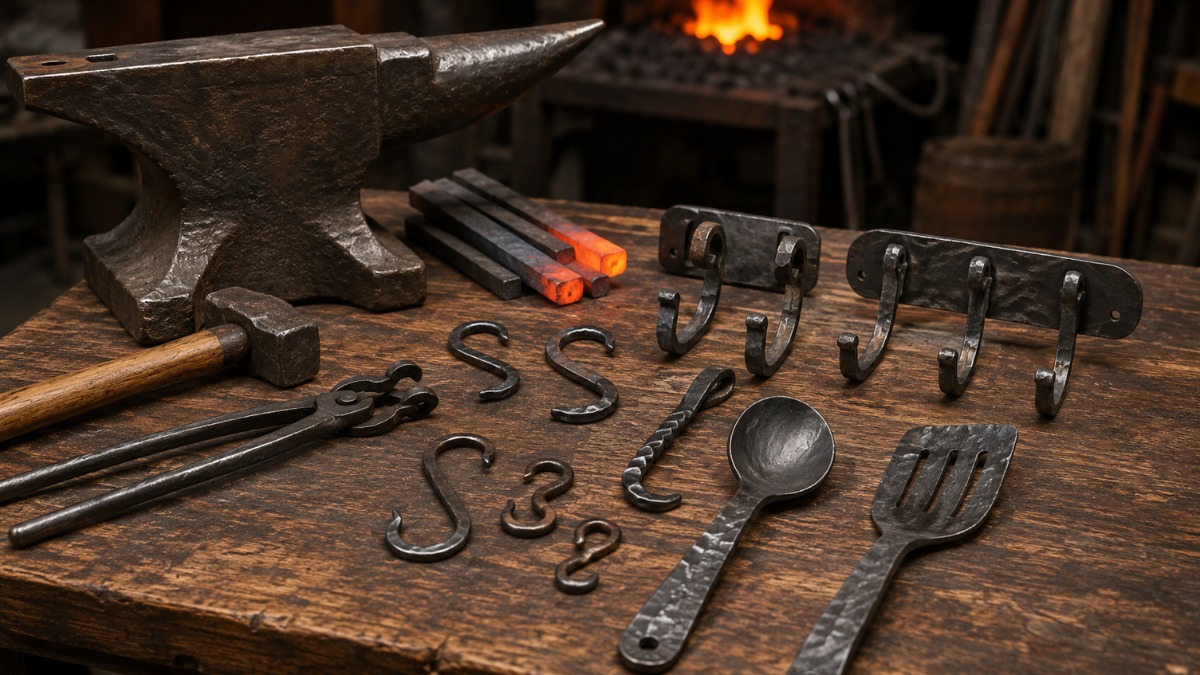
Hooks are popular first projects because a short steel bar can introduce several essential forging techniques. A student may taper one end, bend the steel over the anvil, form a scroll, add a twist, or punch a mounting hole. Making a hook also reinforces controlled hammering because striking too hard can flatten one area too quickly or move the metal off-center.
-
Utensils and Fire Tools
Spoons, forks, fire pokers, and similar tools connect forging techniques to an obvious function. A student might flatten one section, taper another, bend a handle, or texture the surface. Longer pieces also teach how to support and rotate the work.
These projects help students understand proportion and balance. A utensil should feel comfortable and reasonably balanced in the hand, while a fire poker needs both an effective working end and a practical handle.
-
Leaves and Decorative Forms
A forged leaf often begins with a taper. The student flattens part of the metal, develops the outline, adds vein-like texture, and curves the form while it remains workable. The stem may receive a gentle twist or bend.
Decorative projects allow more visual freedom than objects with exact working dimensions. Two leaves can follow the same demonstration yet differ in width, texture, or curvature.
-
Small Functional Objects
Some beginner blacksmith classes focus on bottle openers, key fobs, brackets, simple latches, or other compact objects. The design may also incorporate an opening created through punching and refined through drifting.
What Foundational Skills Will You Practice?
Hammer Control
Hammer control means placing each blow where it will move the metal toward the intended shape. Beginners learn that accuracy, rhythm, and body position matter more than maximum force. They strike consistently while watching how the steel responds.
Tapering and Drawing Out
Tapering narrows the end of a bar. Drawing out makes a section longer and thinner. Hooks, leaves, handles, and decorative points often use these skills. Students rotate the stock so the taper stays even.
Bending and Twisting
Bending changes the direction of the bar, while twisting rotates a heated section around its axis. Both techniques require careful control of the heated area. If too much of the bar becomes workable, the bend or twist may extend beyond the intended section.
Punching and Drifting
Punching creates an opening by driving a tool through hot metal. Drifting refines or enlarges that opening. Not every beginner workshop includes these techniques, but they may appear in hangers, bottle openers, or simple hardware.
How a Beginner Forge Project Comes Together
- Review the project, tools, and safety instructions before beginning.
- Heat the steel only as the instructor demonstrates.
- Shape one section at a time with controlled hammer blows.
- Reheat as needed, then bend, twist, punch, or texture the metal.
- Complete any surface finishing permitted during the workshop, and wait for the instructor to confirm that the piece is safe to handle.
This sequence usually repeats several times. As the steel loses workable heat, beginners learn to stop hammering, inspect the piece, and return it to the forge. A short class may simplify certain stages, while a longer workshop may provide more time for corrections and finishing.
Short Sampler or Weekend Workshop: What Changes?
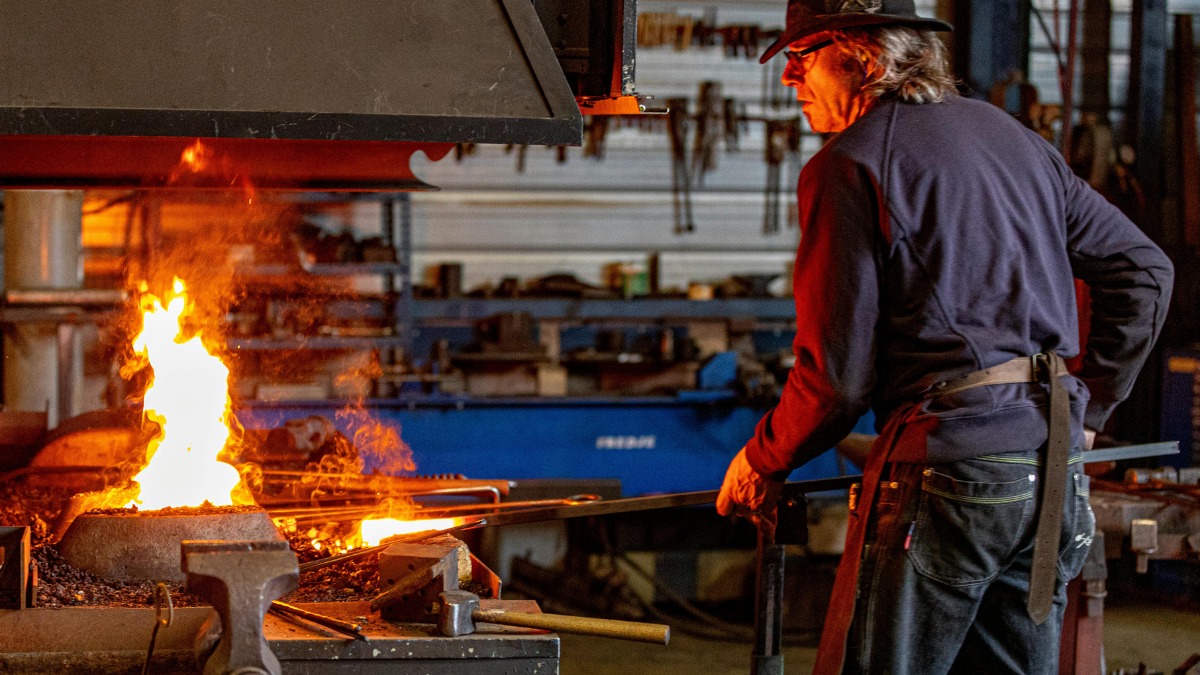
A short sampler usually provides a focused introduction. The instructor may select a project with fewer stages so students can experience heating, hammering, and shaping within several hours.
A weekend workshop creates more room for repetition and refinement. Students may practice multiple tapers, bends, or decorative treatments before completing the main project. They may also have more time to correct alignment or discuss why a technique produced a particular result. Those interested in progressing beyond introductory projects can continue developing these techniques through a structured blacksmithing curriculum that builds on core forging methods across multiple skill levels.
Neither format guarantees more take-home pieces. One detailed object can require more time than several simple exercises. The project description should explain the intended outcome.
Do You Keep What You Make During a Blacksmith Class?
Often, yes, but students should not assume that every exercise will become a take-home project. One class may center on a finished object that students can keep, while another may include practice stock, instructor demonstrations, unfinished exercises, or pieces that require additional cooling or finishing.
Before registering, review the listing for the featured project, included materials, expected number of pieces, additional fees, and take-home policy. If the description does not provide this information, contact the registrar. The class listing and the instructor’s directions take priority over general online guidance.
A piece may remain at the forge temporarily if it is too hot to handle or needs another finishing step. Wait for the instructor to confirm when an object is safe and ready to remove.
What Should You Check Before Booking?
- Project: Look for a named object, example image, or description of the expected result.
- Experience level: Confirm that the workshop welcomes complete beginners.
- Format: Compare the session length and number of meeting days.
- Materials: Review what the registration fee includes and whether any additional materials fee applies.
- Take-home details: Look for a direct statement about completed work.
- Requirements: Check age limits, clothing instructions, prerequisites, and any tools students must bring.
These details help set realistic expectations and prevent a short introductory workshop from being mistaken for a comprehensive blacksmithing course.
Why Finished Results Differ
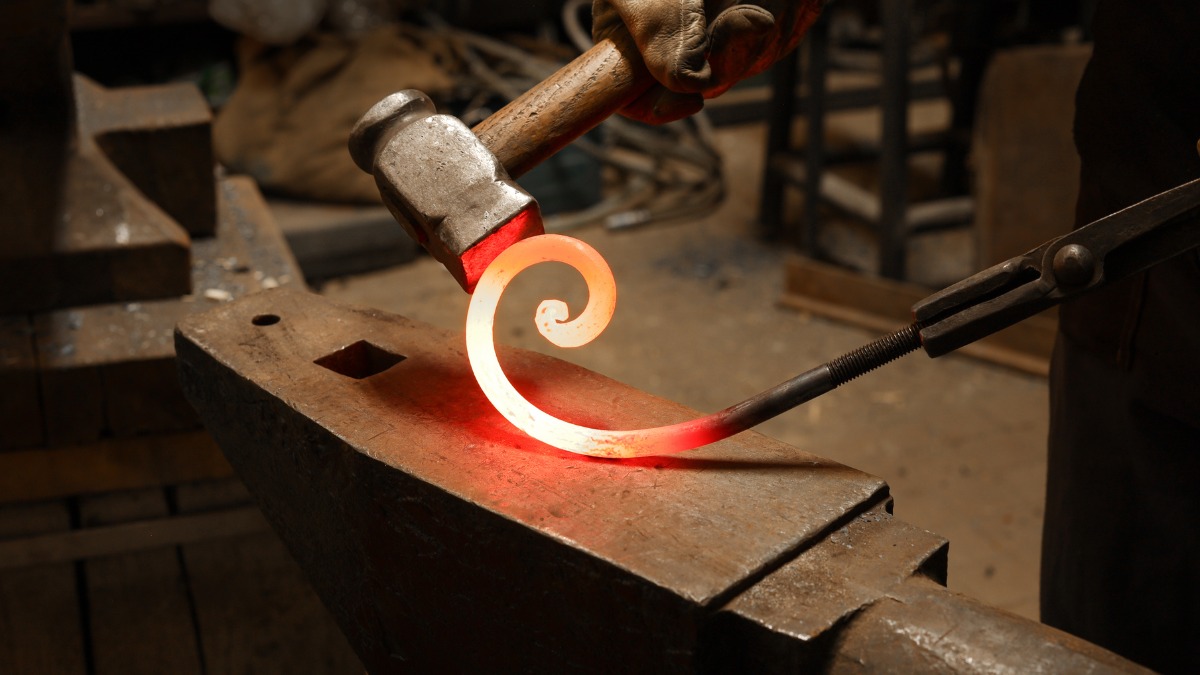
Blacksmithing results depend on timing, temperature, force, hammer angle, and tool placement. Two beginners can follow the same demonstration yet produce different curves, textures, or proportions, and one student may require more reheating cycles than another.
Project outcomes also reflect the workshop’s pace and learning goals. An instructor may prioritize safe technique and controlled movement over surface polish. A class may complete fewer objects so students can repeat a difficult operation.
A first project does not need factory-level symmetry to be successful. A strong beginner result demonstrates improving hammer control, a better understanding of heat management, safe tool use, and visible evidence of the student’s individual work.
Forge Safety Comes Before the Take-Home Project
Hot metal, scale, sparks, and forging tools require constant attention. Follow the instructor’s requirements for clothing, protective equipment, movement, and tool use. Additionally, federal workplace guidance emphasizes appropriate eye and face protection when working around hazards such as flying particles, molten metal, and potentially injurious light radiation.
Never touch metal based only on how it looks. Wait for the instructor to confirm when a piece is safe to handle. Do not operate a forge, grinder, power tool, or unfamiliar hand tool without instruction. Workshop-specific requirements always take priority over general online advice.
Frequently Asked Questions
Can complete beginners take a blacksmithing class?
Yes. Brookfield Craft Center offers forge workshops for absolute beginners and experienced students. Choose a listing labeled for beginners or all levels, then review its age and prerequisite requirements.
How many objects will I make?
It varies. A short blacksmith experience may focus on one manageable object. A longer workshop may allow several exercises, multiple pieces, or one detailed project. The class listing provides the best estimate.
What if I do not finish my project?
Ask the instructor what the workshop allows. Some pieces can go home in their current state. Others may require additional finishing, cooling, or work during another eligible session. Do not remove an unfinished object without permission.
Will my project match the instructor’s example?
Probably not exactly, and that is normal. Hand-forged objects reflect differences in hammer control, heat management, and design choices. An example shows the intended project or process, not a guaranteed duplicate.
Do beginner blacksmith classes teach every basic technique?
No. One class may emphasize tapering and bending, while another adds twisting, punching, or texture. A beginner workshop introduces selected skills through its project. It does not replace a full progressive curriculum.
What should I wear to a forge class?
Follow the exact clothing and protective equipment instructions in the class listing. Requirements can differ by studio and activity. If any instruction is unclear, contact the registrar before the workshop rather than relying on a generic checklist.
Start Your Blacksmith Experience in Brookfield, CT
Ready to try blacksmithing? Whether you are looking for a short introductory sampler or a more in-depth weekend workshop, Brookfield Craft Center offers hands-on forge classes for beginners.
Each workshop is different, so review the specific class listing for details about the project, required experience level, prerequisites, and take-home policy.