What’s in This Guide
- How to Make Stained Glass: The Steps Every Project Shares
- Copper Foil Stained Glass: How the Method Works
- Lead Came Stained Glass: The Traditional Method
- Copper Foil vs. Lead Came: A Quick Comparison
- Stained Glass for Beginners: Choosing Your First Method
- Stained Glass Safety: What to Know About Lead, Solder, and Glass
- Frequently Asked Questions
- Ready to Make Your First Piece?
Hold a piece of stained glass up to a window and the whole room shifts. Color spills across the floor, and a flat sheet of glass starts to look like a slice of sky. Learning how to make stained glass lets you build that effect yourself, one carefully cut piece at a time.
Two methods do most of the work. Lead came to hold glass in grooved metal strips, the way many traditional church windows were built. Copper foil stained glass wraps the edge of each piece in thin adhesive tape and joins everything with solder.
Both start with the same core skills, and both are within reach for anyone with patience and a willing pair of hands.
Quick Facts
- Every stained glass project follows the same arc: pattern, cutting, grinding, joining, soldering, and finishing.
- Copper foil suits detail. It handles small pieces, tight curves, and three-dimensional forms.
- Lead came suits tradition. It creates bold outlines and works well for larger panels with simple shapes.
- Stained glass for beginners works best with guidance. An instructor can spot a cutting or fitting problem as it happens.
- Solder and came often contain lead, so clean work habits and studio instruction matter.
How to Make Stained Glass: The Steps Every Project Shares
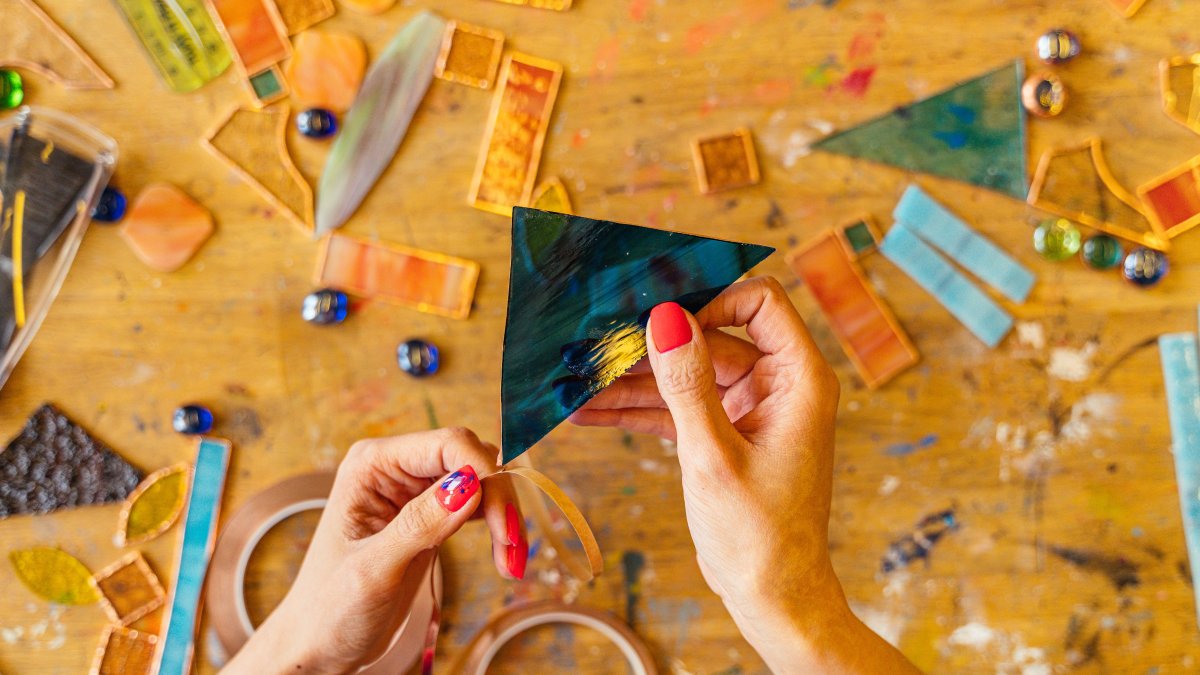
The joining method changes from project to project, but the path around it stays remarkably consistent.
- Choose or draw a pattern. Beginners usually start with large shapes, gentle curves, and few tight corners. Each shape in the pattern becomes a guide for one cut, so the drawing acts as a map for everything that follows.
- Cut the glass. The maker scores the surface with a glass cutter, then applies gentle pressure to break the glass along that line. Clean scoring takes practice, and a few scrap pieces are a normal part of learning.
- Grind the edges. A grinder smooths sharp edges and fine-tunes each piece so it fits the pattern. Tight, even seams make every later step easier.
- Join the pieces. This is where the two methods split. Copper foil wraps each edge in tape. Lead came slides each piece into a grooved metal strip.
- Solder the seams. Heat from a soldering iron melts solder along the joints and locks the pieces into one panel. Makers apply flux first, a cleaning agent that helps solder flow and stick to the metal.
- Finish and clean. Makers remove flux residue, sometimes add a patina to darken the solder lines, and prepare the piece for hanging or display.
Copper Foil Stained Glass: How the Method Works
Wrap Each Edge in Foil
Copper foil stained glass takes its name from a thin copper tape with an adhesive back. The maker wraps it around the edge of every glass piece and presses it flat.
Flux and Solder the Seams
Flux goes on first, then a bead of solder runs over the foil. The solder bonds to the copper, and separate pieces become a single panel. Makers who enjoy this step often try metal next, where silversmithing for beginners, from tools to a soldered ring relies on the same steady heat.
Build on an American Technique
The copper foil method took shape in the United States in the late 1800s, and the famous studios of that era used it to create lamps and windows with remarkable detail.
Work in Small, Detailed Pieces
Thin solder lines allow small pieces, sharp curves, and dimensional shapes, which makes copper foil the go-to for suncatchers, ornaments, and lamps. The tradeoff is precision, since gaps between pieces show.
Lead Came Stained Glass: The Traditional Method
Set the Glass in Grooved Strips
Came is a grooved strip, often H-shaped, that cradles the edges of each glass piece, while borders use a U-shaped channel. The maker cuts each strip to length and slides the glass into place.
Solder the Joints and Seal the Gaps
Solder joins the strips wherever they meet. Many panels then receive a cement or putty brushed between glass and metal, which helps seal and stiffen the window.
Choose It for Bold, Larger Panels
Came has framed windows in churches and homes for centuries, and it suits larger panels with flowing lines. The metal becomes part of the design, outlining every color. Lead is the traditional material, though came is also made from zinc, brass, and copper.
Copper Foil vs. Lead Came: A Quick Comparison
|
|
Copper Foil |
Lead Came |
|
Look |
Thin, delicate solder lines |
Bolder, defined metal outlines |
|
Best for |
Small pieces, fine detail, 3D forms |
Larger panels, simple shapes, gentle curves |
|
How glass is held |
Foil-wrapped edges joined with solder |
Edges set into grooved metal channels |
|
Level of detail |
High |
Moderate |
|
Materials to ask about |
Foil, flux, solder, patina |
Came, solder, cement or putty |
Neither method is better in every situation. The right choice depends on the look you want and the scale of the project.
Stained Glass for Beginners: Choosing Your First Method
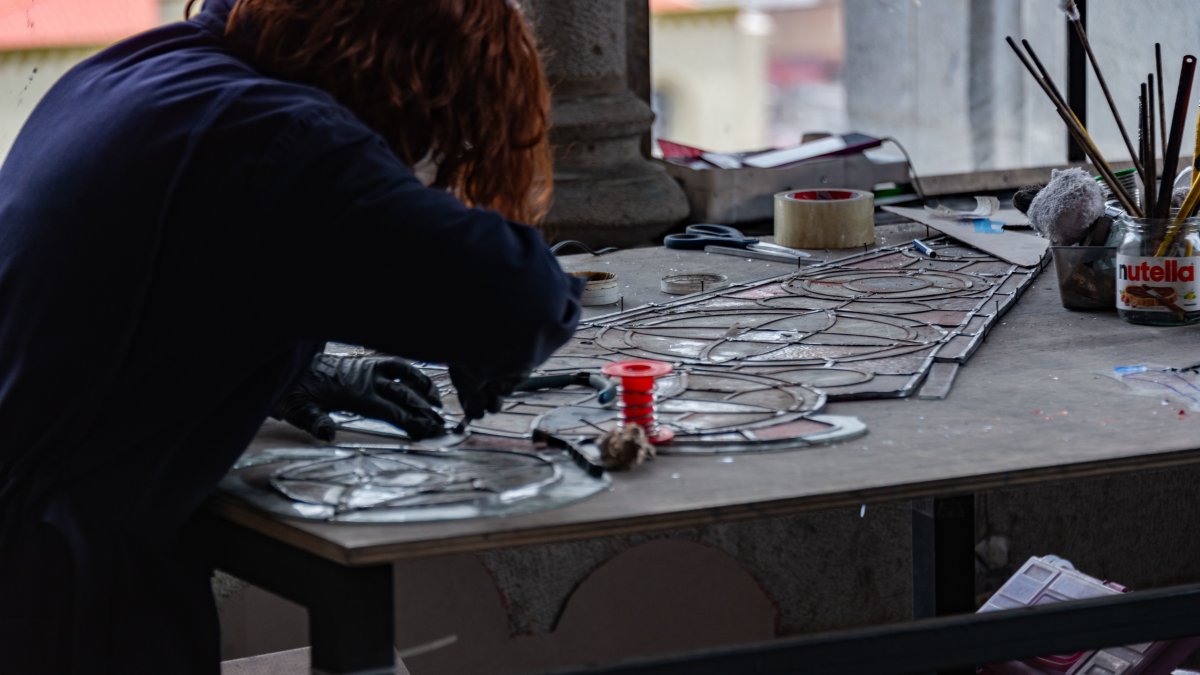
Stained glass for beginners comes down to a handful of practical decisions. Weigh each factor below and the right starting point usually becomes clear.
The Pattern You Want to Make
Start with large pieces, soft curves, and few tight corners. Simple shapes are easier to cut and fit, and they leave room to focus on technique instead of troubleshooting. A pattern with delicate points and small pieces can wait until your cutting feels steady.
The Look You Picture
Copper foil stained glass produces thin, delicate solder lines, which suits small, detailed pieces and dimensional forms. Lead came creates bolder metal outlines and a classic window look. Picture the finished piece first, then let that image point you toward a method.
How Much Cutting Practice You Expect to Need
Cutting takes the most practice in either method. Scoring and breaking glass cleanly is a skill that develops over time, so a few scrap pieces are a normal part of the process. Pick a first project that forgives small mistakes.
Access to In-Person Instruction
A video can show a score line, but it cannot tell you why your break wandered or why a seam looks loose. Stained glass classes may cover cutting, grinding, copper foil, and soldering, and introductory classes welcome students with little or no experience.
The Class Format That Fits Your Schedule
Sampler workshops offer a short, focused introduction to one technique, which works well for a first taste of the craft and for craft experience gifts for makers and curious beginners. Weekend workshops give more time to practice and work through multi-stage projects. Techniques differ from class to class, so the course listing is the best source for what a specific session covers.
Stained Glass Safety: What to Know About Lead, Solder, and Glass
Stained glass involves sharp glass, a hot soldering iron, and metals that deserve respect. The details below are general education and do not replace instruction from a qualified teacher or the safety data sheets for the materials in use.
Lead is the main concern. The Occupational Safety and Health Administration lists soldering among the common jobs with lead exposure and warns that lead can travel home on hands, hair, clothing, and shoes.
Researchers at the National Institute for Occupational Safety and Health have also evaluated lead exposure inside a working stained-glass studio, a reminder that good habits matter even in small workshops.
The CDC notes that children younger than 6 years are especially vulnerable to lead, and its lead prevention resources explain why.
Studios commonly address this with a few steady habits:
- Wash hands thoroughly after handling solder, came, or glass, and before eating or touching the face.
- Keep food and drink out of the work area.
- Clean surfaces with damp wipes rather than dry sweeping.
- Wear eye protection during cutting, grinding, and soldering.
- Ask about materials. Lead-free solders exist, and an instructor can explain what a class uses and why.
Grinding also produces fine glass dust, which is why studios rely on water and ventilation. OSHA’s overview of respirable crystalline silica explains how dust control protects people who work with glass and clay. Anyone with questions about lead exposure should talk with a doctor.
Frequently Asked Questions
What type of glass is used to make stained glass?
Stained glass uses colored sheet glass, available in transparent, opalescent, and textured varieties. Each type changes how light moves through the finished piece, so the look you want helps guide the choice, whether the project uses copper foil or lead came.
Do I need my own tools to take a stained glass class for beginners?
Not necessarily. Introductory classes begin with an orientation to the studio tools, and the course listing explains what is included or what to bring.
Can children and teens learn how to make stained glass?
Glass instruction for younger students is generally offered through Brookfield Craft Center’s seasonal Summer Youth Program rather than as a standing weekly class. Check the current youth program listings for availability and age requirements. Families weighing other crafts for kids sometimes start with children’s pottery classes near Brookfield for young makers.
Can I practice stained glass outside of class?
Open Studio offers eligible students and members monitored time to work independently. Eligibility requirements apply and can change, so review the current details before planning a visit. Choosing between structured classes and independent studio time is a familiar question in clay too, where pottery class vs open studio and which fits you depends on experience.
What is the difference between stained glass and fused glass?
Fused glass is made by arranging compatible pieces of glass and firing them in a kiln until they bond, sometimes followed by slumping over a mold. Stained glass relies on cutting, joining, and soldering instead, so each craft has its own tools and classes. Hot glass adds more distinctions, including glass blowing vs flameworking and how the crafts differ.
Ready to Make Your First Piece?
Curious about how to make stained glass? Come cut, wrap, and solder your first piece with us. Our Glass Studio offers stained glass instruction alongside lampworking and fused glass, with dates, formats, and experience levels listed in our current class schedule. Class availability changes, so check the latest listings to find an introductory option that fits.