What’s In This Guide
- What Is Blacksmithing?
- What Is Bladesmithing?
- Blacksmithing vs. Bladesmithing: Where They Differ
- Why Blacksmithing Fundamentals Help Before Blade Work
- Is Blacksmithing or Bladesmithing Better for Beginners?
- How to Choose Your First Class
- What to Expect in a Beginner Class
- Frequently Asked Questions
- Find the Right Class for Your Goals
If you have been comparing local knife-making classes with general blacksmithing courses, you have probably noticed that the two crafts overlap more than expected. Bladesmithing is not entirely separate from blacksmithing. Instead, it is a specialized branch of the broader craft. Both use many of the same tools and techniques, but they lead to different finished projects.
Knowing where the two paths diverge, and where a beginner benefits from starting with broader fundamentals, can make the difference between a frustrating first class and a productive one.
Quick Facts
- Bladesmithing is a specialized branch of blacksmithing focused on forging functional blades.
- Both crafts share core skills like heat control and hammer technique, but blade work adds edge geometry and extra finishing steps.
- Beginners without forge experience often benefit from starting with general blacksmithing fundamentals.
- ABANA provides a structured curriculum for blacksmith education, while the American Bladesmith Society provides education, testing, and certification for bladesmiths.
- Because forging involves fire, hot metal, heavy tools, and potentially sharp edges, safety instruction and appropriate protective equipment are essential in any responsible class.
What Is Blacksmithing?
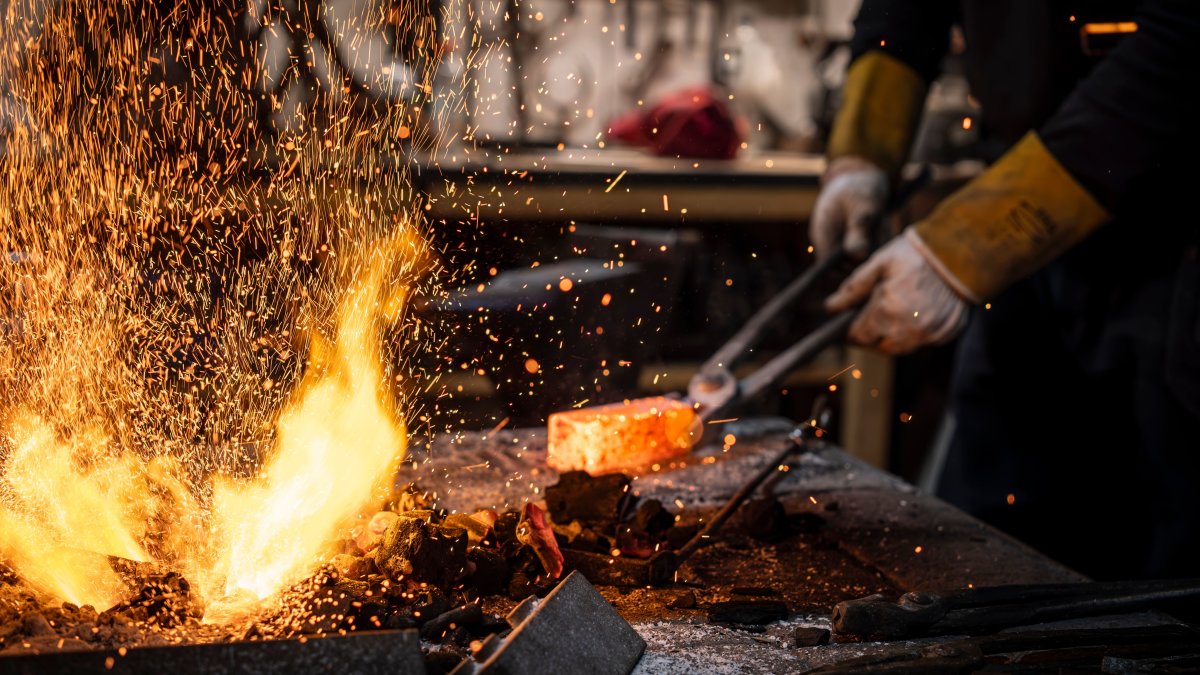
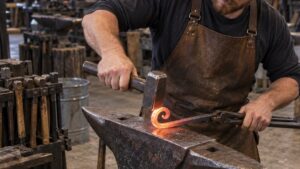
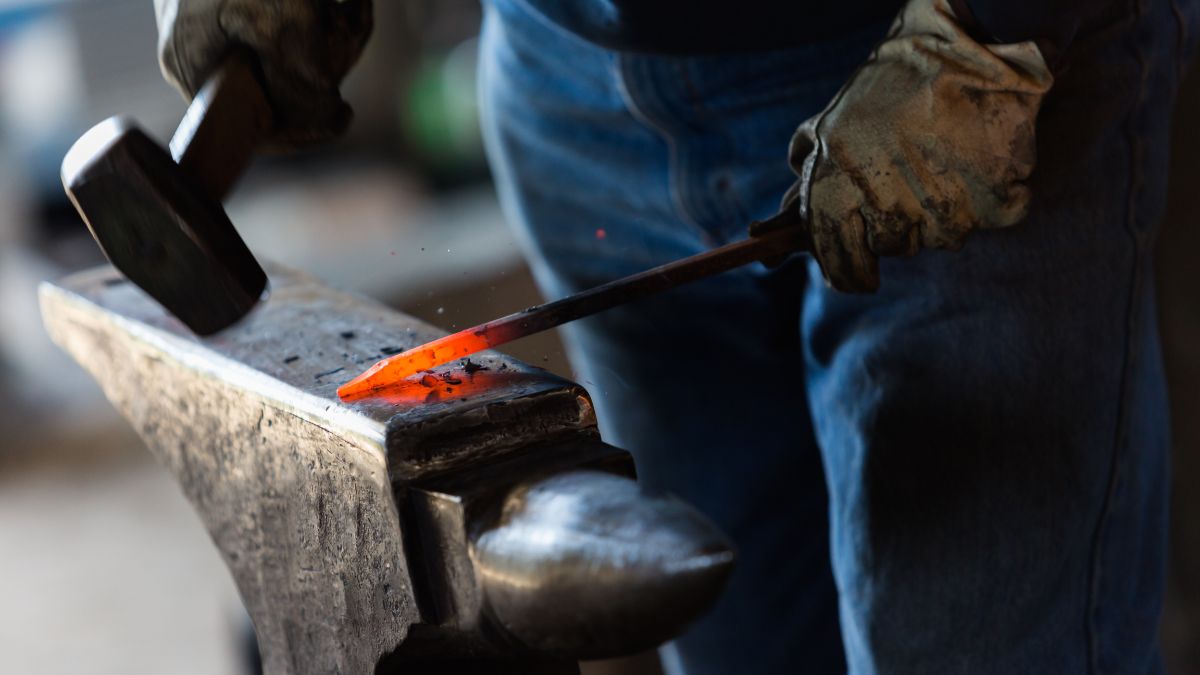
The Artist-Blacksmith’s Association of North America (ABANA) describes a blacksmith as someone who shapes and forges iron with a hammer and anvil, uniting function with aesthetics. Blacksmithing courses generally cover heat control, drawing out metal, punching, bending, and joining. These techniques are used to make hooks, tools, hardware, and decorative ironwork, and they form the foundation on which nearly every forged object, including a knife, depends.
What Is Bladesmithing?
Bladesmithing narrows that same skill set toward a single outcome: a functional, sharp-edged blade. The American Bladesmith Society (ABS) states its mission as preserving and promoting the craft of forged knives through education, testing, and certification.
Earning the Journeyman Smith rating requires candidates to meet the ABS membership eligibility requirements and pass established performance and workmanship tests, while fewer than 200 individuals worldwide hold the organization’s Master Smith rating.
Blacksmithing vs. Bladesmithing: Where They Differ
|
Comparison |
Blacksmithing |
Bladesmithing |
|
Purpose and End Goal |
Produces a wide range of forged items, including hooks, hardware, tools, decorative ironwork, and functional objects. |
Focuses specifically on forging functional blades such as knives, swords, axes, and other edged tools. |
|
Skills You’ll Build |
Develops core forging skills, including fire management, hammer control, drawing out, tapering, bending, twisting, and shaping hot metal. |
Builds on blacksmithing fundamentals while adding blade geometry, bevel grinding, heat treatment, quenching, and tempering. |
|
Finishing Process |
Some beginner blacksmithing projects require relatively limited finishing after forging, such as wire brushing, filing, smoothing rough edges, or applying a protective finish. |
Projects typically involve several post-forging stages, including grinding, heat treatment, tempering, polishing, handle fitting, and sharpening. |
|
Project Time and Complexity |
Beginner projects, such as hooks, bottle openers, or brackets, can often be completed in a single class or workshop. |
Blade projects generally require tighter tolerances, multiple finishing stages, and more time before the finished tool is ready for use. |
Why Blacksmithing Fundamentals Help Before Blade Work
Students with basic blacksmithing experience may adjust more quickly to the demands of blade forging. General blacksmithing practice helps them learn to read the color of heated steel, control hammer blows, maintain an appropriate working temperature, and understand how metal moves under force.
A beginner who has never worked with forging tools may find an introductory blacksmithing class to be a more comfortable starting point before taking a dedicated bladesmithing or knife-forging course.
Is Blacksmithing or Bladesmithing Better for Beginners?
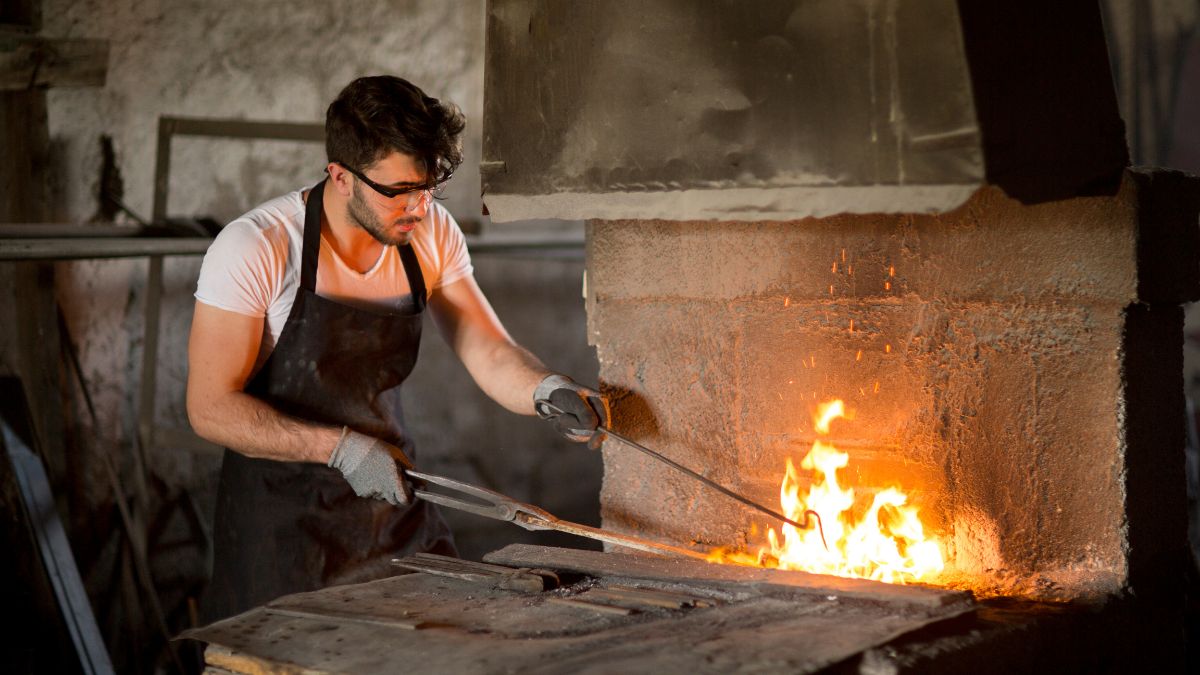
Start With Blacksmithing If…
A general blacksmithing class is often the better choice if you want to build broad, transferable forging skills before specializing. It may be a strong fit if you:
- Have little or no experience working at a forge.
- Want to learn core techniques such as hammer control, tapering, bending, and drawing out.
- Enjoy the idea of making a variety of functional and decorative forged objects.
- Want to explore different types of metalworking before choosing a specialty.
The skills developed in introductory blacksmithing provide a solid foundation for many other forging disciplines, including bladesmithing.
Start With Bladesmithing If…
A beginner bladesmithing class may be the right fit if your goal is specifically to make knives or other edged tools. Consider this path if you:
- Want to focus on blade making from the beginning.
- Are interested in learning bevel formation, heat treatment, and blade geometry.
- Already have some basic forging experience, or the course is clearly labeled as beginner-friendly.
- Prefer working toward one complete knife rather than several introductory forging projects.
You May Be Ready to Skip Straight to Blade Forging If…
Some students can begin with bladesmithing without first taking a general blacksmithing class. This may be appropriate if:
- You’ve previously completed a forge or blacksmithing course.
- You have experience working with hot metal and basic forging tools.
- The instructor confirms that the class is suitable for complete beginners.
- You are comfortable committing more time to the grinding, heat treatment, handle work, and finishing stages that blade projects require.
When comparing metalworking classes near me, always review the course description and prerequisites rather than relying on the class title alone.
There Isn’t a Single “Right” Starting Point
Both blacksmithing and bladesmithing can provide a rewarding introduction to forge work. If you are still undecided, choose the class that most closely matches your preferred projects and current experience level.
Many makers begin with general blacksmithing to develop foundational skills, then transition into bladesmithing once they’re comfortable working at the forge. Others start with a beginner-friendly knife-making class and expand into broader blacksmithing techniques later.
How to Choose Your First Class
1. Define What You Want to Create
Start by thinking about the type of project you want to complete rather than focusing only on the name of the craft. A general blacksmithing class may be the better place to begin if you want to develop broad forging skills that can be applied to hooks, tools, hardware, decorative pieces, and future blade work. A beginner bladesmithing class may be more suitable if your primary goal is to make a knife and the course does not require previous forge experience.
2. Review the Required Experience Level
Not every class is designed for complete beginners. Introductory blacksmithing courses typically teach forge safety, hammer control, and basic shaping techniques from the ground up, while some bladesmithing classes expect students to already be comfortable working at a forge. Reading the course description carefully helps ensure you enroll in a class that matches your current skill level.
3. Understand the Safety Training and Equipment
Working with hot steel, open forges, grinders, and sharp tools requires proper instruction from the start. A reputable program should include a safety orientation covering protective equipment, safe tool handling, and shop procedures before students begin hands-on work. You should also confirm whether safety gear is provided or whether you’ll need to bring your own.
4. Confirm the Project, Materials, and Schedule
Before registering, review exactly what the class includes. Confirm which project you will complete, whether the registration fee covers materials and tool use, how long the session lasts, and whether any finishing work must be completed outside class. These details will help you choose a course that fits your goals, budget, and schedule.
5. Start With Fundamentals if You’re Unsure
If you are undecided between general forging and blade making, beginning with a foundational blacksmithing course is often the most practical choice. The core skills you develop, including hammer control, fire management, and shaping hot steel, transfer directly to more specialized courses. Once you are comfortable at the forge, you will be better prepared to take a blade-forging class with greater confidence.
What to Expect in a Beginner Class
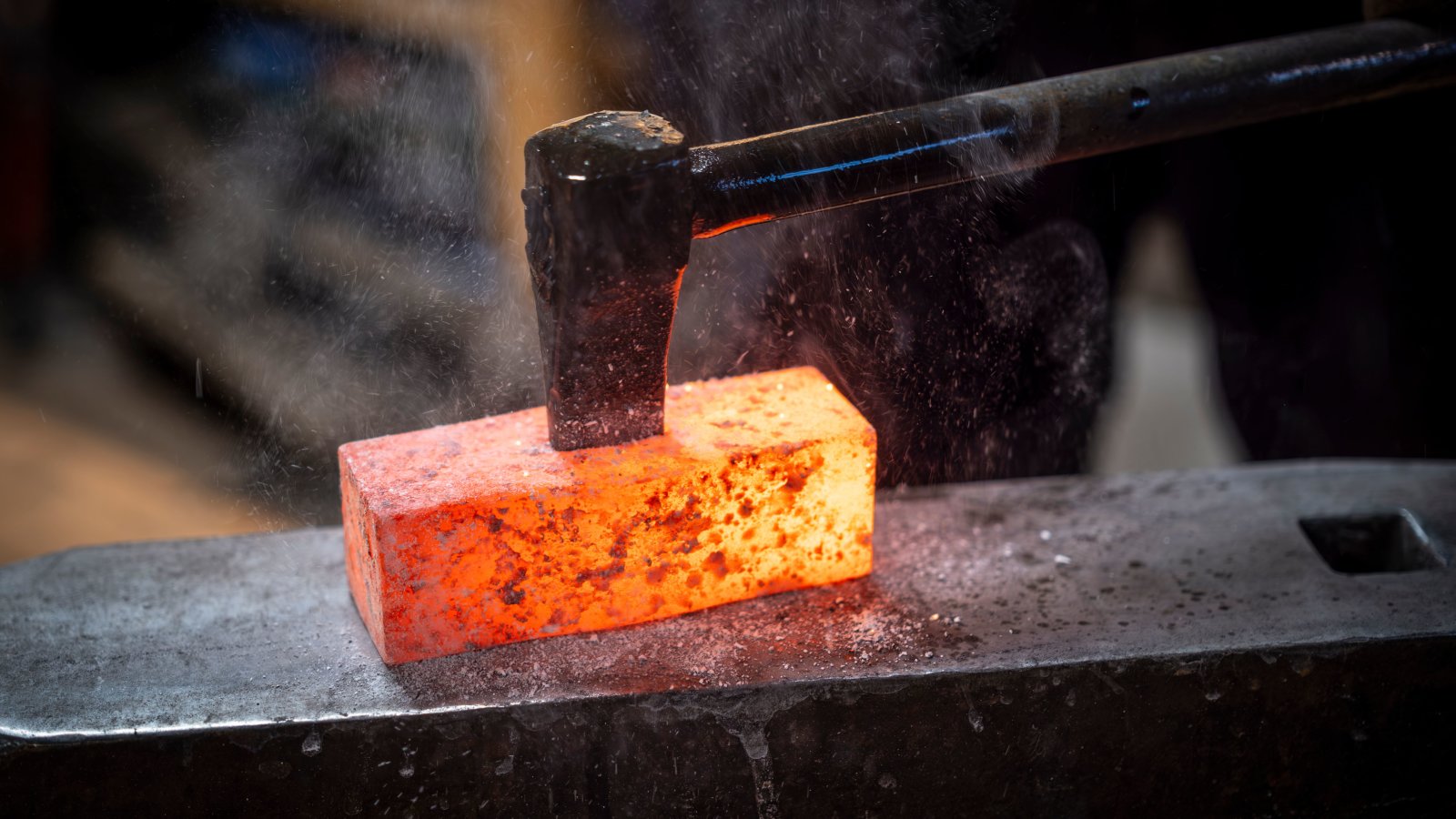
Learn Basic Shop Safety and Tool Handling
Most metalworking classes begin with a safety orientation before students start any hands-on work. You’ll learn how to use tools correctly, understand shop rules, and work safely around heat, sharp edges, and power equipment.
Get Familiar With Essential Tools and Equipment
Instructors typically introduce the main tools used during the class, explain their purpose, and demonstrate safe handling techniques. Depending on the course, these tools may include hammers, tongs, anvils, forges, vises, grinders, files, and other finishing equipment. Beginner instruction should give students time to become familiar with each tool before working independently.
Practice Core Techniques Through Guided Exercises
Rather than immediately beginning a complex project, you will usually spend time practicing foundational skills. These exercises help you develop accuracy, control, and a better understanding of how heated steel responds to hammering, bending, tapering, and other shaping techniques.
Complete a Beginner-Friendly Project
Many introductory classes include a simple project that reinforces the techniques covered during the session. The emphasis is on learning the process and building practical skills, not creating a perfect finished piece.
Receive Individual Instruction and Feedback
Hands-on guidance is an important part of beginner instruction. During the class, instructors may demonstrate techniques, answer questions, observe your work, and offer individual feedback to help you improve your control and correct mistakes safely.
Frequently Asked Questions
Is bladesmithing a type of blacksmithing?
Yes. Bladesmithing is a specialized branch of blacksmithing focused specifically on forging functional blades rather than general ironwork.
Do I need blacksmithing experience before taking a knife-making class?
Not always, but some bladesmithing classes expect students to have basic experience working at a forge. Review the prerequisites in the current course description before registering.
What is the difference between bladesmithing and knife making?
Bladesmithing involves shaping heated steel through forging to create a blade. Knife making is a broader term that can include both forged blades and stock-removal methods, in which a knife profile is cut and ground from a piece of steel without forging it to shape.
How can I find blade forging classes near me?
Check current class listings from local craft centers, metalworking schools, and blacksmithing organizations. Compare the course schedule, experience level, project description, and prerequisites before registering.
Are forge classes safe for beginners?
Forging involves open heat sources, hot metal, heavy tools, sparks, grinders, and potentially sharp edges. Responsible studios provide safety instruction, maintain supervised work areas, and explain which protective equipment students must use. Always follow the instructor’s procedures and wear the required clothing, footwear, eye protection, and other safety gear.
Find the Right Class for Your Goals
Choose a class that matches your interests, experience level, and preferred project. Review Brookfield Craft Center’s current blacksmithing and bladesmithing offerings to compare course requirements, schedules, and availability before registering.