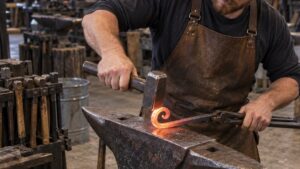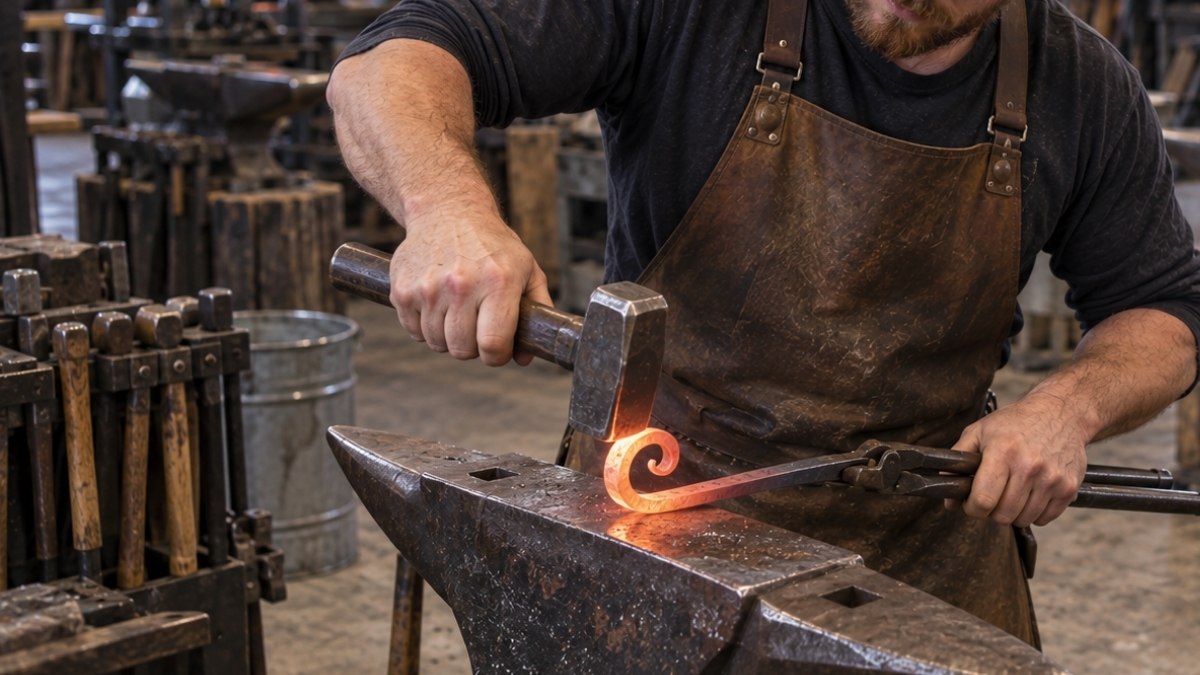
Picture two blacksmiths at their anvils. One is forging a fireplace hook. The other is forging a sculptural gate panel meant to hang in a gallery. Their tools are nearly identical. Their techniques overlap at almost every step. The difference is intent, and that difference is where art blacksmithing begins.
Many people searching for art blacksmithing picture either a colonial-era trade or a competitive reality show. Neither fully captures what the craft looks like today. Art blacksmithing sits at the intersection of utility and expression, and understanding that overlap changes how you see forged metal, whether you are visiting a gallery, planning your first class, or trying to figure out where your own curiosity fits.
Quick Facts
- Art blacksmithing uses the same core techniques as functional forging (drawing out, upsetting, bending, punching) applied toward decorative, architectural, or sculptural outcomes rather than only utilitarian ones.
- The craft has an organized artistic community: the Artist-Blacksmith’s Association of North America (ABANA), founded in 1973, works to preserve, promote, and share blacksmithing skills and design excellence while increasing awareness of blacksmithing as an art and craft.
- Heat control is the technical foundation of expressive work. Steel becomes workable in a specific temperature range, and a smith’s ability to read color and timing shapes how refined a decorative or sculptural piece can become.
- Forge work can involve burn, impact, and respiratory hazards. OSHA’s general PPE standard (29 CFR 1910.132) requires employers to assess workplace hazards and select appropriate personal protective equipment when hazards are present. Forge-specific protective equipment should be based on the hazards of the process and the shop’s safety procedures.
- Beginners typically start with small functional forms (hooks, leaves, bottle openers) before progressing toward architectural or sculptural projects that demand more planning and technical control.
What Is Art Blacksmithing, Exactly?
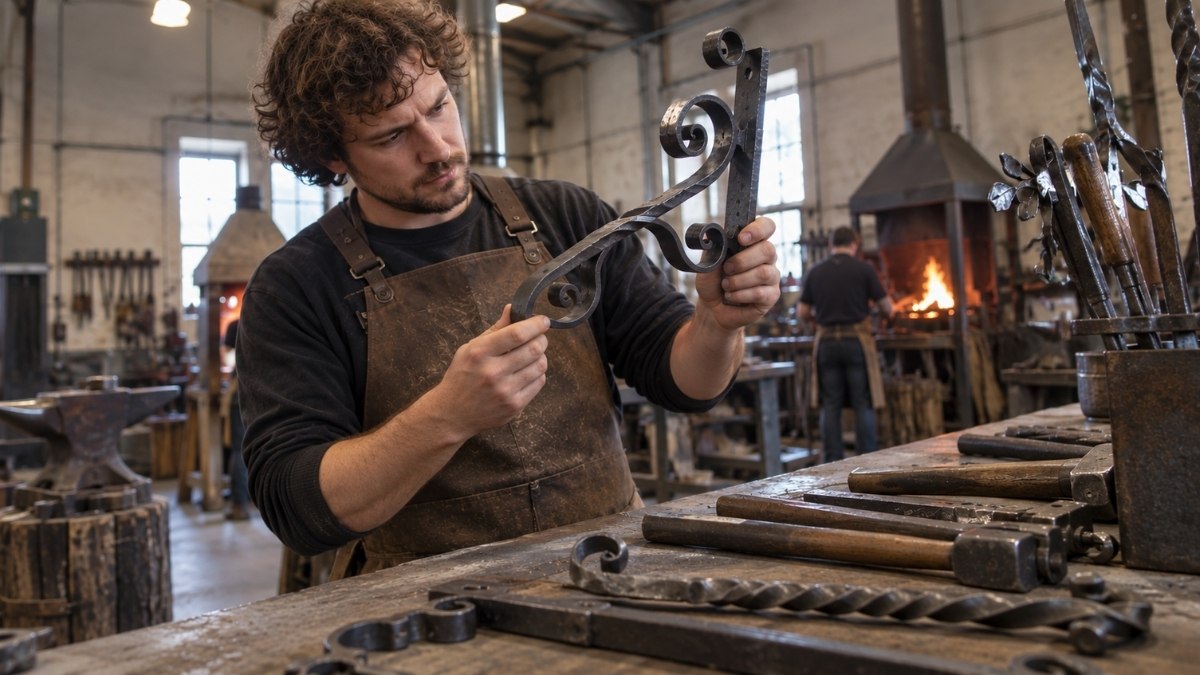
Art blacksmithing is the practice of forging metal, almost always iron or steel, with an emphasis on aesthetic, decorative, or sculptural outcomes alongside or instead of pure function. It relies on the same core tools and forging techniques as traditional blacksmithing, but the objective shifts from strict utility toward form, texture, and visual expression.
The distinction is not always sharp. A hand-forged fireplace poker can be entirely functional and still show deliberate proportion, a twisted collar, or a hammered texture that makes it a small work of craft. Art blacksmithing simply names the end of the spectrum where those decorative choices become the primary goal rather than a bonus.
The Artist-Blacksmith’s Association of North America (ABANA), founded in 1973, helps preserve and promote blacksmithing skills, design excellence, and awareness of blacksmithing as both an art and a craft.
Why the Function-to-Art Spectrum Matters
Understanding this spectrum helps explain why forged metal shows up in so many different settings, from a farmhouse kitchen to a public sculpture garden. The same skill set produces hardware, tools, household objects, decorative pieces, architectural elements, and standalone sculpture, and recognizing where a piece falls on that range tells you what to expect from it.
Functional Forged Objects
These are pieces built primarily to do a job: hooks, hinges, tool heads, fireplace tools, and hardware. Craftsmanship still matters here. A well-forged hook must be shaped and proportioned for its intended use, and the finished form reflects the smith’s control of the material.
Decorative and Architectural Ironwork
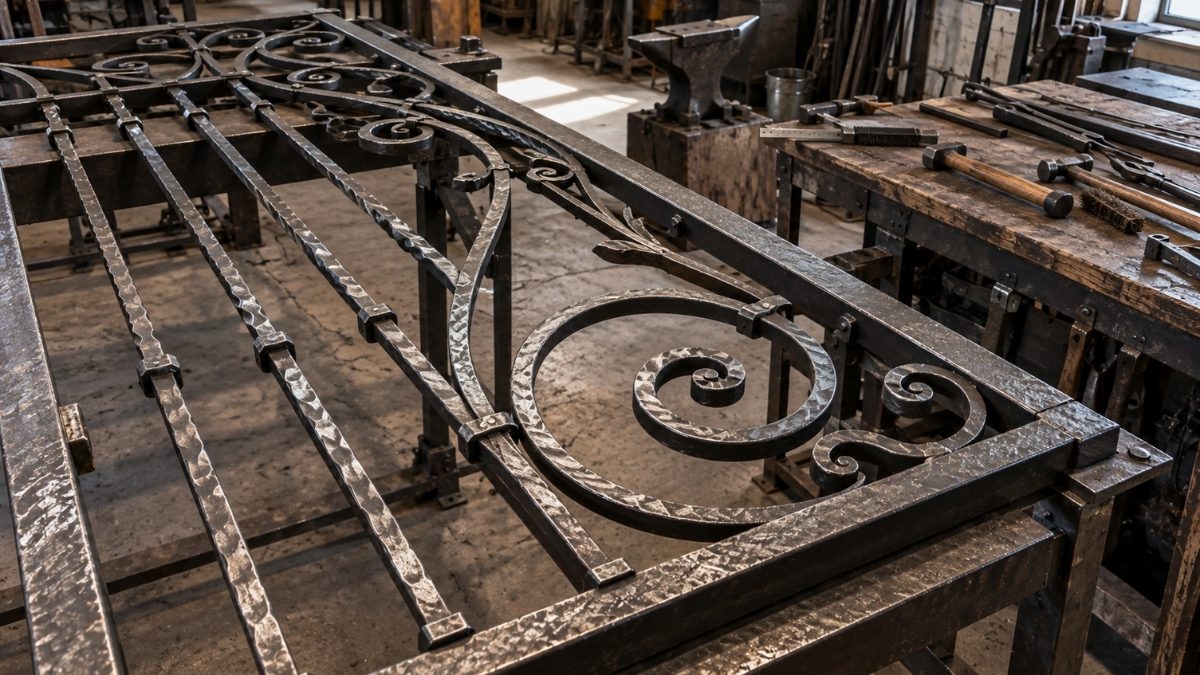
This middle category includes railings, gates, light fixtures, and household decor where form carries as much weight as function. Scrollwork, hammered texture, and intentional silhouette turn a structural element into a visual one. Architectural ironwork has historically bridged trade and art because pieces such as railings still need to meet structural requirements while also serving as design elements.
Sculptural and Fine Art Forged Work
At the far end of the spectrum, forged pieces exist purely as art. Freestanding sculpture, wall-mounted panels, and gallery pieces use forging techniques without any functional requirement at all. This is the category most closely associated with the term art blacksmithing, and it is where a smith has the most latitude to explore form, movement, and abstraction in metal.
How a Forged Piece Moves From Idea to Object
Whether a smith is making a hook or a sculpture, the underlying process follows a similar arc. Understanding these steps helps explain why forged work, especially artistic work, takes real time and skill to produce well.
Step 1: Design and Material Selection
Every piece starts with a plan, even a loose one. An artist blacksmith considers the type and size of the metal stock and how the final form will hold together structurally, since a design that looks good on paper may not translate cleanly into hot metal.
Step 2: Heating to a Workable Range
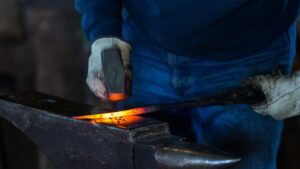
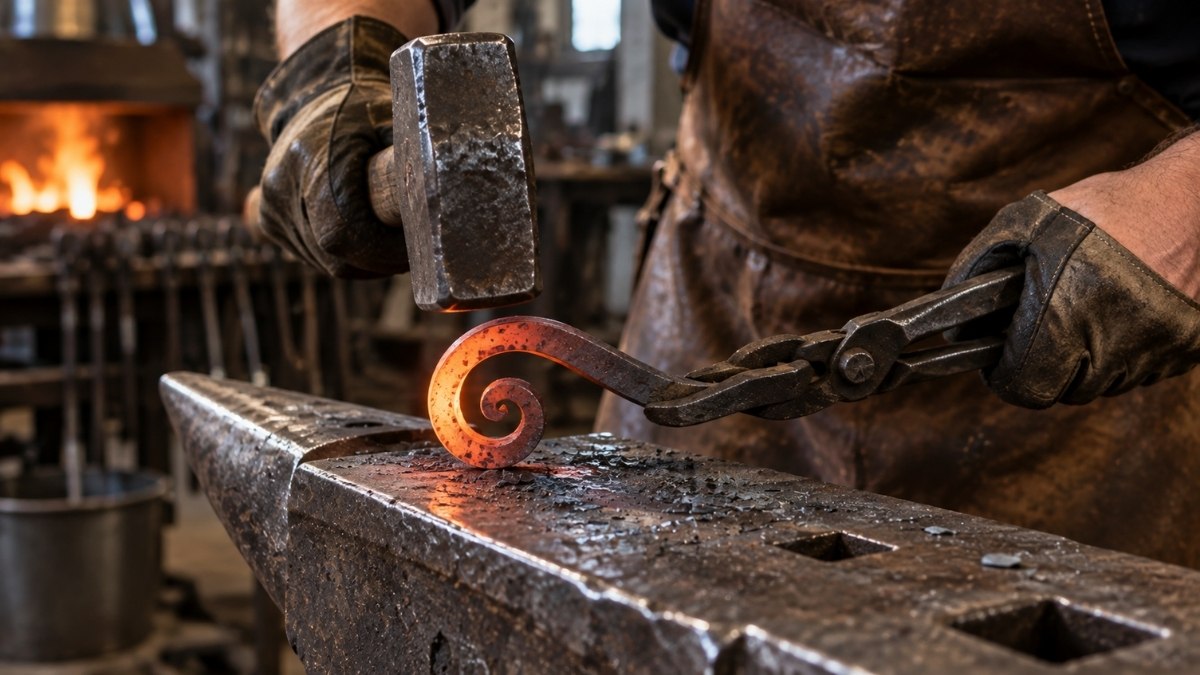
Steel needs to reach a specific temperature range before it responds well to hammer blows. Experienced smiths often use the color of the heated metal (dull red, orange, yellow) as a practical indicator of temperature, and that visual judgment takes practice to develop.
Step 3: Drawing Out, Bending, and Shaping
This is the core forging work: drawing out lengthens and thins a bar, upsetting thickens it, and bending, twisting, and punching create the structural and decorative shapes the design calls for. Each technique changes how the metal moves under the hammer.
Step 4: Texturing and Surface Detail
Decorative and sculptural work often adds a layer beyond basic shaping. Hammer texture, chiseled lines, and repoussé-style surface work give a piece visual depth that a purely functional object may not need.
Step 5: Joining and Assembly
Larger or multi-part pieces, like gates or sculptural panels, require joining methods such as forge welding, riveting, or mechanical fittings. How pieces connect affects both the final appearance and how the work holds up over time.
Step 6: Finishing
Wire brushing, wax, oil, and patina treatments can clean, color, or help protect the metal surface, depending on the finish used. These finishing choices can shift a piece from rustic to refined without changing its underlying form.
Materials, Safety, and Setting Considerations
Art blacksmithing depends on more than technique. The materials, tools, and setup used for metal work in a forge all shape what a smith can safely and successfully make.
Material Factors
- Mild steel is common for practice and functional work because it is affordable and forgiving.
- Higher-carbon steels can achieve greater hardness and edge retention with appropriate heat treatment but generally require more precise heat control.
- Wrought iron, once common, has largely been replaced by modern steels in contemporary forge work.
Safety Factors
A forge involves open flame, radiant heat, hot metal, and heavy tools, so appropriate safety measures are essential. OSHA’s general PPE standard requires employers to assess workplace hazards and select protective equipment appropriate to the hazards identified. Depending on the equipment, process, and shop environment, forge safety measures may include:
- Eye or face protection appropriate to impact, spark, and related hazards
- Protective clothing appropriate to heat and hot-metal exposure
- Protective footwear appropriate to the work area
- Hearing protection where noise exposure requires it
- Ventilation or other controls appropriate to smoke, fumes, and airborne contaminants
These are general safety considerations, not a complete compliance guide. Specific PPE and shop safety requirements should be confirmed through the shop’s safety procedures and with a qualified instructor or safety professional before working at a live forge.
When Formal Instruction Makes Sense
Some people pick up basic forging concepts from videos or books, and that self-directed learning can help build general awareness. However, hands-on forge work can be difficult and unsafe to learn entirely on your own. Formal instruction makes the most sense when you want to:
- Learn proper heat judgment and hammer control under direct supervision
- Understand forge and tool safety before working independently
- Move beyond small practice pieces toward more involved functional or decorative projects
- Get feedback that corrects technique early, before habits are hard to unlearn
- Connect with other makers and see a wider range of forged work in person
A structured studio environment can provide direct supervision, immediate feedback, and access to appropriate equipment as someone develops practical forging skills.
Frequently Asked Questions
How can I learn from a local blacksmith near Brookfield, CT?
Look for a working forge or craft school that offers supervised blacksmithing instruction and clearly lists experience levels and current course availability. Local options may offer blacksmithing, bladesmithing, and welding workshops from beginner through advanced levels, with current offerings listed through its course schedule.
Do I need prior metalworking experience to try blacksmithing?
Not necessarily. Many beginner-friendly forge classes are designed for people with no prior metalworking background. Review the experience level and any prerequisites listed on the specific class before registering, since not every course is built for first-time students.
Is blacksmithing the same as bladesmithing?
No. Bladesmithing is a specialized branch of forging focused on knives and other blades. It often involves blade-specific considerations such as heat treatment, edge geometry, and performance characteristics, while general blacksmithing covers a broader range of functional, decorative, and sculptural objects.
What tools does a beginner artist blacksmith typically use?
A basic setup usually includes a forge, an anvil, a hammer, tongs, and hand tools for cutting and shaping. Common tools include anvils, forges, hammers, tongs, and other equipment used for forge instruction. Students should review the specific course listing to confirm any materials or equipment they need to bring.
Where can I see examples of art blacksmithing near Brookfield, CT?
Local craft galleries, studio exhibitions, and blacksmithing organizations can be useful places to see forged work ranging from functional pieces to sculpture. Brookfield Craft Center’s Lynn Tendler Bignell Gallery and Shop features work by artists and fine craftspeople across multiple disciplines. Check current exhibition and shop information to confirm whether forged metalwork is on view.
Ready to Try Forging for Yourself?
Brookfield Craft Center is a nonprofit craft school with a well-equipped forge on its Connecticut campus, offering hands-on instruction for students exploring metalwork as both a functional skill and a creative practice.
Current class dates, formats, and experience-level requirements are listed on our course schedule, and pricing should always be confirmed at registration.