What’s in This Guide
- What to Expect From a Children’s Pottery Class Near Me
- Why Hands-On Clay Work Supports Child Development
- Signs of a Well-Structured Youth Pottery Program
- How to Evaluate a Children’s Pottery Class Near Me Before Enrolling
- Materials, Safety, and Timing Factors to Confirm
- When to Reach Out to a Pottery Studio Directly
- Frequently Asked Questions
- Ready to Enroll Your Child in a Pottery Class at Brookfield Craft Center?
Signing a child up for a pottery class raises more questions than a typical craft activity. Will a six-year-old sit through an hour-long session? Is a spinning pottery wheel safe for small hands?
What happens if a piece comes out of the kiln looking nothing like what your child imagined? Parents searching for children’s pottery classes nearby are usually looking for answers to these questions before they look at a class schedule.
Quick Facts
- Age grouping shapes the class, since attention span and hand strength vary widely across ages.
- Hand-building typically comes before wheel work, which demands more coordination and hand strength.
- Glaze materials for younger students are generally held to a safety standard.
- Firing adds time, since pieces are rarely ready the same day they’re made.
- Supervision at the wheel and kiln matters more than the project itself.
What to Expect From a Children’s Pottery Class Near Me
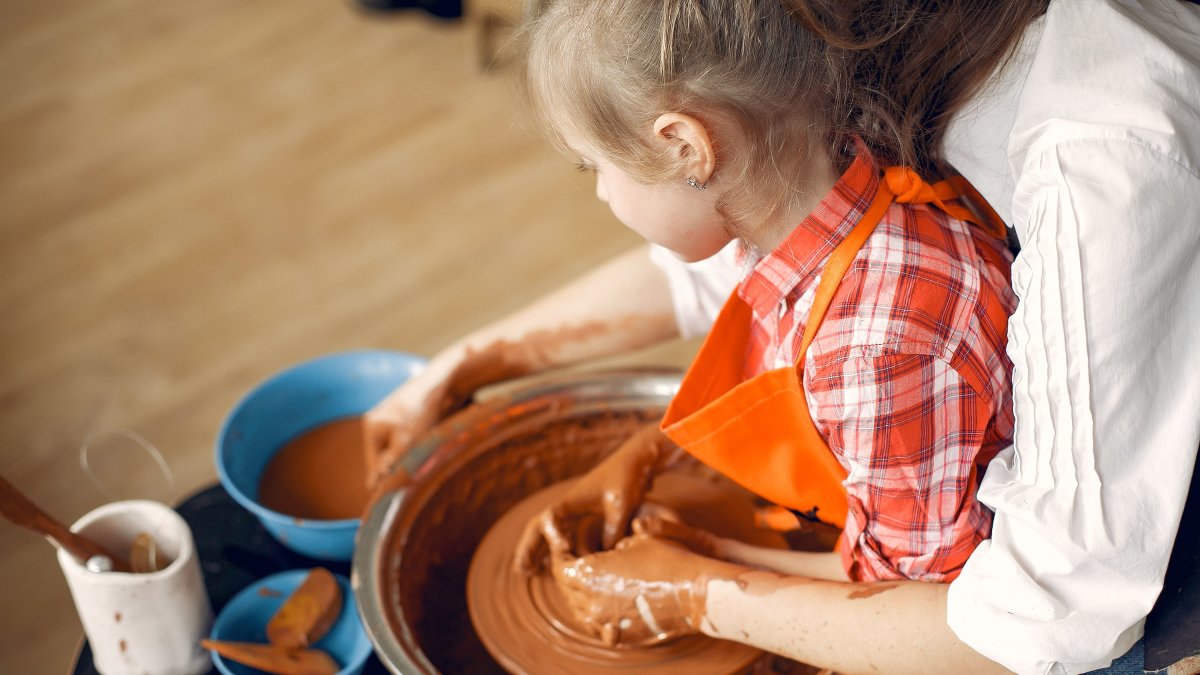
A well-structured children’s pottery class groups students by age, introduces hand-building before wheel work, and keeps kilns, trim tools, and cutting wires under adult control at all times. Most classes run across several sessions, since clay needs time to dry, get bisque fired, glazed, and fired again before a piece is finished.
A typical session starts with a short demonstration, followed by guided hands-on practice. Younger children usually work with small batches of clay and simple hand tools, while older students may progress to wire cutters, ribs, and trimming tools under closer supervision.
Between sessions, pieces sit out to dry, which is part of why a single-day pottery experience and a multi-week class produce very different results.
Understanding the differences between pottery classes, workshops, and courses can help parents choose a format that fits their child’s interests, attention span, and schedule.
Why Hands-On Clay Work Supports Child Development
Clay work exercises many of the same small hand muscles children use to hold a pencil, button a shirt, or tie shoes, which makes it a practical addition to a child’s fine motor development, not just a creative outlet.
Researchers at Stanford’s Bing Nursery School have noted that clay offers children a combination of fine and large motor opportunities, since fingers pinch, smooth, poke, and push clay through detailed, intricate work that draws on many of the same hand muscles used for writing and self-care tasks.
The same material also supports sensory exploration and emotional expression, which is part of why pottery classes are often described as calming as much as they are creative.
None of this means every child will respond to clay the same way. Some children take to hand-building quickly, while others need more warm-up time before they settle into a project. A good class allows room for that range rather than expecting uniform results.
Signs of a Well-Structured Youth Pottery Program
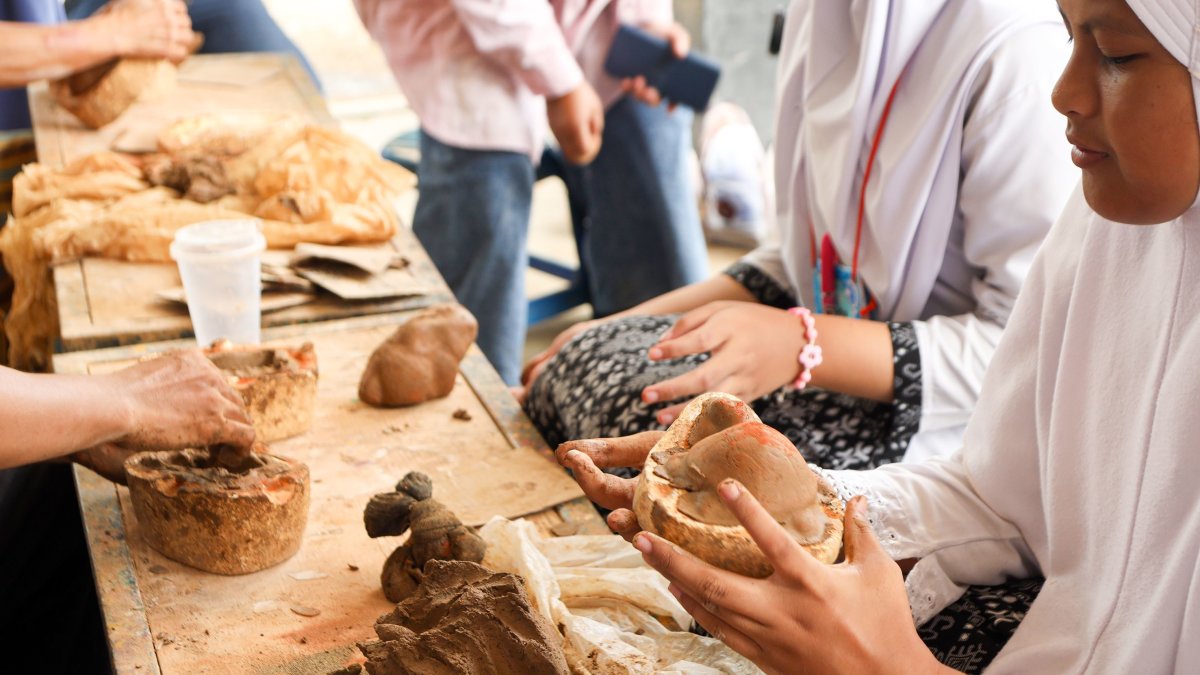
Not every pottery class is built the same way, and a few structural details tell you more about fit than the project photo on a registration page.
Age Grouping and Class Size
Programs that separate students by age, such as roughly ages 6 to 10 and 11 and up, are generally better matched to attention span and hand strength than mixed-age sessions. Smaller class sizes also matter, since a lower student-to-instructor ratio means more individual guidance at the wheel or worktable.
Hand-Building vs. Wheel-Throwing
Hand-building methods, including pinch, coil, and slab construction, are usually the entry point for younger children because they rely on hand-held tools and simple motions. Wheel-throwing requires more coordination, grip strength, and patience. Comparing wheel-throwing and hand-building techniques for beginners can help parents understand which approach best suits their child’s experience and abilities.
|
Technique |
Typical Age Fit |
What It Teaches |
Supervision Needed |
|
Hand-Building (pinch, coil, slab) |
Younger children and beginners |
Shaping, texture, patience |
Moderate; hand-held tools |
|
Wheel-Throwing |
Pre-teens and teens with developed coordination |
Centering, symmetry, control |
Close, often one-on-one |
Instructor Experience and Class Structure
Ask how many students are assigned to each instructor and whether an assistant is present for younger age groups. Working artists who teach youth classes typically adjust their approach for age, using shorter demonstrations and more hands-on redirection for younger students than they would for teens or adults.
Process-Focused vs. Product-Focused Teaching
A class built around exploration rather than a polished final product tends to be a better fit for younger or first-time students. Ask whether the instructor emphasizes technique and creative choice-making over producing a picture-perfect piece, since that framing affects how a child experiences setbacks like a cracked pot or a color that fires differently than expected.
How to Evaluate a Children’s Pottery Class Near Me Before Enrolling
A short evaluation process before registering can prevent a mismatch between a child’s age, temperament, and the class structure.
Step 1: Confirm the Age Range and Group Size
Check the listed age range against your child’s age and ask whether class size is capped. A program designed for ages 8 to 12 may move faster than a child on the younger edge of that range can keep up with.
Step 2: Ask About the Hand-Building-to-Wheel Ratio
Find out how much of the class is spent hand-building versus at the wheel. Parents comparing pottery and ceramics classes in Brookfield, CT, should also check which techniques and projects each program covers. A class that is mostly wheel-based may be a poor fit for a child who has never worked with clay before.
Step 3: Review Tool, Wheel, and Kiln Safety Practices
Ask who operates the kiln and whether students have any direct contact with it. Kilns used to fire pottery reach temperatures well above 1,800 degrees Fahrenheit, so kiln loading and unloading should always be handled by staff, not students.
Step 4: Clarify Clothing and Mess Expectations
Clay and glaze can stain fabric, so ask whether aprons are provided or whether your child should wear clothes that can get dirty.
Knowing what to expect in a first beginner pottery class can make the experience feel more familiar before the session begins. Long hair and loose sleeves are also worth addressing, especially near a spinning wheel.
Step 5: Ask About the Firing and Pickup Timeline
Confirm how long it typically takes for a finished piece to be bisque fired, glazed, fired again, and made available for pickup. This timeline is rarely instant, and setting expectations in advance helps avoid disappointment if a child expects to bring a piece home the same day.
Materials, Safety, and Timing Factors to Confirm
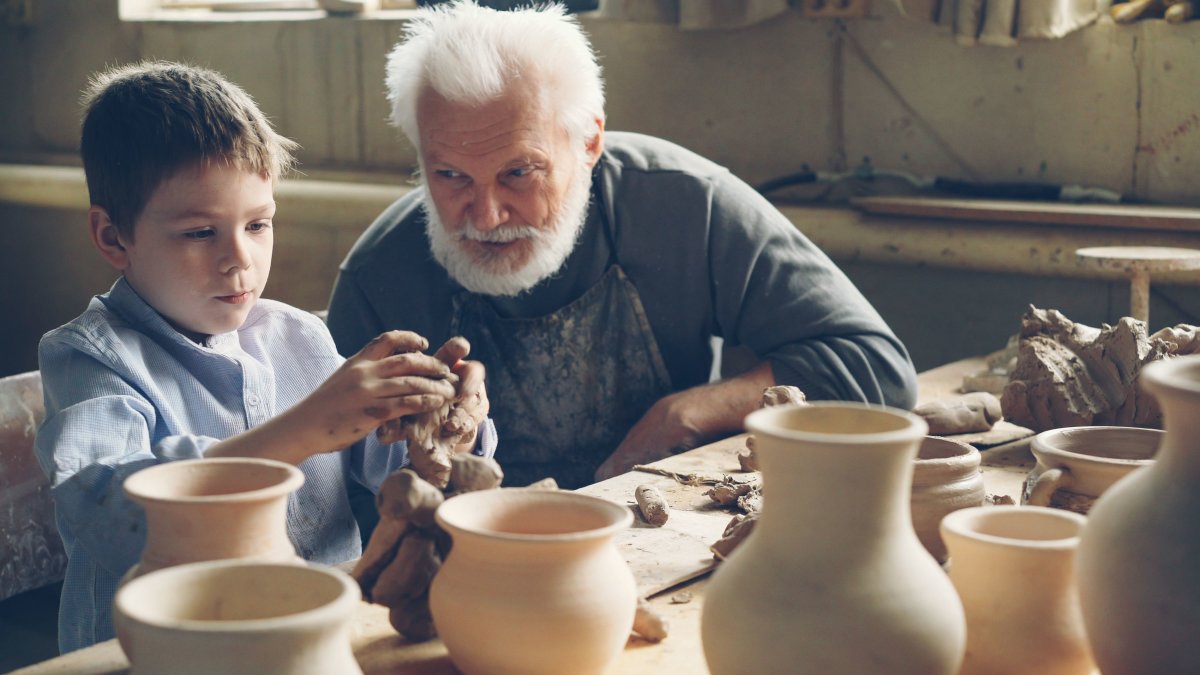
A few material and safety details are worth confirming directly with a studio rather than assuming they apply universally across every pottery program.
Glaze Safety Certification
Glaze materials made for children’s use are generally evaluated through established art material safety certification standards, which distinguish between formulas considered safe for younger children and those reserved for older students and adults. Asking which glazes a program uses with younger age groups is a reasonable question for any parent to raise.
Dust and Ventilation Practices
Dry clay dust and glaze materials can also contain crystalline silica, a substance regulated in occupational settings under OSHA’s respirable crystalline silica standard. Studios commonly manage this through wet-cleaning practices and ventilation rather than dry sweeping, which reduces airborne dust during class.
Fees, Capacity, and Scheduling
Program fees, supply costs, class size limits, and firing turnaround times vary by studio, session, and time of year. These details are best confirmed directly with the program at the time of registration rather than assumed from a prior class or a different age group’s schedule.
When to Reach Out to a Pottery Studio Directly
Some questions are specific enough that only the studio running a class can answer them accurately, including current age brackets, session dates, and whether scholarship support is available for a given term.
Brookfield Craft Center has offered seasonal youth pottery opportunities through its Ceramics Studio, alongside programs in glass, wood, fiber, and forge arts.
Families exploring other hands-on crafts may also consider beginner blacksmithing classes when age requirements and available sessions are appropriate. Class titles, age groupings, and schedules vary by term, so checking current program listings is essential before registering.
If a child has sensory sensitivities, limited fine motor experience, or a shorter attention span than the listed age range assumes, a direct conversation with the studio before registering can help confirm whether a particular class or a smaller private session is the better starting point.
Frequently Asked Questions
Are there pottery camps or seasonal programs for kids, not just weekly classes?
Yes, many studios offer programs for people searching for pottery camps nearby, especially during school breaks or summer. These sessions typically focus on themed projects rather than ongoing weekly commitments. Contact the studio to find out which options best fit your schedule.
Can the whole family take a pottery class together, or are classes just for kids?
Some studios offer family pottery classes nearby that allow parents and children to create pottery projects side by side. These sessions are typically separate from dedicated youth programs and may include guided activities suitable for different ages and skill levels.
Pottery classes for family nearby can also include seasonal workshops, weekend sessions, and special events designed for families to enjoy together. Contact the studio to confirm availability, age requirements, and scheduling options.
Does my child need prior art experience before taking a pottery class?
No, most youth pottery programs welcome first-time students alongside those who have taken classes before. Instructors typically adjust their guidance to each child’s comfort level rather than assuming prior exposure to clay or studio tools.
What happens if my child misses a session during a multi-week pottery course?
Policies vary by studio, since a missed session can affect a project that depends on earlier steps, such as a piece needing a certain dryness before the next class. It’s worth asking about makeup options before enrolling in a multi-week course.
Can parents stay and watch during a children’s pottery class?
This depends on the studio and the age group being taught. Some programs welcome parents to observe, especially for younger children, while others prefer a drop-off format to help kids focus. Check the specific class policy when you register.
Ready to Enroll Your Child in a Pottery Class at Brookfield Craft Center?
Brookfield Craft Center is a nonprofit craft school on a historic campus in Brookfield, Connecticut, offering youth pottery opportunities through its Ceramics Studio and seasonal Summer Youth Program. Our program groups students by age and pairs them with experienced studio artists in small class settings.
Explore current youth pottery opportunities and find a session that fits your child’s age and interests.
Related Posts