What’s In This Guide
- Are Pottery and Ceramics the Same Thing?
- 3 Common Types of Pottery and Ceramics Classes You’ll Find
- How to Choose the Right Pottery or Ceramics Class: A Checklist for Beginners
- Cost, Timing, Materials, and Studio Safety Factors to Plan For
- When a Beginner Class Makes Sense and When to Ask Before Registering
- Frequently Asked Questions
- Ready to Register for a Pottery or Ceramics Class in Brookfield, CT?
When you start searching for ceramics classes near Brookfield, CT, the terms pottery and ceramics often appear side by side or seem to be used for the exact same thing. While the two crafts are closely related, understanding the core differences between them makes it much easier to find the right class for your creative goals. Whether you want to throw functional tableware on a potter’s wheel or build unique hand-sculpted forms, this guide breaks down everything beginners need to know before signing up.
Quick Facts
- Ceramics is the umbrella term. Pottery describes a specific subset of ceramics built around fired clay, usually shaped into vessels like bowls, pots, and vases, according to standard definitions.
- Clay types dictate firing temperatures. Many studios work with low-fire clay such as earthenware as well as high-fire options like stoneware and porcelain, which are typically fired to cone 6 in electric kilns.
- Wheel-throwing and handbuilding are separate skill paths. Centering clay and pulling walls on a wheel are different physical skills from pinch, coil, or slab construction by hand.
- Clay dust is a real studio safety factor. Workplace safety guidance identifies pottery making among the activities where respirable crystalline silica exposure can occur, which is why wet cleanup habits matter even in a hobby studio.
- A finished piece requires multiple steps. Drying, bisque firing, glazing, and a second firing complete the creation process.
Are Pottery and Ceramics the Same Thing?
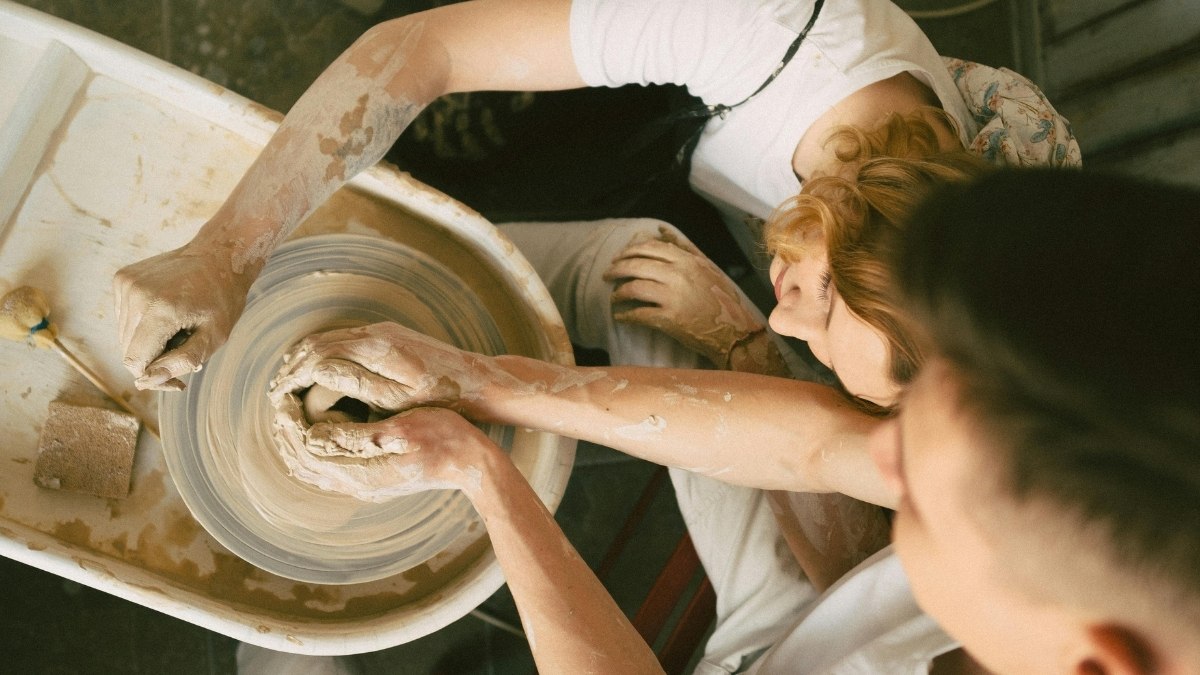
Not exactly. Beginners searching for ceramic classes near Brookfield, CT, often find that ceramics is actually the broad umbrella category, covering objects made from clay or other nonmetallic inorganic materials that are shaped and hardened by heat. Pottery sits inside that category as the specific practice of shaping clay into functional or decorative vessels, most often by hand or on a wheel.
The word “ceramic” traces back to the Greek keramos, meaning potter’s clay, which is part of why the two terms get used interchangeably. Definitions from ceramic organizations like the American Ceramic Society describe ceramics as nonmetallic, inorganic, crystalline materials that are processed or consolidated at high temperatures, a definition broad enough to include tile, technical ceramics, and cements alongside handmade work. Pottery is the piece of that world most people picture: a thrown mug, a hand-built planter, a glazed bowl.
3 Common Types of Pottery and Ceramics Classes You’ll Find
Most clay classes fall into a few recognizable categories. Knowing what each one covers makes it much easier to match a search for ceramics courses near you to the right listing.
Wheel-Throwing Classes
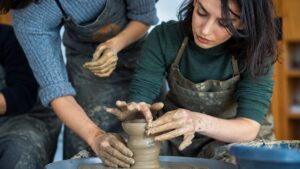
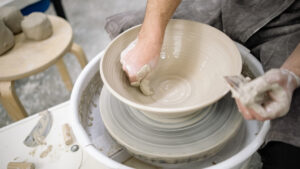
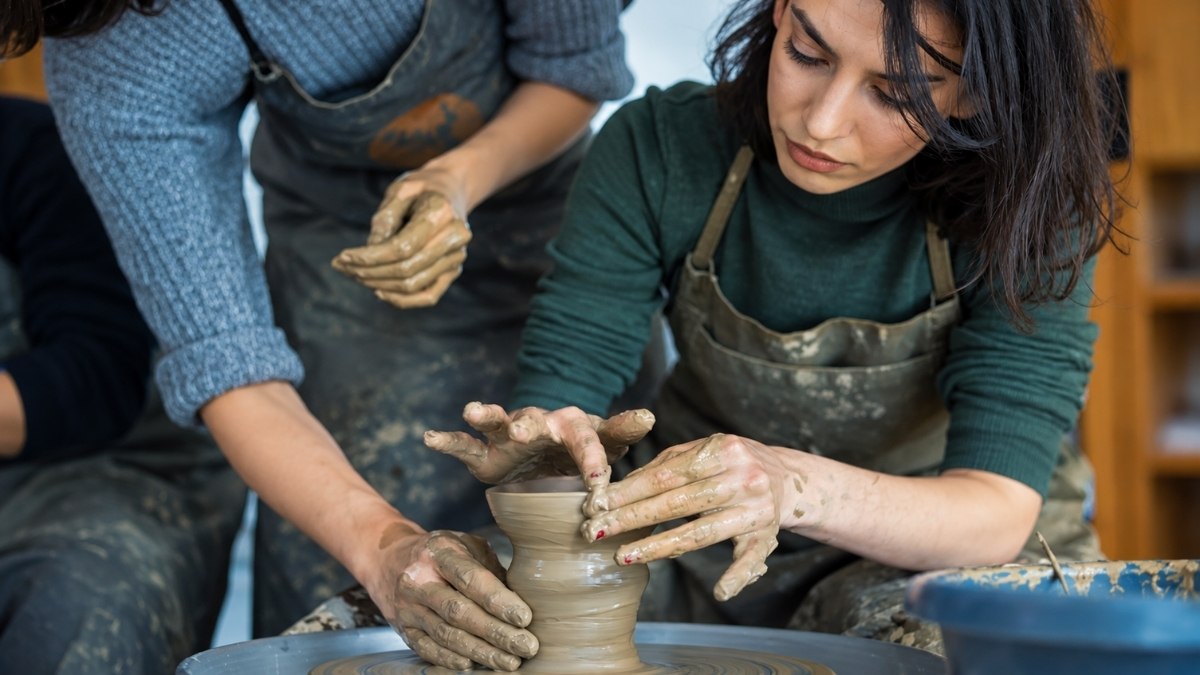
Wheel-throwing uses a spinning potter’s wheel to shape clay through centering, pulling walls, and trimming. It rewards repetition and hand-eye coordination as students learn to shape clay symmetrically on the wheel.
Handbuilding Classes
Handbuilding skips the wheel in favor of pinch, coil, and slab techniques. These methods give students more direct control over shape and texture, and they tend to be more approachable for a first-time student who has never touched clay.
Glazing, Surface Decoration, and Firing
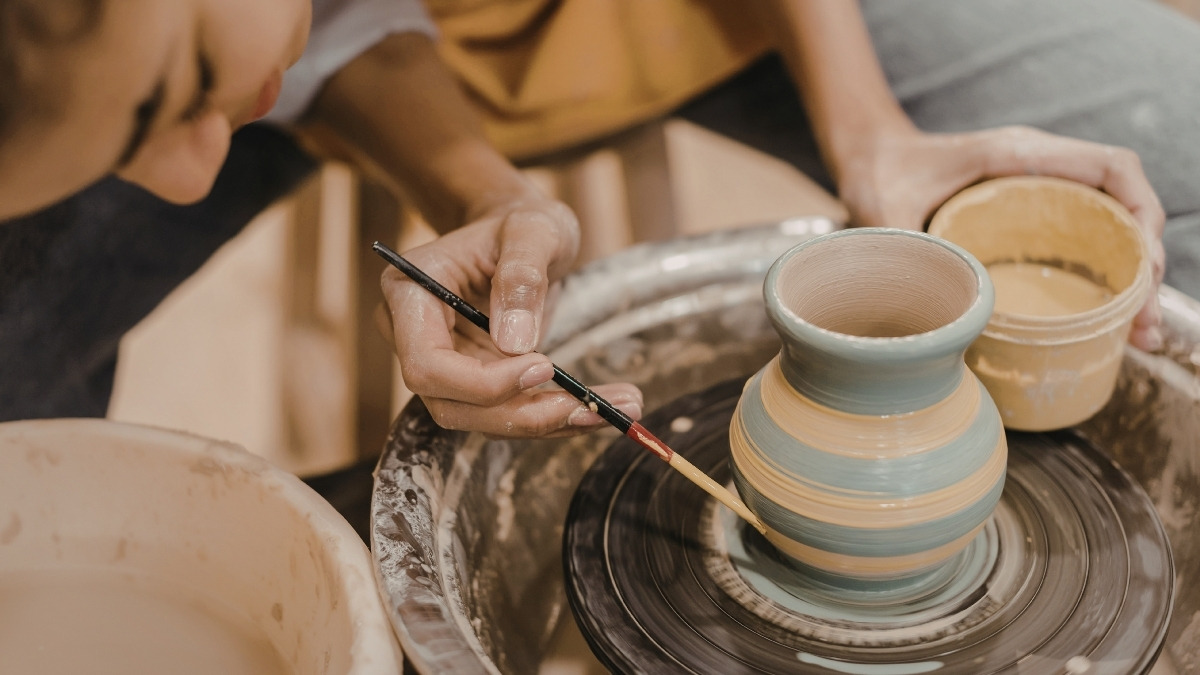
Glazing and surface work determine how a finished piece looks and functions. This is also where clay type becomes relevant. Earthenware is a low-fire clay, so it stays porous unless a glaze seals the surface. Stoneware and porcelain fire at higher temperatures, commonly around cone 6 in electric kilns, which lets the clay body itself fully vitrify into a thin, strong, and water-resistant material.
How to Choose the Right Pottery or Ceramics Class: A Checklist for Beginners
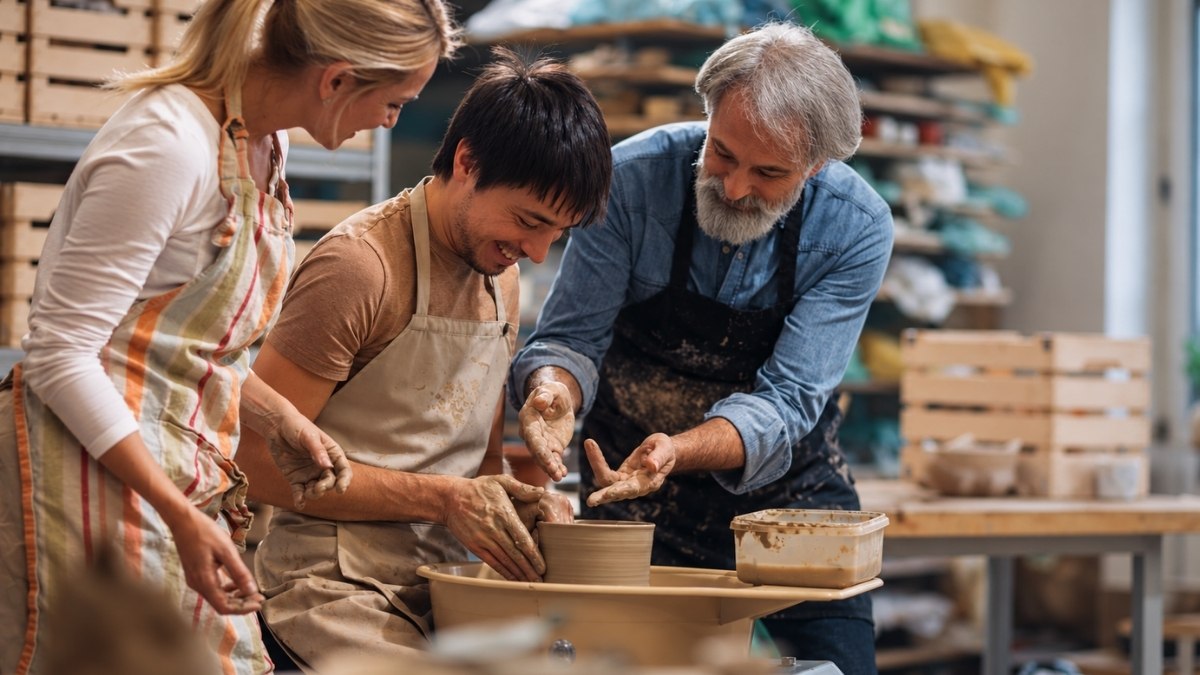
Working through a short checklist before registering can save a beginner from an awkward first session. Reading the full class description against this list, rather than registering from the title alone, is the fastest way to land in the right course the first time.
Decide What You Want to Make
Functional items like mugs, bowls, and vases often point toward wheel-throwing. If you prefer sculptural forms, textured tiles, or organic shapes, handbuilding techniques like slab construction and coil building offer far more control without needing a spinning wheel.
Assess Your Comfort Level with Tools
A potter’s wheel requires physical coordination, muscle memory, and posture control to center the clay properly. If using a potter’s wheel sounds intimidating for your first attempt, starting with handbuilding offers a gentler, more tactile introduction to clay work.
Check the Listed Experience Level and Prerequisites
Not every studio course welcomes complete novices. Intermediate and advanced classes frequently require prerequisite experience or instructor approval, assuming students already understand foundational wheel or handbuilding techniques. Carefully review course descriptions to ensure the syllabus matches your actual current skill level.
Confirm the Session Count and Schedule
Single-day workshops are great for trying out clay without a big commitment, but they rarely cover every phase of ceramics. Multi-week courses provide the time needed to practice techniques, let pieces dry properly, and return for glazing and firing steps.
Ask What Is Included in Tuition
Studio policies differ regarding supplies. Some courses bundle clay, glazes, and firing fees into one registration price, while others charge separately for materials or kiln space. Double-check what is covered before signing up.
READ MORE: Blacksmithing vs Bladesmithing Classes for Beginners
Cost, Timing, Materials, and Studio Safety Factors to Plan For
A pottery or ceramics class involves more moving parts than a typical one-hour workshop, and planning around them makes the experience smoother.
Timing and Firing Cycles
A ceramic piece is not usually finished in a single session. A piece typically needs to dry fully, undergo a first (bisque) firing, get glazed, and go through a second firing before it’s complete. Multi-week courses build this cycle into the schedule, whereas short workshops may focus on specific techniques or require return trips for pickup. Students working toward a gift deadline should ask about the full timeline before enrolling, not just the class dates.
Materials and What You’ll Need
Clay, glazes, and studio equipment are provided or made available depending on the course, though students may need to purchase specific clay bodies or tool sets. Clothing that can get dirty, closed-toe shoes, and hair tied back are common expectations in a working clay studio. Review the individual course listing for specifics, since requirements differ between a youth workshop and an advanced wheel course.
Studio Safety
Working with clay produces fine dust when materials are mixed, sanded, or cleaned up dry. Workplace safety resources identify pottery and ceramic manufacturing as activities where respirable crystalline silica exposure can occur, and note that repeated inhalation of these particles is linked to serious respiratory conditions over time. A well-run studio manages this through ventilation, wet cleanup methods, and general housekeeping rather than dry sweeping.
Continuing Practice Between Classes
For students who complete a foundational course, ongoing access to studio time can help build consistency. Brookfield Craft Center, for example, offers Open Studio access for eligible students and members in its Clay Studio, typically tied to recent class participation and demonstrated basic skills. Fees, eligibility, and schedule details change, so confirm current terms directly with the registrar rather than assuming availability.
When a Beginner Class Makes Sense and When to Ask Before Registering
A beginner-level class is the right starting point for anyone without previous wheel or hand-building experience, regardless of general art background. These courses are built to introduce studio tools, safety habits, and foundational technique from the first session.
Returning or more advanced students should look for listings that specify intermediate or advanced experience, since those courses often assume comfort with centering, trimming, or specific handbuilding methods already.
If a class description is unclear about the expected skill level, checking with the studio before registering is a better move than guessing and ending up in a mismatched course.
Families exploring options for children or teens should also confirm age requirements directly, as youth pottery programs, after-school classes, and summer programs run on dedicated schedules separate from adult classes.
Frequently Asked Questions
How long does it take to get comfortable using a pottery wheel?
There is no fixed timeline. Centering, pulling walls, and controlling the shape of clay are skills that improve through repetition. Beginners should expect their first classes to focus as much on technique and practice as on producing finished pieces.
Can beginners try both wheel-throwing and handbuilding?
Yes, although whether both techniques are included depends on the class. Trying each can help beginners discover whether they prefer the controlled symmetry of wheel work or the more flexible forms possible through handbuilding.
Why do ceramic pieces sometimes crack or explode during drying or firing?
Cracks or breakage can occur when clay dries unevenly, contains trapped moisture that expands rapidly into steam during firing, has joints that were not attached securely, or is fired too rapidly. Learning proper construction, wedging, air evacuation, and slow drying techniques is part of developing basic ceramic skills.
Does pottery shrink after it is fired?
Yes. Clay loses water as it dries and undergoes additional changes during firing, causing the finished piece to become smaller than it was when freshly formed. The amount of shrinkage varies by clay body and firing temperature.
Can pottery made in a beginner class be used for food or drinks?
Potentially, but that depends on the clay body, glaze, firing process, and studio guidance. Students planning to make mugs, bowls, or other functional ware should ask which materials and finishes are appropriate for food-contact pieces.
Ready to Register for a Pottery or Ceramics Class in Brookfield, CT?
If you are looking for engaging pottery and ceramics classes nearby, Brookfield Craft Center’s Clay Studio teaches wheel-throwing, hand-building, glazing, and firing techniques on its historic campus along the Still River. Current course listings outline the experience level, format, and clay type for each class before you register.