What’s In This Guide
- The Short Answer: It Comes Down to the Heat Source
- Glass Blowing vs. Flameworking at a Glance
- How Flameworking Works in a Studio Setting
- Looking for Glass Blowing Classes in CT? Start With the Technique
- What to Expect From Your First Torch Class
- Safety First: Why Eye Protection Matters at the Torch
- Which Path Fits You?
- Frequently Asked Questions
- Ready to Try Glass at Brookfield Craft Center?
Search for glass blowing classes and you will find a surprisingly mixed bag. Some listings show a roaring furnace and a long metal pipe. Others show a student seated at a bench, turning a thin glass rod in a small, hissing flame. Both involve hot glass, and people often call both “glass blowing.” They are different crafts, though, with different tools, different rhythms, and different finished pieces.
Quick Facts
- Glass blowing shapes molten glass gathered from a furnace on the end of a blowpipe, and glass blowing classes may mean either that method or torch work.
- Flameworking and lampworking are two names for the same torch-based technique, which shapes glass rods and tubes softened in a flame.
- The two crafts differ most in heat source, tools, and scale, and “blowing” can appear in both.
- Torch work calls for proper eye protection and instructor guidance in a supervised studio.
- Finished pieces often require controlled annealing in a kiln to relieve internal stress and reduce the risk of cracking.
The Short Answer: It Comes Down to the Heat Source
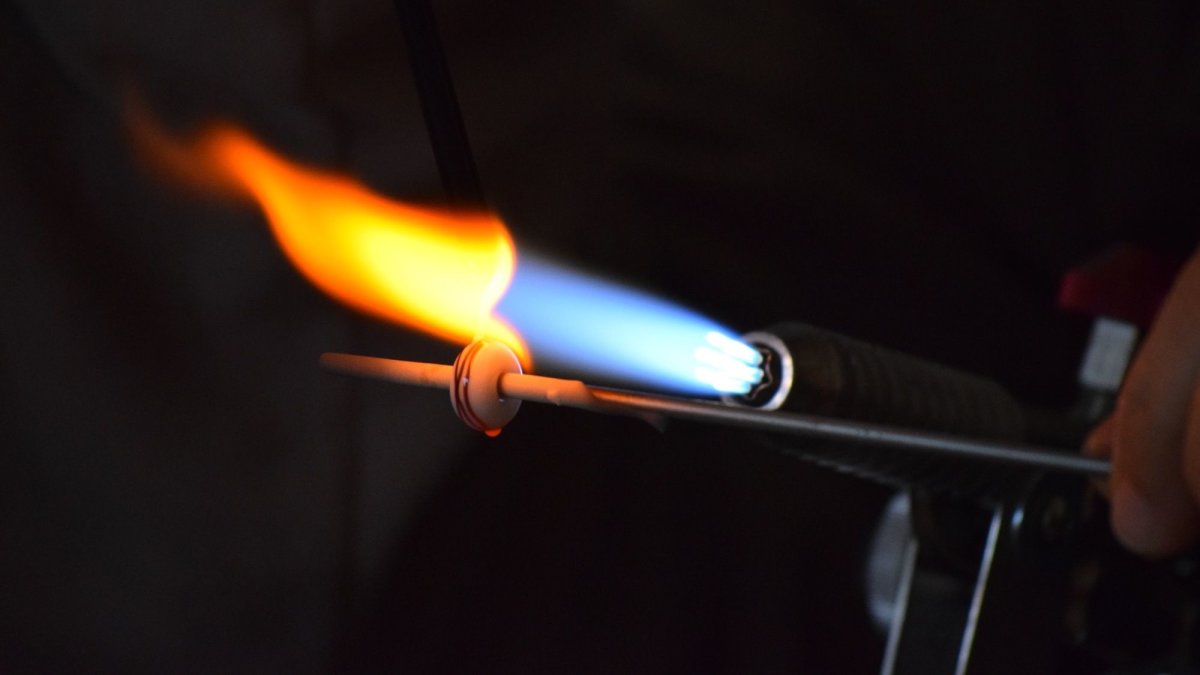
Glass blowing, in the traditional sense, means inflating a gob of molten glass on the end of a blowpipe. The Corning Museum of Glass (CMOG) describes the blowing technique as a glassworker blowing through the tube to slightly inflate the glass, then shaping it by swinging, rolling on a marver, or working with tools or a mold.
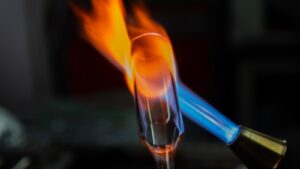
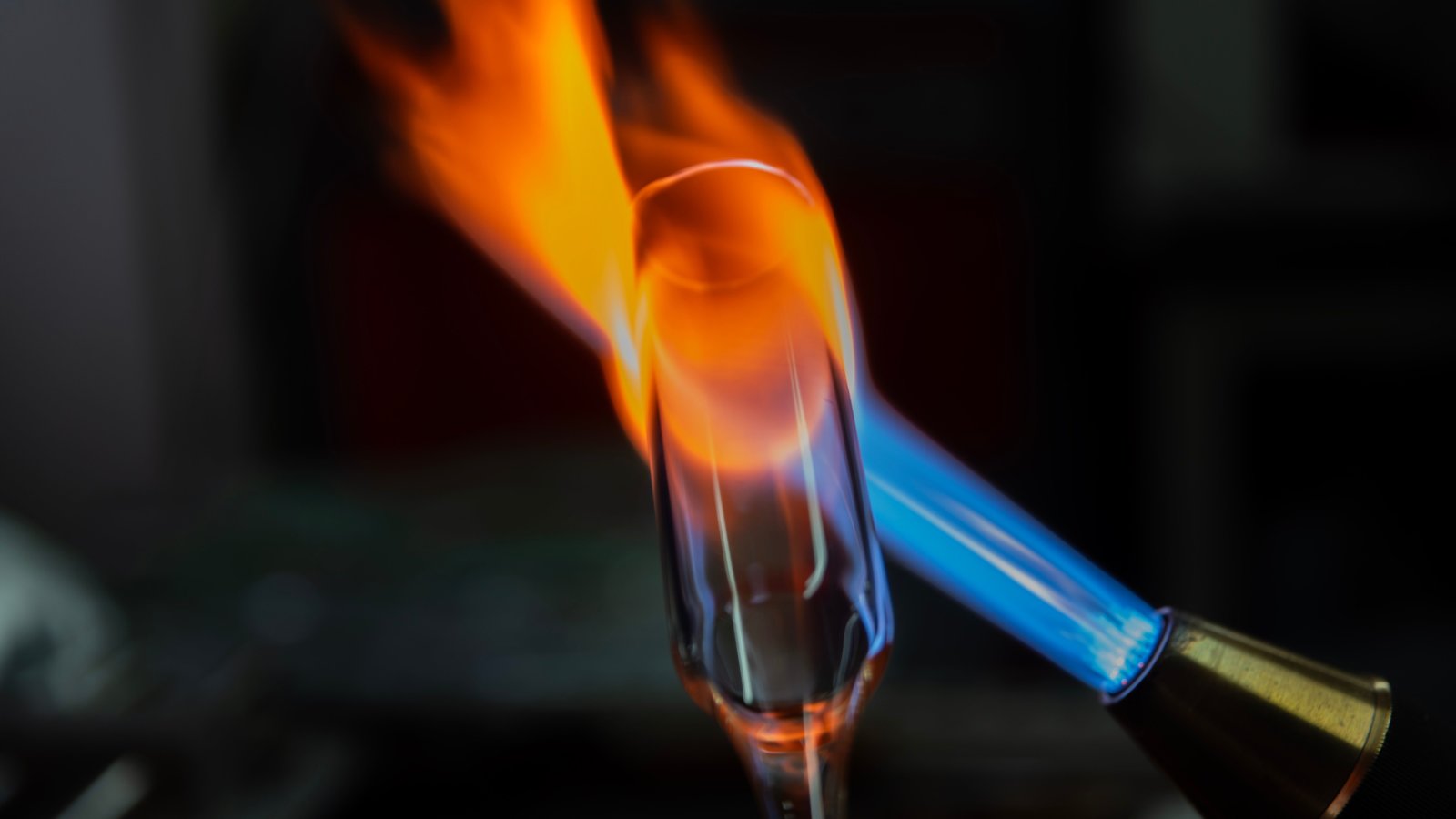
Flameworking starts from a different place. CMOG defines flameworking as forming objects from rods and tubes of glass that soften in a flame and can then be shaped by hand. Lampworking is the older name, a nod to the oil lamps that once fueled the flame. Today, gas-fueled torches do that job.
Here is the simplest way to remember the difference:
- Furnace plus blowpipe means glass blowing.
- Torch plus glass rods or tubes means flameworking, or lampworking.
The terms blur because blowing is not exclusive to the furnace. CMOG notes that in flameworking, a worker can heat and close one end of a glass tube, then blow into the other end to shape the piece. So a torch artist may blow glass too. That overlap is why a listing for glass blowing classes can describe very different studios. The difference lies in where the heat comes from and what the glass looks like when you start.
Glass Blowing vs. Flameworking at a Glance
|
Glass Blowing (Furnace) |
Flameworking / Lampworking (Torch) |
|
|
Heat source |
A furnace holding molten glass |
A gas-fueled torch |
|
Starting material |
Molten glass gathered on a blowpipe |
Solid glass rods and tubes |
|
Workspace |
A hot shop, often with several people working together |
A bench where one maker works at a torch |
|
Typical scale |
Often vessels and larger forms |
Often beads, small sculptures, and ornaments |
|
Pace and feel |
Fast-moving, large-scale handling |
Close, detailed work at arm’s length |
How Flameworking Works in a Studio Setting
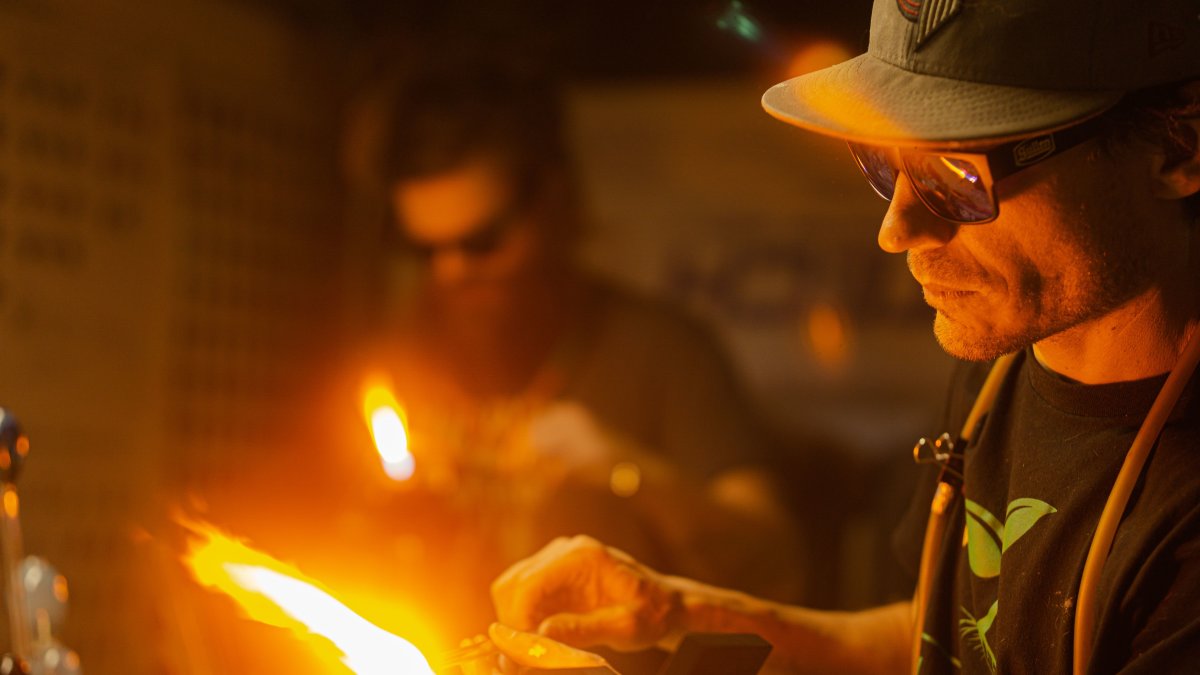
Flameworking demonstrations show an artist heating glass rods and tubes in a high-temperature torch flame, then shaping the softened glass into everything from beads and animals to ornaments and sculptures. The method was practiced in France and Venice by the 15th century, and it remains an established glassworking technique today.
Dedicated glass studios, such as the one at Brookfield Craft Center, bring that tradition into a classroom setting. Standard teaching setups feature Minor torches fueled by oxygen and propane, paired with specialized annealing kilns designed for lampwork pieces. Annealing is a slow, controlled cooling process that helps relieve internal stress in the glass, reducing the risk of cracking as finished pieces cool.
Because the scale is small and the flame sits right in front of you, lampworking rewards patience and observation. You learn to read how glass softens, how heat travels through a rod, and how a steady hand changes the result.
Looking for Glass Blowing Classes in CT? Start With the Technique
Many people who search for glass blowing classes in CT want one thing: the experience of shaping glowing glass with their own hands. Torch-based lampworking delivers that experience up close, and it is the technique our Glass Studio teaches at the torch.
The studio’s schedule also reaches beyond the flame. Depending on the season, you may find:
- Lampworking and flameworking for beads and small forms
- Fused glass, where compatible pieces of glass are arranged and fired in a kiln until they bond
- Stained glass, where cut pieces of colored glass are joined with copper foil and solder
- Specialty sessions, such as borosilicate glasswork or glass silkscreen, when scheduled
Fused and stained glass do not involve blowing at all, so they make a useful comparison if you are still deciding what appeals to you. Naming can overlap in clay too, as seen in pottery vs. ceramics classes.
What to Expect From Your First Torch Class
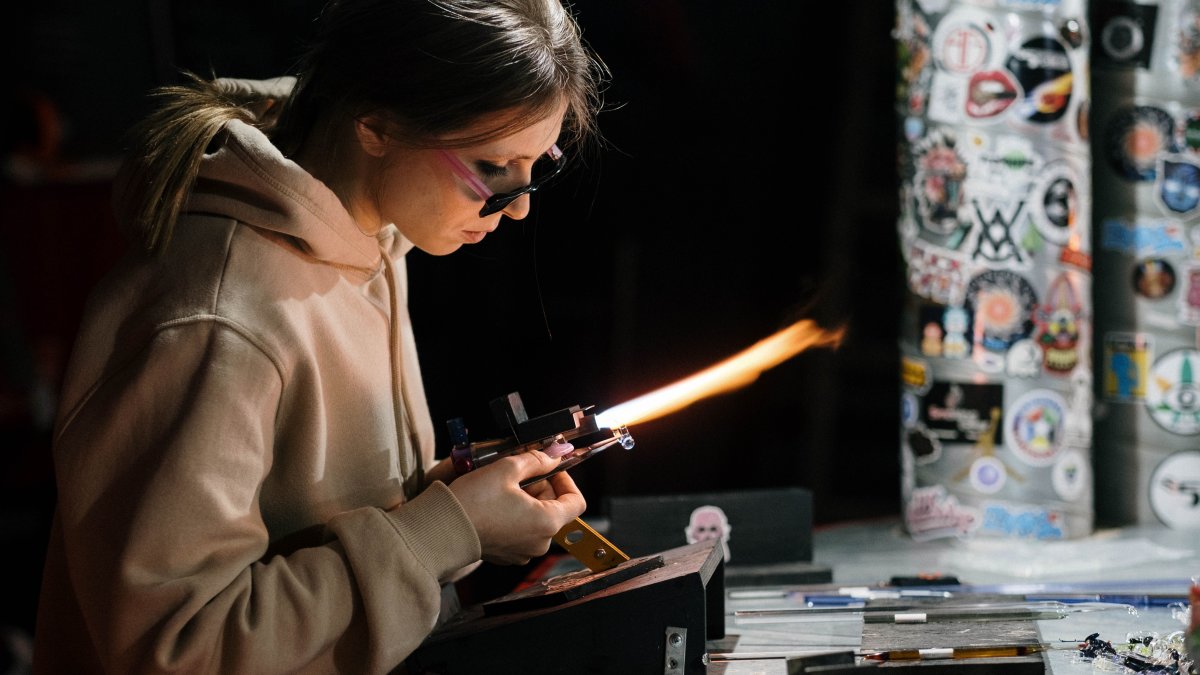
Introductory glass classes are built for people with little or no prior experience. In a typical beginner session, you can expect an orientation to the tools and safety procedures for that technique, an instructor demonstration, guided practice, and a first project sized for a newcomer. Beginners curious about other media can read what to expect in a beginner pottery class for comparison.
Our listings come in three main formats:
- Sampler workshops offer a short, focused introduction to one technique. They work well for trying glass once or finishing a small piece.
- Weekend workshops give you more time for multi-stage projects and for steps like kiln work that take time to complete.
- Specialty intensives rotate with the schedule and may be led by experienced or visiting instructors. Prerequisites vary, so read each listing closely.
Returning students can build on that foundation in later sessions, improving heat and tool control, developing more detailed designs, and working with greater independence. Advanced instruction may cover more complex torchwork and specialty glass for students who already have a foundation in lampwork, stained glass, or fused glass.
Some pieces are ready to take home right away. Others need extra time to finish, so check the individual class listing for specifics before you register.
Safety First: Why Eye Protection Matters at the Torch
Torch work involves open flame, intense heat, and hot glass, and a good studio treats safety as part of the craft.
That emphasis matches what workplace safety regulators expect. OSHA’s eye and face protection standard, 29 CFR 1910.133, calls for appropriate protection against hazards that include molten material and potentially injurious light radiation, along with filter lenses of an appropriate shade number for the work. The rule governs employers, but the principle carries into every studio where people work near a flame.
Note that torch and kiln work belongs in a supervised studio, guided by a qualified instructor and the safety rules of that class.
Which Path Fits You?
Use these quick prompts to find your starting point. As you compare glass blowing classes, read each description for the heat source and the starting material.
- You picture large vessels formed at a furnace. That is glass blowing proper, and it takes place in a hot shop built around furnaces.
- You like small, detailed work you can control at a bench. That points to lampworking and flameworking.
- You love color and pattern but feel unsure about torches. Fused glass and stained glass offer other ways into the material.
- You are shopping for a child or teen. Look for age-appropriate glass classes offered through seasonal programs, as torch and kiln work requires appropriate instruction and supervision.
No single answer is correct. Each path teaches you something about how glass behaves, and many makers try more than one. For younger makers, children’s pottery classes are another way to start with the center’s programs.
Frequently Asked Questions
Is flameworking easier to learn than glass blowing?
Both techniques require practice, patience, and careful handling of heated glass. Flameworking may feel more approachable to some beginners because it involves smaller pieces and detailed benchwork. Furnace glass blowing involves larger quantities of molten glass and often requires coordinated movements. Neither is inherently easier, and progress depends on the student, instructor, and class format.
What kinds of glass do flameworkers use?
Flameworkers commonly work with soda-lime glass, often called soft glass, and borosilicate glass. These materials have different working temperatures and thermal properties, which influence the equipment and techniques used. Beginners should use the glass specified by their instructor, since combining incompatible glass types can lead to cracking during cooling.
How long does it take for a flameworked glass piece to cool?
Cooling time depends on the piece’s size, thickness, glass type, and annealing requirements. Small pieces may need several hours in a kiln, while larger or more complex work can take longer. Proper annealing helps reduce internal stress and the risk of cracking. Your instructor can explain when your finished project will be ready for collection.
Do I need artistic experience before taking a glassworking class?
Many introductory glassworking classes welcome students without prior artistic or technical experience. Instructors typically introduce essential tools, basic techniques, and beginner-friendly projects through demonstrations and guided practice. Some specialty workshops require previous experience, so review the prerequisites before registering.
Can I practice in the Glass Studio between classes?
Brookfield Craft Center offers monitored Open Studio opportunities for eligible students and members. Participation generally requires appropriate prior training and experience, and additional age or eligibility restrictions may apply. Availability and access requirements can change, so check the current Open Studio guidelines before purchasing a session. Seeing an overview of how a class differs from Open Studio can help you choose between them.
Ready to Try Glass at Brookfield Craft Center?
If you are comparing glass blowing classes in CT, Brookfield Craft Center’s Glass Studio is a welcoming place to see the torch-based options. You can look through sampler workshops, weekend sessions, and specialty classes, then pick the format and experience level that suits you. If the differences between a class, workshop, or course are unclear, the center’s broader guide can help. Class availability, instructors, and schedules change, so the current listing is your best guide.
Discover torch-based lampworking, sampler workshops, and specialty sessions at our studio today.
Related Posts