What’s in This Guide
- Is a Beginner Blacksmithing Class Right for You?
- Why Strength Concerns Keep New Students on the Sidelines
- Common Concerns First-Time Students Bring to Class
- What a Beginner-Level Class Actually Covers
- Essential Tools and Equipment Beginners Will Use
- How Beginners Build Forge Skills, Step by Step
- Safety, PPE, and What to Expect at the Anvil
- When You’re Ready to Progress Beyond a First Class
- Frequently Asked Questions
- Ready to Try Beginner Blacksmithing in Brookfield, CT?
Quick Facts
- Beginner blacksmithing focuses on technique and body mechanics, not raw strength.
- ABANA Level I begins with safety before core forging skills.
- Most beginner classes require no prior experience, but some physical stamina helps.
- Closed-toe leather shoes, natural-fiber clothing, and proper eye protection are standard.
- Progression usually depends on safe technique and instructor approval, not time spent training.
Is a Beginner Blacksmithing Class Right for You?
Yes, in most cases. Beginner blacksmithing classes are designed for people who have never touched a forge. Instructors introduce heat, tools, and hammer control step by step, and physical strength plays a smaller role than most first-timers expect.
Patience, focus, and a willingness to repeat a motion matter more. Blacksmithing rewards accuracy over force, which is why people searching for blacksmith classes nearby for beginners may find hands-on instruction more approachable than trying to learn entirely through videos or tutorials.
The real question worth asking before registering is not “am I strong enough,” but “am I ready to move slowly, follow instruction closely, and practice a motion until it becomes consistent.” Most beginners answer yes to that question, even if they arrive uncertain.
Why Strength Concerns Keep New Students on the Sidelines
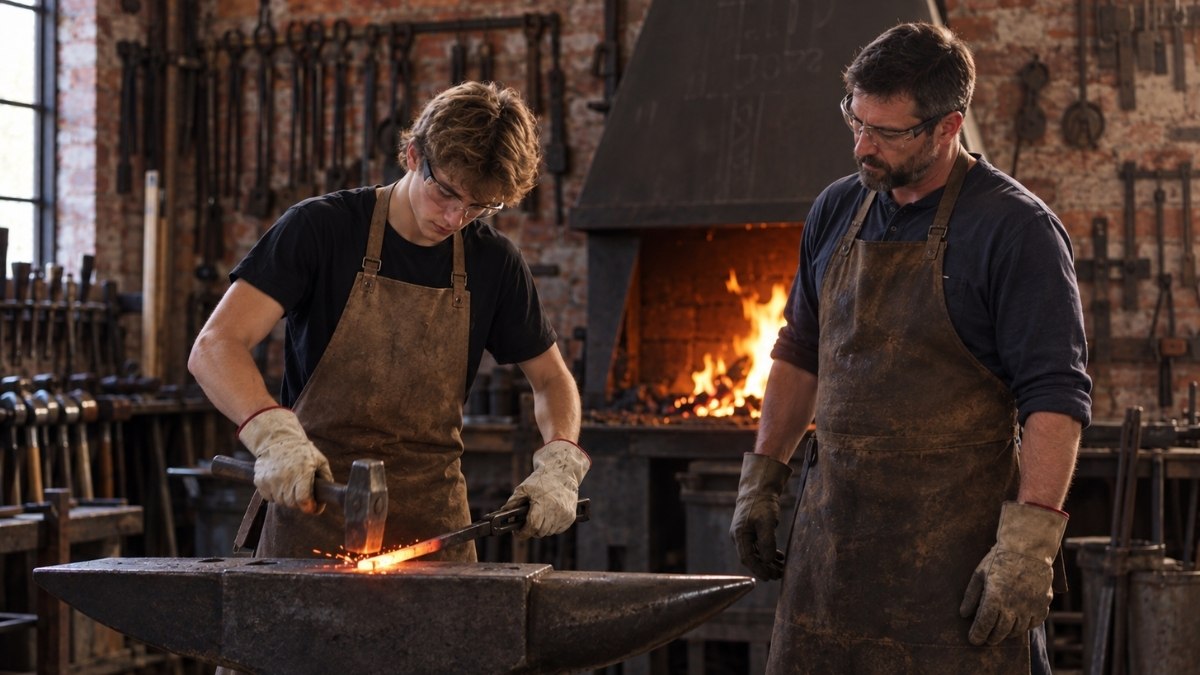
Blacksmithing Looks More Physical Than It Really Is
Many beginners assume blacksmithing requires significant upper-body strength. In practice, introductory classes focus more on learning controlled movement, safe tool use, and basic forging technique.
Technique Matters More Than Force
Effective forging depends on timing, accuracy, and working the metal at the right temperature. A controlled hammer strike can often accomplish more than simply swinging harder.
Lighter Hammers Make Learning More Manageable
New students usually begin with lighter hammers that are easier to control. This allows beginners to develop proper grip, stance, and swing mechanics before progressing to heavier tools.
Proper Hammer Control Reduces the Need for Strength
Good blacksmithing technique relies on allowing the hammer’s weight and momentum to do much of the work. As students become more comfortable with the movement, forging can feel less physically demanding than they initially expected.
Common Concerns First-Time Students Bring to Class
Strength is not the only worry that keeps beginners on the sidelines. A few other concerns come up often, and most have straightforward answers.
- Will I get burned? Forges and hot metal carry real risk, which is why studios train new students on tool handling and safe movement before any hammering starts. Following instruction and wearing required gear significantly reduces the risk of a serious burn.
- What if I ruin the project? Beginner projects are chosen specifically because they tolerate mistakes. Instructors expect uneven early attempts and treat them as part of learning, not a sign a student is in the wrong class.
- Do I need to be artistic? Blacksmithing is a technical craft first. Design sense develops with experience, and a first class focuses on control and repetition rather than creative output.
- How physically demanding is a full session? Most beginner sessions involve standing, moving between the forge and anvil, and repetitive hammer strikes. It is more comparable to a few hours of active hands-on work than a strength-training workout.
What Blacksmith Classes Near Me for Beginners Actually Cover
Beginning blacksmithing classes generally follow a similar arc. The ABANA National Curriculum Level I is a widely referenced framework for this stage, and many foundational forge programs introduce skills in a comparable order, moving from safety fundamentals into hands-on technique before students attempt a complete project.
|
Skill Area |
What It Involves |
|
Forge safety and fire management |
Lighting and maintaining a fire, reading heat color, and safe tool handling |
|
Tapering and drawing out |
Thinning and lengthening stock to create points, edges, and tapers |
|
Bending and basic joinery |
Shaping curves and simple connections between pieces of metal |
|
Punching and drifting |
Creating and shaping holes through hot metal, a skill used in hooks, latches, and hardware |
|
Heat treating |
Hardening and tempering simple hand tools so they hold an edge or shape |
Programs built around this progression often take multiple sessions to build real comfort at the anvil, with pacing depending on the student and how often they practice. Some students settle into rhythm within their first class, while others need repeated sessions before basic moves feel automatic.
Essential Tools and Equipment Beginners Will Use
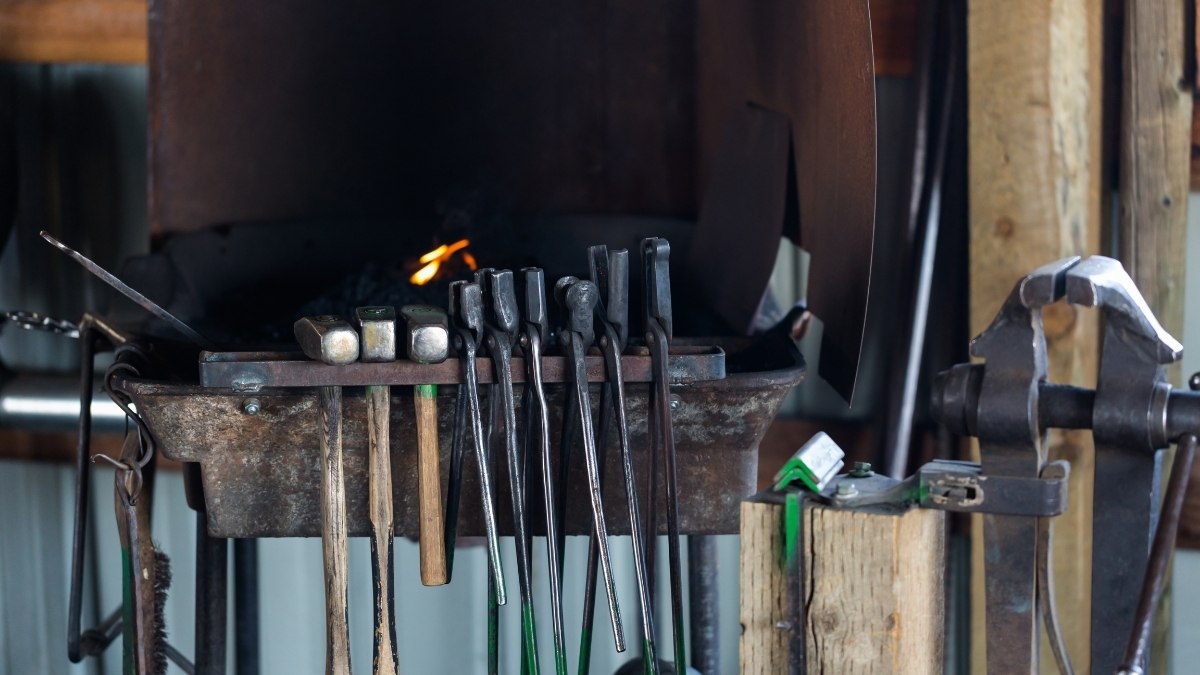
Understanding the basic toolkit ahead of time can make a first-class feel less unfamiliar. Beginners typically work with a small, consistent set of equipment rather than a large or specialized collection.
- Forge. The heat source, often coal, coke, or propane, used to bring metal to a workable temperature.
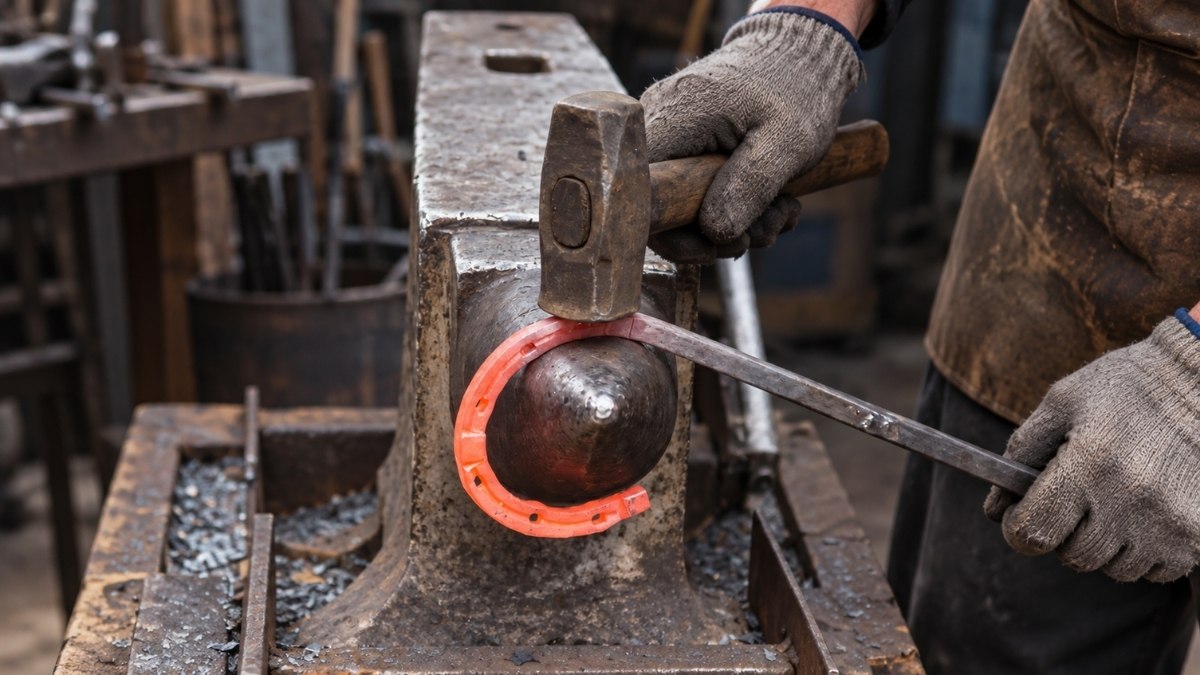
- Anvil. A heavy steel work surface used for shaping, straightening, and finishing hot metal.
- Hammer. A cross-peen or ball-peen hammer in a beginner-appropriate weight is standard for early sessions.
- Tongs. Used to grip and hold hot metal safely, keeping hands well away from the heat.
- Quench tank. A container of water or oil used to cool finished pieces and, in some cases, to harden steel.
Studios typically provide shared studio tools for beginner classes, so new students are not expected to arrive with their own equipment. Personal tools become more relevant as students progress into continued instruction.
How Beginners Build Forge Skills, Step by Step
A typical first blacksmithing class introduces skills in a deliberate order rather than all at once.
- Safety orientation. Students learn forge operation, proper tool handling, and how to move safely around fire and hot metal before any hammering begins.
- Fire and heat control. Instructors demonstrate how to read metal color as an indicator of temperature and working range, since forging outside that range wastes effort and risks damaging the piece.
- Basic hammer technique. Students practice striking with control and consistency on scrap stock before starting a project, focusing on stance, grip, and a relaxed swing rather than force.
- Foundational moves. Tapering, bending, and drawing out metal introduce the core motions used in nearly every later project, and repetition here builds the muscle memory that later techniques depend on.
- Tool handling with tongs. Students practice safely gripping, rotating, and moving hot stock between the forge and anvil without exposing hands to heat.
- A first completed piece. Simple projects, such as hooks, S-hooks, or basic tools, let beginners apply new skills from start to finish and see a tangible result from the session.
Each step builds directly on the last, which is why prior experience is rarely a prerequisite for a true beginner course. Students who struggle with one step are typically given more repetition rather than moved ahead before they are ready.
Safety, PPE, and What to Expect at the Anvil
Forge work involves open flame, radiant heat, and flying scale, so safety equipment is not optional. Reputable studios require eye protection meeting the OSHA eye and face protection standard, since sparks and hot scale present a genuine eye hazard.
Expect these general requirements at most studios:
- Closed-toe leather shoes or boots, no synthetic materials
- Natural-fiber clothing such as cotton or wool, since synthetics can melt on contact with heat
- Long pants and sleeves that can be rolled up safely
- Hair tied back and no loose jewelry near the fire or anvil
Beyond personal protective equipment, forge safety also depends on the studio environment itself. Coal, coke, and propane forges all produce combustion byproducts, and carbon monoxide is a recognized workplace hazard that can build up quickly in enclosed spaces, even ones that appear reasonably ventilated. Established studios manage this through adequate airflow and forge placement rather than leaving it to individual students.
Burns are the most common injury concern beginners raise, and most result from momentary lapses, such as touching metal that looks cool but is not, rather than from the hammering itself.
Instructors typically address this directly during safety orientation, since recognizing that “black” metal can still be hot enough to burn skin is one of the more important lessons in a first session.
When You’re Ready to Progress Beyond a First Class
Completing a beginner class does not automatically grant access to independent forge time. Most studios look for demonstrated safety habits first, including:
- Comfortable, controlled hammer technique without close supervision
- Consistent fire and heat management
- Clean, safe habits around tools and hot metal
Continued Instruction
For most students, the next step is additional guided coursework rather than independent practice. Continued instruction builds on Level I-style fundamentals with more complex joinery, forge welding, and project work, giving students more repetitions before they work without direct supervision.
Open Studio Eligibility
Where available, open studio access lets experienced students practice independently outside a scheduled class. Because forge work involves live fire and hot tools, eligibility is typically more selective than in lower-risk studios, and instructor evaluation plays a larger role than a simple class count. Eligibility requirements and available hours vary by studio and should be confirmed directly.
Frequently Asked Questions
Do I need experience before taking a beginner blacksmithing class?
No. Beginner classes are built for first-time students. Review the specific listing for any prerequisites, since these can vary by course.
Do I need to be strong to blacksmith?
Not particularly. Technique, hammer control, and timing matter more than raw strength. Reasonable stamina for standing and repetitive movement helps more than upper-body power.
Is blacksmithing safe for beginners?
Blacksmithing carries real hazards, including burns and hot flying debris, but structured beginner classes reduce that risk through safety orientation, required protective equipment, and close instructor supervision. Following studio guidance is the most important factor in staying safe.
What age is appropriate for a beginner blacksmithing class?
Age requirements and any related restrictions vary by studio and by class format, including whether a course is designed for adults, teens, or a mixed group. Review the specific class listing for age guidance before registering.
How much do beginner blacksmithing classes usually cost?
Pricing varies based on class length, materials, project type, and instruction format. Check the current course details before registering so you know what is included in the tuition.
Ready to Try Beginner Blacksmithing in Brookfield, CT?
At Brookfield Craft Center, we offer a welcoming introduction to blacksmithing in a guided studio setting. Our beginner classes cover the basics of forge work, including safe tool use, hammer control, and simple shaping techniques.
Students learn at a comfortable pace while getting familiar with the tools and processes used in traditional blacksmithing. As skills grow, there are opportunities to continue with additional classes and studio experiences.
Since class availability can change throughout the year, if you are searching for blacksmith classes near you for beginners, we recommend checking our current forge listings to find a session that fits your schedule and comfort level.