What’s In This Guide
- What Happens in a Beginner Pottery Class?
- Why Knowing What to Expect Helps You Learn Faster
- What to Wear and Bring to Your First Class
- Studio Safety and Etiquette for New Students
- How a Beginner Pottery Class Unfolds: Step-by-Step
- Wheel-Throwing or Hand-Building: Which Beginner Path Fits You?
- Why Common Beginner Frustrations Are Normal
- Why Your Piece Isn’t Ready to Take Home the Same Day
- How to Choose the Right Beginner Pottery Class
- Frequently Asked Questions
- Ready to Try Your First Pottery Class?
Walking into a pottery studio for the first time raises real questions. What do you wear? How messy does clay actually get? Will your first piece even survive the wheel?
A search for “beginner pottery classes near me” often starts with the same practical questions. Knowing the class flow, what to bring, and what happens to your piece after the session can make the first visit easier to navigate.
Quick Facts
- Hands-on practice typically follows an orientation and instructor demonstration. Students first learn the studio basics and see the technique before trying it themselves.
- Clay can stain clothing. Choose something you do not mind getting dirty rather than an outfit you want to keep spotless.
- A finished piece is not ready the same day. Drying, a bisque fire, glazing, and a second fire typically span several weeks.
- Beginner classes may focus on wheel-throwing, hand-building, or both. Check the course description to see which techniques are included in the session.
- Course length, format, and prerequisites vary by session. Confirm experience level and materials on the current class listing before you register.
What Happens in a Beginner Pottery Class?
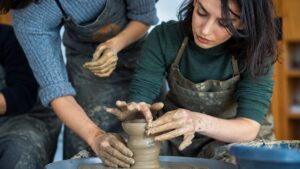
A typical beginner class opens with a brief safety and studio orientation, followed by an instructor demonstration of that session’s core technique. Students then spend most of the class time working directly with clay while the instructor circulates to offer feedback. Class wraps with cleanup and a short note on what happens next with your piece.
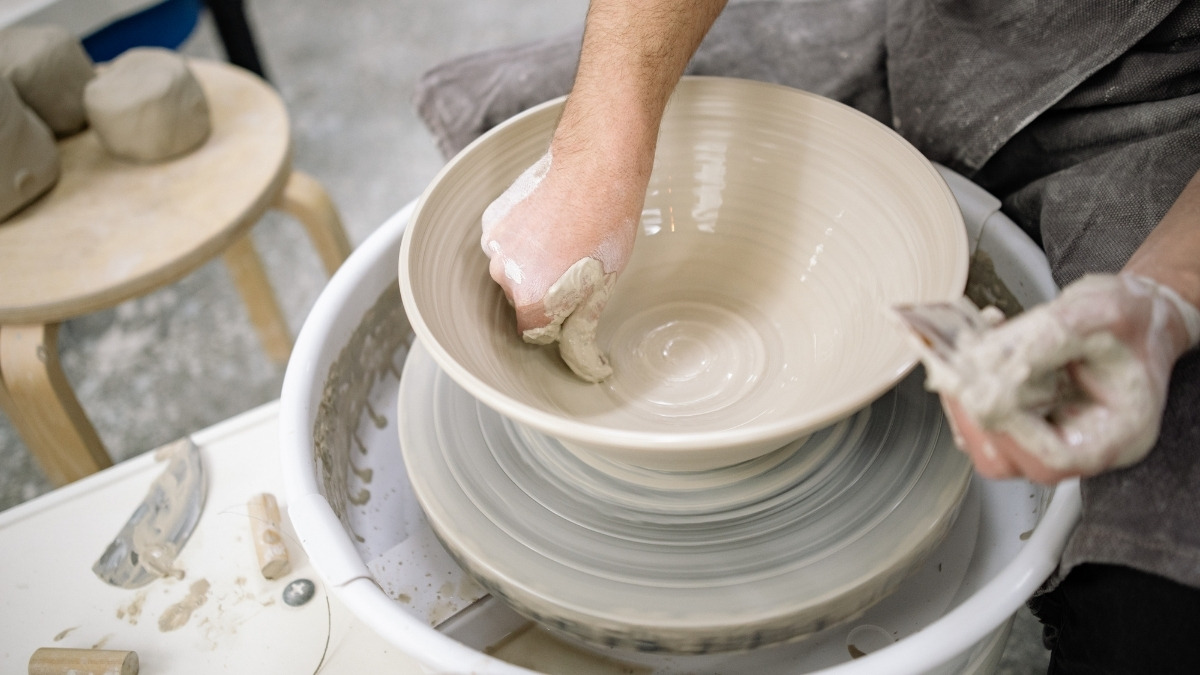
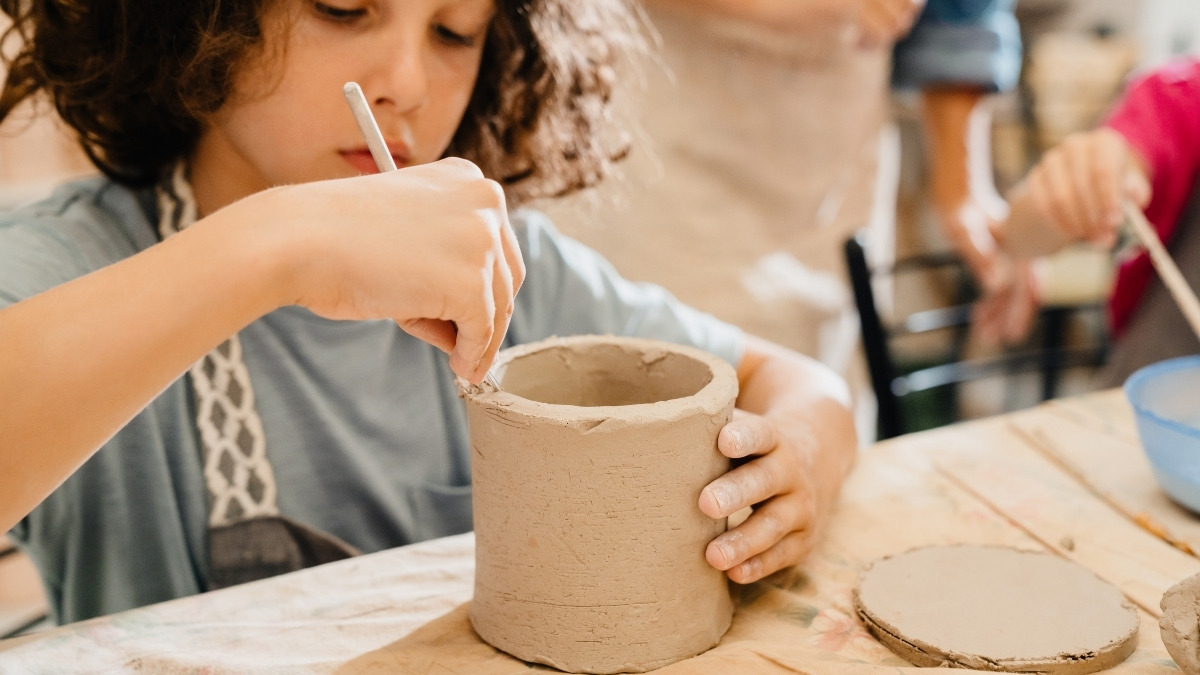
That structure holds whether the class centers on the wheel or hand-building. What changes is the specific technique: centering and pulling walls on the wheel, or pinching, coiling, and building with slabs at a table.
Most first sessions focus less on finishing a polished object and more on learning how clay behaves under your hands. Expect wobbly walls, uneven pinch pots, and a few restarts. That is part of the process, not a sign that something has gone wrong.
How Knowing What to Expect Can Help You Settle In
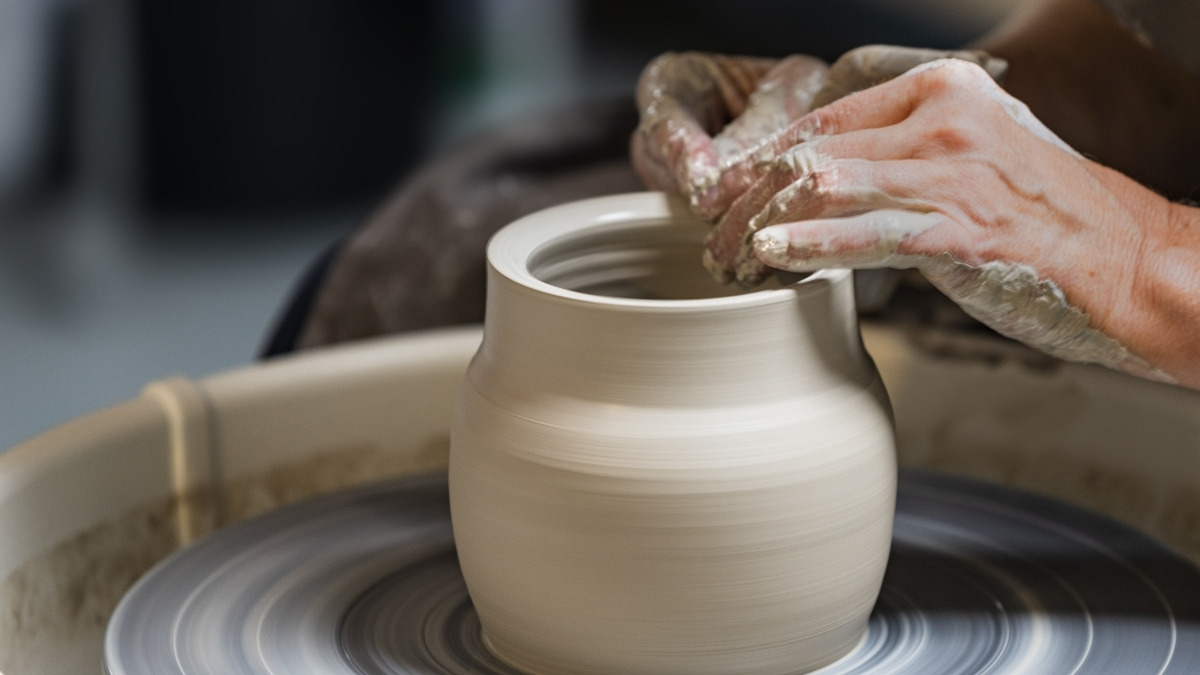
Knowing the basic class flow can reduce uncertainty about what happens first, what equipment you will use, and when to ask for help. It can also make it easier to follow the instructor’s demonstration and focus on the technique being introduced.
Early results are often uneven. Centering may take several attempts, and hand-built forms may not look symmetrical right away. Treating those first pieces as practice keeps the focus on learning the process rather than producing a perfect object.
The most useful preparation is simple: watch the demonstration closely, ask questions when something is unclear, and pay attention to how the clay responds to pressure and moisture.
What to Wear and Bring to Your First Class
Wear clothes you do not mind staining, since wet clay does not always wash out completely. Closed-toe shoes and tied-back hair are standard practice around a working pottery wheel, and jewelry, especially rings and bracelets, is best left at home.
Clothing and preparation basics:
- Comfortable, older clothing that can get wet or stained
- Closed-toe shoes for standing at a wheel or worktable
- Hair tied back if it is long enough to fall forward
- Minimal jewelry, particularly on hands and wrists
- A hand towel or apron, if you want extra coverage
Materials and tools included with a class vary by course and studio. Some sessions include clay, glazes, and firing in the course fee, while others ask students to purchase clay separately or bring specific tools.
Pricing for materials and course fees varies by session length, clay type, and firing needs, so confirm current costs when you register.
Studio Safety and Etiquette for New Students
Pottery studios run on shared space, shared tools, and shared kilns, so etiquette matters as much as technique. New students are expected to listen during demonstrations, clean their own workstation, and use tools and wheels respectfully alongside other students.
Common studio etiquette includes:
- Waiting for the instructor’s demonstration before starting on your own
- Wiping down your wheel head, table, and tools after use
- Using the studio’s wet-cleanup method for clay residue instead of dry sweeping or brushing
- Returning shared tools to their designated spot
- Asking before touching another student’s in-progress piece or workstation
Airborne dust is a safety consideration in ceramic work, not just a housekeeping issue. OSHA identifies respirable crystalline silica as an occupational hazard in pottery and ceramic manufacturing, so follow the studio’s procedures for cleaning clay residue without sending dry dust into the air. Your instructor will explain the specific safety rules for the studio.
READ MORE: Short Blacksmithing Sampler vs. Weekend Workshop: Which Beginner Format Fits Your Goals?
How a Beginner Pottery Class Unfolds: Step-by-Step

A first pottery class generally follows five stages, from orientation to cleanup. Knowing what happens at each stage helps you know what to focus on and when.
Step 1: Arrival and Studio Orientation
Plan to arrive a few minutes early. Most instructors open with a brief studio orientation covering where supplies are kept, how to use shared equipment, and basic safety expectations for that session.
Step 2: Watching the Instructor Demonstration
Before touching any clay, students typically watch the instructor demonstrate that class’s technique, whether that is centering clay on the wheel or starting a pinch pot by hand. Pay close attention here. The demonstration can answer many initial questions about the technique before hands-on practice begins.
Step 3: Hands-On Practice With Clay
This is where most of the class happens. Students work at their own wheel or table station, applying what the instructor just demonstrated. Expect to repeat the same basic motion several times before it starts to feel natural.
Step 4: Feedback and Troubleshooting
Instructors circulate during hands-on time to check in, adjust hand position, or explain why a wall collapsed or a pot went off-center. This feedback helps students correct problems while the clay is still workable and apply the adjustment on the next attempt.
Step 5: Cleanup and Next Steps
Class typically ends with cleanup: wiping down stations, storing tools, and setting finished or in-progress pieces on a drying shelf. Your instructor will usually explain what happens next, including drying time and the firing schedule.
What Wheel-Throwing and Hand-Building Feel Like in a First Class
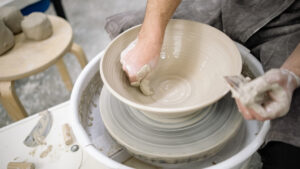
A wheel-focused class introduces you to controlling clay while it spins, with early practice usually centered on hand position, pressure, and keeping the clay stable on the wheel. A hand-building class keeps the work at the table, where you shape clay directly using methods such as pinching, coiling, or slabs.
For a first class, choose the format you actually want to experience. A wheel-focused session makes sense if learning the potter’s wheel is the main draw, while hand-building lets you construct forms directly by hand. Some beginner courses introduce both methods, so check the class description before registering.
Why Common Beginner Frustrations Are Normal
Collapsing walls, off-center clay, and cracks are common problems beginners may encounter while learning pottery. They usually point to a technique, moisture, thickness, or drying issue that an instructor can help identify.
|
Common Frustration |
Why It Happens |
What Helps |
|
Clay will not center on the wheel |
Uneven pressure or shifting hand position |
Stable hand position, steady pressure, and the wheel speed recommended by the instructor |
|
Walls collapse while pulling |
Clay too wet, or walls pulled too thin and fast |
Firmer clay and more gradual, even pulls |
|
A pinch pot cracks at the rim |
Uneven wall thickness, a thin rim, or uneven drying |
Keep the rim and walls at a consistent thickness and follow the instructor’s guidance for slow, even drying |
|
Hands cramp during practice |
New muscle use and unfamiliar grip |
Short breaks and a more relaxed hand position |
Treat these as feedback from the clay, not a verdict on your ability. Instructors regularly encounter these beginner issues and can help identify the technique, moisture, or handling adjustment that may be needed.
Why Your Piece Isn’t Ready to Take Home the Same Day
A finished, glazed piece needs drying, a bisque fire, glazing, and a second fire, a process that typically takes several weeks in a shared studio. Expecting to walk out with a finished mug after one class sets up unnecessary disappointment.
The general timeline looks like this:
- Drying: Your piece needs to dry completely before firing. Thicker pieces may take longer to dry.
- Bisque firing: Once the greenware is completely dry, the studio fires it to create durable, porous bisqueware ready for glaze.
- Glazing: Glaze is applied to the bisque piece according to the class format and studio process.
- Glaze firing: A second firing melts and matures the glaze into a durable, glass-like surface. The firing temperature depends on the clay body and glaze system.
Shared studios typically fire work in scheduled batches rather than running a kiln for each individual piece. Drying time, kiln scheduling, and the firing process can therefore add several weeks between your first class and pickup of a finished, glazed piece.
How to Choose the Right Beginner Pottery Class
The right first class depends on your schedule, whether you prefer the wheel or hand-building, and how much structure you want. Single-session workshops suit a casual introduction, while multi-week courses give more time to build real skill.
Before registering, check the class listing for the recommended experience level, session length, and included materials. Some beginner classes focus entirely on wheel-throwing or entirely on hand-building, while others introduce both.
Frequently Asked Questions
Do I need experience to take a beginner pottery class?
No. Beginner pottery classes are designed for students with little or no previous experience. Instructors typically demonstrate the basic techniques before students begin working with clay on their own.
How long does a beginner pottery class usually last?
Class length depends on the studio and course format. Some introductory workshops meet once, while multi-week courses provide more time to practice techniques, complete pieces, and build skills between sessions. Check the individual class listing for the current schedule.
Do I get to keep everything I make in pottery class?
That depends on the class and studio. Some courses include firing for a certain number of pieces, while others may have limits or separate material and firing fees. Check the class details before registering so you know what is included.
What happens if my pottery cracks or breaks during firing?
Occasional cracking or breakage can happen as clay dries and goes through the kiln. Uneven thickness, trapped moisture, construction problems, and other factors can contribute. Instructors usually teach beginners techniques that reduce these risks, but no handmade piece is guaranteed to survive every stage of firing.
Can pottery made in a beginner class be used for food and drinks?
Some finished pottery can be suitable for food or drink, but that depends on the clay body, glaze, firing temperature, and studio materials. Ask your instructor whether the materials used in your class are intended for functional pieces such as mugs, bowls, or plates.
Ready to Try Your First Pottery Class?
Brookfield Craft Center is a nonprofit craft school with a dedicated Clay Studio built for hands-on pottery instruction. Beginners work alongside experienced instructors in a small, community-focused studio setting.
If you are looking for pottery classes for beginners near you, explore our current class listings to find a session that fits your schedule and start working with clay today.