What’s in This Guide
- What Is the Real Difference Between a Pottery Class and Open Studio?
- Why Studio Readiness Matters Before You Sign Up
- Signs You Are Ready for Independent Studio Time
- Signs You Should Stay in Guided Classes a Little Longer
- How to Move From Class to Open Studio: A Step-by-Step Checklist
- What Affects Pottery Studio Membership Near Me and Open Studio Access
- Staying Safe in a Shared Ceramics Studio
- Frequently Asked Questions
- Ready to Build Skills in a Pottery Class or Open Studio?
Your last wheel-throwing session just wrapped up, and the instructor is packing away tools. Your centering feels steadier, your walls pull more evenly, and you are already picturing your next piece.
The real question is timing: are you ready to work independently, or would another guided class serve you better first?
A search for a pottery studio nearby usually solves the first problem, finding a place to learn. The harder decision comes after you have taken a class or two: knowing when structured instruction should give way to open studio practice and what that transition actually requires.
Quick Facts
- Foundational class completion first. Most open studio programs require finishing an introductory wheel-throwing or hand-building course before independent access is granted.
- Silica dust is a real hazard. OSHA’s respirable crystalline silica standard (29 CFR 1910.1053) caps general industry exposure at 50 micrograms per cubic meter over an 8-hour period, a benchmark shared studios build cleaning routines around.
- Readiness is skill-based, not calendar-based. Centering consistency, trimming control, and safe kiln and tool handling matter more than the number of weeks enrolled.
- Membership and access rules vary by studio. Clay, glass, and other craft studios set separate open studio eligibility, so confirming requirements before registering avoids wasted fees.
- Cleanup responsibility shifts in open studio. Wet-cleaning surfaces and reporting equipment issues become the student’s job once instructor supervision ends.
What Is the Real Difference Between a Pottery Class and Open Studio?
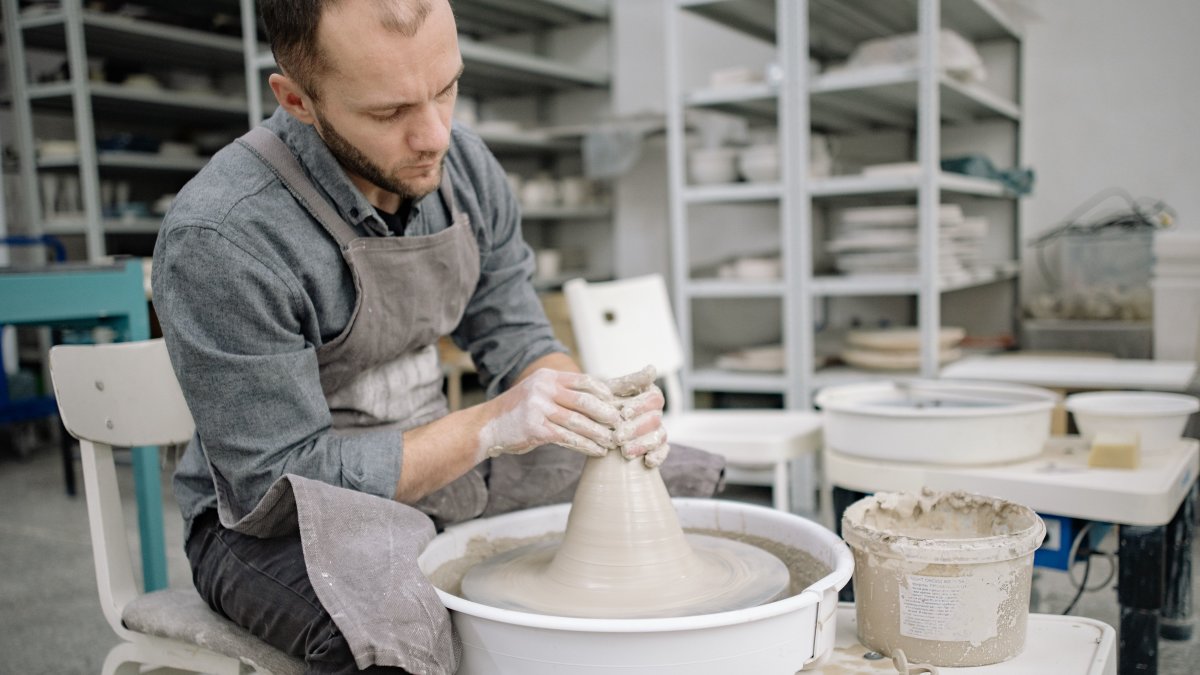
A pottery class pairs you with an instructor who demonstrates technique, corrects your form in real time, and guides each session toward a specific project. Open studio removes that instructor-led structure and gives eligible students monitored, independent time to practice.
|
Feature |
Guided Pottery Class |
Open Studio |
|
Instruction |
Step-by-step demonstration and feedback |
Minimal, questions only as needed |
|
Project focus |
Structured, often assignment-based |
Self-directed, your own projects |
|
Equipment access |
Shared under instructor supervision |
Shared, used independently |
|
Best for |
Building foundational technique |
Practicing and refining existing skills |
|
Typical prerequisite |
None for beginner sections |
Completion of an introductory course |
Most craft studios treat open studio as a continuation of class instruction rather than a replacement for it. Access still requires demonstrated comfort with basic techniques, studio tools, and shared equipment before a student works without direct supervision.
Why Studio Readiness Matters Before You Sign Up
Working independently in a shared ceramics studio carries real consequences when skills are not fully in place.
Wasted Materials and Equipment Strain
A student who is not yet centering consistently can waste clay, strain studio wheels, or leave pieces vulnerable to cracking in the kiln.
Safety for Everyone in the Studio
Shared studios rely on every user to handle tools carefully, keep floors dry, and clean surfaces properly. A student unfamiliar with those habits can create hazards for the next person in the room.
Less Support to Catch Mistakes
Open studio sessions are typically monitored rather than instructor-led, so a student who still needs step-by-step correction may not get enough support to keep progressing. Staying in guided instruction a little longer often produces better results than moving to independent practice too early.
Signs You Are Ready for Independent Studio Time
- You can center clay consistently without instructor correction on most attempts.
- You understand how to safely load, monitor, and unload studio equipment such as wheels, slab rollers, or extruders.
- You know the basics of clay recycling, wedging, and moisture management without being reminded.
- You can identify when a piece is ready for trimming, drying, or bisque firing.
- You are comfortable cleaning your workstation with wet methods and returning shared tools to their proper place.
Signs You Should Stay in Guided Classes a Little Longer
- Centering still takes multiple attempts, or walls collapse frequently during throwing.
- You are unsure how to safely operate shared equipment without supervision.
- You have not yet practiced trimming, handle attachment, or surface finishing on your own.
- Cleanup habits still need reminders, particularly around wet-cleaning versus dry sweeping.
- You feel uncertain about studio etiquette, such as sharing space or storing greenware properly.
How to Move From Class to Open Studio: A Step-by-Step Checklist
Step 1: Finish an Introductory Course
Most craft studios require completing a foundational wheel-throwing or hand-building class before granting open studio eligibility. Confirm your specific studio’s prerequisite before registering for independent time.
Step 2: Ask Your Instructor for an Honest Assessment
Instructors see your technique across multiple sessions. A direct conversation about your centering, trimming, and equipment handling gives you a clearer readiness picture than self-assessment alone.
Step 3: Review the Studio’s Open Studio Policy
Eligibility rules, scheduling, and membership requirements vary by studio and craft center. Review the current policy for your specific clay or other studio before assuming access is automatic.
Step 4: Practice Studio Safety Habits During Class
Wet-cleaning surfaces, wearing closed-toe shoes, and safely operating shared equipment should become habits during instruction, not new skills learned once supervision ends.
Step 5: Start With Shorter Independent Sessions
If your studio allows it, begin with shorter open studio blocks before committing to a full membership or a multi-session pack. This lets you gauge comfort level before adding a recurring cost.
Step 6: Reassess Regularly
Skill level, confidence, and safety habits change over time. Periodically revisit whether guided instruction, a refresher session, or continued open studio access best fits your current stage.
A technique that felt solid after your first course can get rusty after months away from the wheel, and new equipment, updated studio procedures, or a stretch of inconsistent practice are all reasonable reasons to check back in with an instructor rather than assume prior approval still applies indefinitely.
What Affects Pottery Studio Membership Near Me and Open Studio Access
Open studio eligibility is rarely automatic. Studios typically base access on a combination of factors rather than a single requirement. Common factors include:
- Recent class participation. Some studios require completing a class within a defined recent window, not just at any point in the past.
- Demonstrated foundational skills. Instructor sign-off or a skills check may be required before independent access is granted.
- Membership status. Some studios bundle open studio access with a membership tier, while others sell session packs or single visits.
- Current studio schedule. Open studio hours depend on staffing, studio capacity, and seasonal demand, so availability can shift throughout the year.
If you are comparing an open pottery studio near you against a membership-based option, ask each studio directly how access is structured. A pottery open studio near you is rarely one-size-fits-all, and terms that apply at one location may not apply at another.

Staying Safe in a Shared Ceramics Studio
Ceramics studios carry real, well-documented hazards, and safety habits matter more once instructor supervision decreases.
Clay contains crystalline silica, and repeated inhalation of fine clay dust can contribute to silicosis, a lung condition documented in ceramics studio safety guidance from academic art programs.
OSHA’s respirable crystalline silica standard for general industry, 29 CFR 1910.1053, sets a permissible exposure limit of 50 micrograms per cubic meter of air as an eight-hour time-weighted average, with a lower action level of 25 micrograms per cubic meter. This standard is part of why craft studios emphasize wet cleaning over dry sweeping.
Practical habits that reduce risk in a shared studio include:
- Cleaning work surfaces and floors with a wet sponge or mop rather than sweeping or dry brushing.
- Wearing closed-toe shoes and tying back long hair near wheels and kilns.
- Avoiding food and drinks near clay, glaze, and unfired materials.
- Reporting cracked equipment, malfunctioning kilns, or unclear glaze labeling to studio staff right away.
Many craft schools, including Brookfield Craft Center, reinforce these habits through posted studio guidelines and staff oversight during open studio hours. Even in independent practice, a studio’s safety expectations still apply.
Frequently Asked Questions
How long does it typically take to be ready for open studio?
Readiness depends on the individual student and the complexity of the technique, not a fixed number of classes. Some students feel ready after one introductory course, while others benefit from a second class to build confidence with centering, trimming, or safe equipment handling.
Do I need my own tools to use an open pottery studio near me?
Requirements vary by studio. Some studios provide shared tools for open studio use, while others expect students to bring a personal tool kit. Check the specific open studio policy before the first independent session.
Can I switch between classes and open studio as my schedule allows?
Many studios allow this once open studio eligibility is granted, though access still depends on the current schedule and any membership or session-pack terms. Confirm scheduling flexibility directly with the studio.
Is open studio access included with a pottery class?
Not usually. Open studio access is typically separate from class enrollment and may involve its own membership, session pack, or eligibility requirement. Review the details before assuming access is automatic.
What happens if I am not ready but want to keep practicing?
Additional guided classes, a private lesson, or a refresher session are usually better options than attempting open studio before foundational skills are solid. An instructor can recommend the right next step based on current progress.
Ready to Build Skills in a Pottery Class or Open Studio?
Brookfield Craft Center is a nonprofit craft school with a hands-on pottery studio on its historic campus along the Still River in Brookfield, Connecticut. Instruction moves from foundational demonstration through independent practice, so students can grow at their own pace.
Explore our current pottery classes to find the right starting point, or review open studio details if you are ready to practice independently.
Related Posts
- Are You Ready for a Beginner Blacksmithing Class? What First-Time Students Should Know
- What Is Art Blacksmithing? Where Function, Craft, and Creative Expression Meet
- Blacksmithing vs. Bladesmithing: Which Beginner Class Should You Choose?