What’s In This Guide
- Four Common Ways to Start Blacksmithing
- Beginner Blacksmithing Formats at a Glance
- What Is a One-Time Blacksmith Experience?
- What Makes a Short Blacksmithing Sampler Different?
- Why a Weekend Workshop Builds More Skill
- How Project Expectations Change by Format
- How to Choose the Right Beginner Blacksmithing Class
- Safety Comes First, Regardless of Format
- Frequently Asked Questions
- Find Your Next Step in Blacksmithing at Brookfield Craft Center
Between watching a short blacksmithing video and enrolling in a multi-week course lies an important question: how much instruction and repetition do you need to begin developing a practical skill?
A search for blacksmithing classes near you often produces several formats, ranging from single-session experiences to full weekend courses. Unfortunately, the differences are not always obvious from the class title alone.
Quick Facts
- A short introductory experience covers one simple project with minimal repetition.
- A sampler workshop adds more hands-on time within a single day.
- A weekend course spreads instruction across multiple sessions, allowing students to apply feedback as they move from one stage of the class to the next.
- Continued supervised practice through longer courses or open studio access supports skill development over time.
- Every format should include instructor-led safety guidance. Longer courses may also provide more opportunities to reinforce safe procedures throughout the class.
Four Common Ways to Start Blacksmithing
A Short Introductory Experience
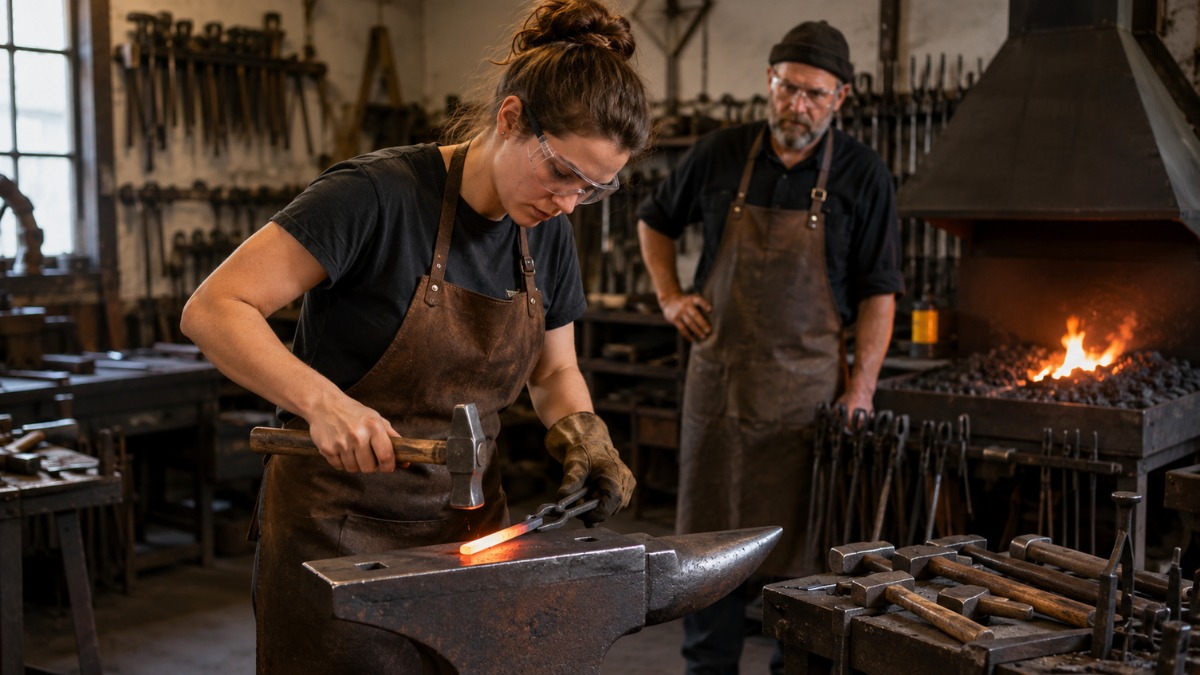
People searching for a “blacksmith experience near me” are often looking for this type of format: a single guided session lasting a few hours. Students forge one simple project, such as a hook, under close supervision. It suits first-timers, people seeking a memorable gift experience, or anyone testing their interest before committing to a longer course.
A Sampler Workshop
A sampler workshop may appeal to someone who wants more hands-on practice than a brief introductory experience but cannot commit to a full weekend course. It still takes place within one day, but it allows more time at the forge and may introduce an additional technique.
A Weekend Course
A weekend course spans two or more sessions, giving students time to practice, receive feedback, and apply that feedback as the course progresses.
Continued Supervised Practice
For students who want to keep progressing, continued supervised practice through multi-week courses or eligible Open Studio access provides ongoing repetition beyond a single weekend.
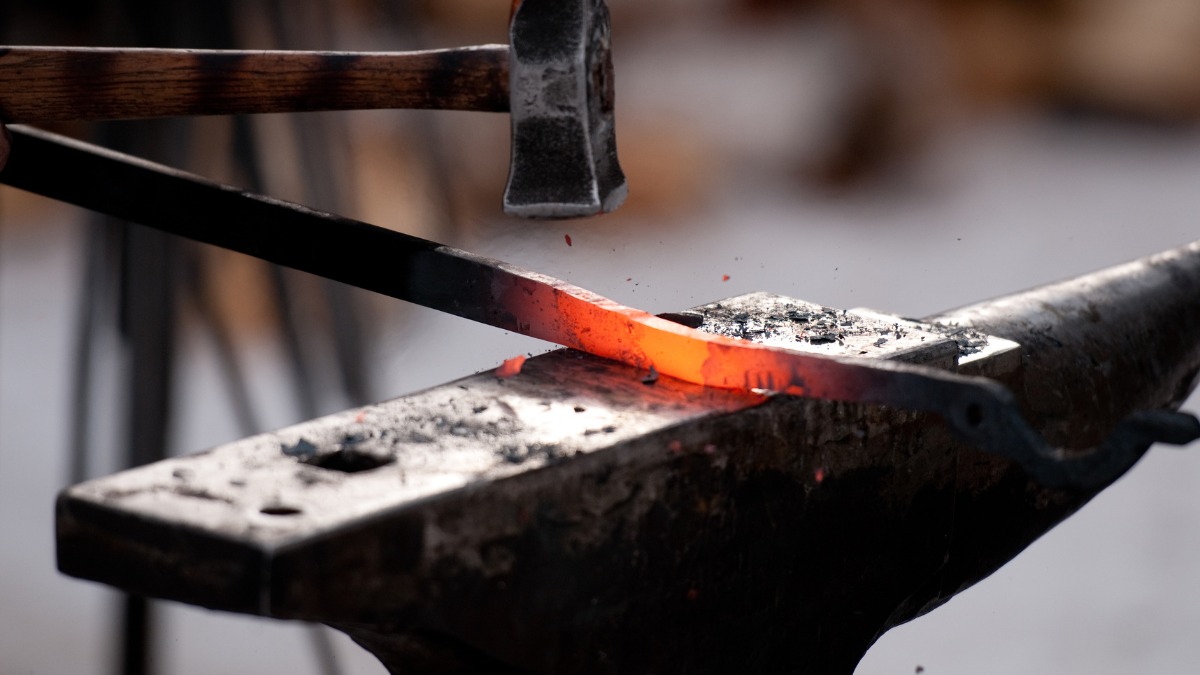
Beginner Blacksmithing Formats at a Glance
|
Format |
Commitment |
Instruction |
Repetition |
Project Expectation |
Best Fit |
|
One-time experience |
A few hours |
Basic orientation |
Limited |
Small guided activity |
Trying blacksmithing once |
|
Short sampler |
About half a day |
Foundational techniques |
Some |
Simple functional or decorative piece |
Testing interest with structure |
|
Weekend workshop |
One or more full days |
Deeper instruction |
Substantial |
Multi-step project |
Building a beginner skill base |
|
Monitored Open Studio |
Recurring sessions |
Limited formal teaching |
Self-directed |
Personal or unfinished class work |
Continuing after instruction |
The best format is not automatically the longest or cheapest. It is the one that matches what you want to learn, make, and do next.
What Is a One-Time Blacksmith Experience?
Someone searching for a “blacksmith experience near me” may be looking for a one-time activity rather than an extended course. The primary goal is exploration. Participants receive a safety orientation, learn how to work around the forge and anvil, and complete a controlled sequence under close guidance.
The instructor may prepare the material and divide the project into simple stages. You might create a taper, bend a curve, add a twist, or texture a surface. The main outcome is exposure to the process.
This format may suit people planning a gift experience or date, those with limited availability, or anyone who wants to test their comfort with heat, noise, tools, and physical work. The tradeoff is limited repetition. The session may end before unfamiliar movements begin to feel natural.
That limitation does not reduce the value of the experience; it simply reflects the nature of the format. A one-time session is best viewed as a memorable introduction rather than the more comprehensive technical instruction available in a structured weekend course.
What Makes a Short Blacksmithing Sampler Different?
For those who have limited time, a sampler may offer a practical starting point. It provides hands-on time at the forge and can help you decide whether you want to continue developing your skills.
At the anvil, you will gain hands-on experience with essential techniques. You may learn how to handle tools, hold and control a hammer, and recognize useful forging temperatures. The session typically focuses on foundational movements such as tapering, bending, twisting, and texturing, which are applied to a project designed for completion in one sitting.
Keep in mind that a sampler is not a weekend course compressed into a few hours. Instead, it provides a focused introduction in which instructors demonstrate techniques and offer individual feedback. By the end of the session, you should have a clearer understanding of the basic process and whether you want to pursue additional instruction.
Why a Weekend Workshop Builds More Skill
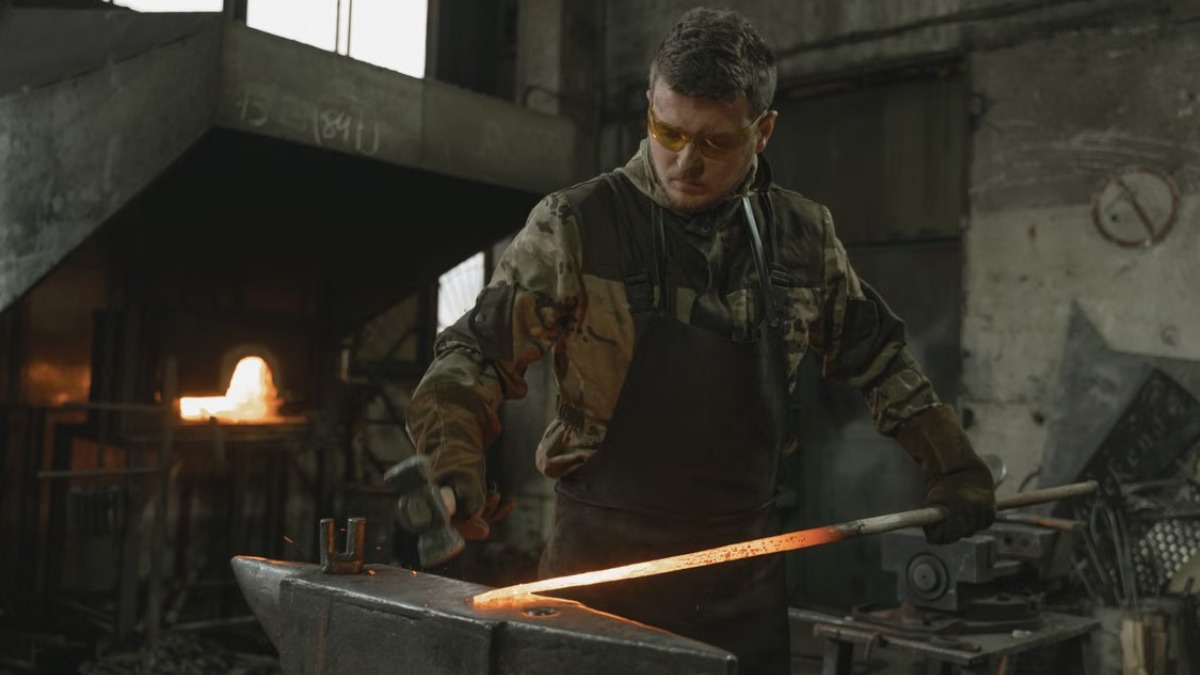
A weekend workshop changes the learning experience because it gives you time to repeat the cycle: heat, observe, strike, assess, correct, and repeat.
Blacksmithing requires coordination, timing, and judgment. You must learn where to strike the metal, when to reheat it, and how one step affects the next. Consistent practice combined with feedback can support this learning process. A meta-analysis of 15 studies found a statistically significant improvement in motor skill learning when feedback was provided, with a standardized mean difference of 0.47.
Although the research focused on physical education, its findings may have broader relevance to hands-on learning. In blacksmithing, repeated attempts paired with timely corrective feedback can help students refine physical movements and identify errors more effectively.
A weekend blacksmithing course may give you more time to develop the following skills:
Hammer Control
Beginners may strike too hard, too lightly, or at an ineffective angle. Repetition helps you observe how the hammer lands and how the steel responds to each blow.
Heat Judgment
Steel does not stay at a useful forging temperature for long. A longer workshop lets you compare color, resistance, and timing under supervision.
Project Sequencing
Projects require operations in a logical order. You may need to establish a shoulder before drawing out a section or complete a bend before access becomes difficult.
Problem Solving
One side may become thin, a curve may drift, or a twist may appear uneven. A longer workshop creates room to diagnose and correct those issues instead of rushing forward.
Greater Independence
The instructor may provide close guidance at first and gradually encourage you to make more decisions independently. This format can be particularly useful if you plan to take additional courses, develop personal projects, or eventually qualify for monitored studio practice.
How Project Expectations Change by Format
In a short introductory experience, the project usually introduces a few techniques through prepared stages or close instructor assistance. A sampler may require more independent work, while a weekend course may include additional steps, greater refinement, and more time for troubleshooting.
A longer class does not always result in a larger finished object. Instead, the additional time may allow students to understand each stage of the process more thoroughly.
Before registering, ask:
- Is the pictured object a demonstration example or the expected student project?
- Do most beginners finish during the scheduled class?
- Are materials and finishing steps included?
- Does the instructor provide prepared starting stock?
- How much individual variation is allowed?
- What happens when a student works more slowly than the group?
Clear answers make it easier to compare class formats, set realistic expectations, and choose an appropriate course.
How to Choose the Right Beginner Blacksmithing Class
1. Define Your Real Goal
Start by clarifying your primary objective:
“Try blacksmithing” points toward an experience or sampler.
“Learn foundational skills” points toward a weekend workshop.
“Develop an ongoing practice” means you should also examine future courses and Open Studio requirements.
2. Be Realistic About Time and Energy
A short session can be physically demanding in a hot, unfamiliar environment. A weekend course provides more practice but requires sustained concentration over a longer period. Consider travel time, daily class hours, physical stamina, and your ability to return for the second day.
3. Compare Instruction, Not Only Duration
Two classes of equal length may use their time differently. One may focus primarily on a guided project, while another may include practice pieces, demonstrations, and individual feedback. Ask how much of the scheduled class time is devoted to hands-on work.
4. Check Class Size and Prerequisites
Smaller groups generally give instructors more opportunities to observe technique and answer questions. Review the stated class size and consider whether the instructor-to-student ratio appears appropriate for the project, equipment, and level of supervision required.
Also confirm that the class is open to complete beginners. A project may look simple while still requiring prior hammer control, familiarity with forge procedures, or experience using specific tools.
5. Look at the Next Step
A well-structured beginner program should explain the available progression path. After a sampler, can you enroll in an introductory weekend course? After completing a full workshop, are intermediate classes available? Can qualified students reserve monitored studio time?
Look for studios that offer monitored Open Studio sessions or designated practice hours. These sessions are typically intended for students and members who have developed enough familiarity with the forge to work more independently on class assignments or personal projects.
A monitor may be present to oversee safety, although participants typically receive less direct guidance than they would in a structured class.
Safety Comes First, Regardless of Format
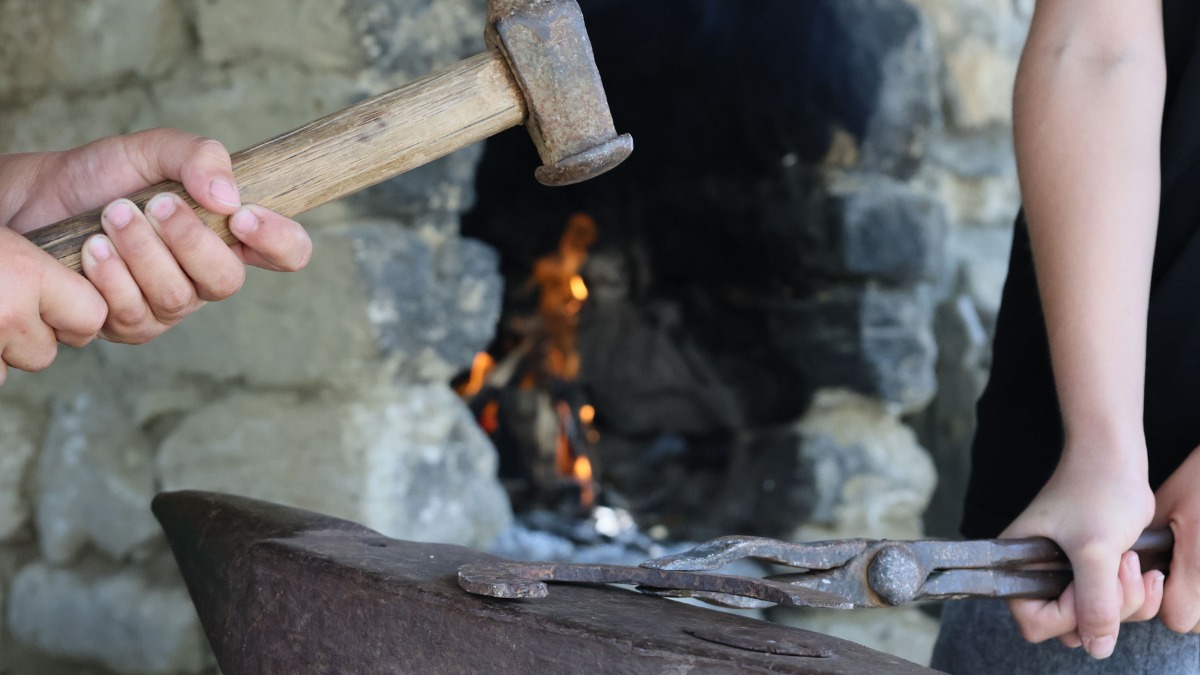
Blacksmithing involves hot metal, sparks, hand tools, and potentially loud equipment. Follow all instructor requirements concerning clothing, footwear, eye protection, hearing protection, and other safety equipment.
OSHA identifies flying particles and molten metal as workplace hazards that require appropriate eye or face protection when exposure occurs. NIOSH recommends an occupational exposure limit of 85 dBA averaged over an eight-hour workday and explains that hearing risk depends on sound level, exposure duration, and frequency of exposure.
These workplace references do not replace the safety policies established by the class provider. Contact the studio before attending if you have mobility concerns, heat sensitivity, hearing-related needs, or questions about required protective equipment.
Frequently Asked Questions
Can a complete beginner take a weekend workshop?
Often, yes, when the course description says no prior experience is required. Confirm prerequisites before registering.
Will I finish a project in a sampler?
Many samplers use a small project to teach basic techniques. Completion depends on the project design, class pace, and your individual progress.
Is Open Studio a substitute for instruction?
No. Monitored Open Studio is intended for qualified makers who can work more independently. Beginners should first complete the required instruction and confirm eligibility with the studio.
Which format offers the best value?
Value depends on your goals, budget, and desired level of instruction. A sampler offers a focused introduction, while a weekend course usually provides more time for instruction, repetition, and feedback.
How should I dress for a blacksmithing class?
Follow the clothing requirements provided by the instructor. Classes commonly require natural-fiber clothing, long pants, and closed-toe leather shoes or boots. Avoid loose clothing and synthetic fabrics unless the studio provides different guidance.
Find Your Next Step in Blacksmithing at Brookfield Craft Center
Choose a sampler when you want a focused introduction. Consider a weekend workshop when you want more time to develop foundational techniques. After completing the required instruction, eligible students may continue practicing through additional courses or monitored studio sessions.
Review Brookfield Craft Center’s current forge classes in Brookfield, Connecticut. Compare each course’s duration, prerequisites, project scope, and recommended experience level, then select the format that best matches your goals.